








 Author Affiliations
Abstract
Background: Asthma, a respiratory disease, is greatly influenced by exposure to the environment, especially by wildfire smoke pollution. Exposure peril has increased with the global increase in wildfires, especially for the most vulnerable. Strategies of healthcare professionals to treat asthma play a pivotal role in symptoms and complication management, but the professionals may struggle when individuals encounter severe smoke exposure.
Aim: The study aimed to explore the relationship between wildfire smoke exposure and the effectiveness of nursing interventions in asthma management at Saidu Group of Teaching Hospitals (SGTH).
Methodology: The present study used a correlational approach with a convenience sample of 80 adult asthma patients. All participants had confirmed asthma and had resided in areas affected by wildfires. Subjects completed structured questionnaires that focused on smoke exposure, clinical outcomes, and the provision of nursing care. Data analysis was conducted using the Statistical Package for the Social Sciences (SPSS) version 27 with Pearson’s correlation, which established a correlation among the variables studied. Significance was determined with a p-value < 0.05.
Results: A moderate, inverse relationship between wildfire smoke exposure and effectiveness of nursing care interventions was evident (r = -0.47, p < 0.01). Higher smoke exposure was associated with increased asthma exacerbations and reduced outcomes of educational and environmental control interventions, as pharmaceutical treatments showed only mild losses.
Conclusion: Exposure to wildfire smoke diminishes the efficacy of nursing measures for asthma treatment. Environmental hazards should also be considered in nursing care interventions to promote the best asthma management outcomes.
Keywords
Wildfire smoke, Asthma management, Nursing interventions, Environmental health, Correlational study, Respiratory care.
Introduction
Breathtaking air polluted with pollutants and principally fine particulate matter 2.5 (PM2.5) from wildfires is known as wildfire smoke exposure. It is now widely accepted that this threat to the environment has adverse effects on respiratory health, particularly on the asthma population.[1] Asthma is described as a chronic respiratory disease characterized by airway inflammation, increased irritability of the bronchial tubes, and intermittent obstruction of airflow, often triggered or worsened by materials such as smoke.[2] Nursing interventions in this case refer to research- and systematic-based approaches used by nurses to combat asthma triggers and promote improved respiratory performance.[3] Major aspects include educating the patient, managing medications, modifying the environment, and routine symptom evaluation. The primary step to enhance better patient outcomes during and after wildfire episodes is to determine the effect of nursing techniques during exposure to wildfire smoke.[4]
Within the last several years, there has been a continuing increase in worldwide asthma cases, with reports by the World Health Organization stating that roughly 262 million people had asthma in 2019.[5] Wildfire season in places like California, Australia and some regions in South Africa brings significant increases in asthma complications that may cripple healthcare systems. The increasing literature indicates that more frequent hospitalizations and emergency room visits among asthmatics occur during the wildfire season for sub-optimal air quality.[6] Individuals of all ages, including children, seniors, and those suffering from an underlying respiratory disease, experience a greater impact from wildfires. Although asthma-related health problems are increasing, the literature is poor on the use of nursing-based strategies to address asthma severity during periods of increased wildfire smoke exposure.[7]
Conclusive findings show that PM2.5 from fires can enter the lung tissues and trigger inflammation, exacerbating respiratory system symptoms. Asthmatics, especially, are at risk of increased attacks and severity of asthma. Effective asthma management is highly dependent on drug treatment and patient education about triggers of the disease and the proper usage of inhalers and spacers.[8] Nursing personnel are very often chief implementors of these measures in a crisis, such as wildfires, when the need for care is greatest. Their relevance increases because they instruct patients in how to manage their condition, recognize early signs of flare-ups, and adjust their medical methods to environmental threats.[9]
Although a huge amount of knowledge has been noted concerning the impact of air pollution on respiratory conditions, there is little information about how nursing care plays a role in dealing with wildfire-induced asthma.[10] Such an investigation is notably missing from the current set of work. The evaluation made on the strategies the nursing care uses to combat fire smoke exposure provides guidance for the development of effective community-based strategies for improving patient outcomes.[11] Such findings are critical for policymakers in designing responsive public health policies, directing resource investments during wildfire events, and preparing nurses with the skills to handle immediate response.[12]
During past public health crises, such as wildfire outbreaks, nurses have shown remarkable success in providing care that reduces asthma symptoms, prevents hospitalization, and calms patient anxiety. However, the impact of nursing care on asthma management in the presence of wildfire smoke has been poorly explored.[13] Such knowledge is critical to transforming current asthma management approaches into integrative environmental disaster planning and a patient-centered nursing care system centered on smoke-related symptoms.[14]
With increasing and more devastating wildfires across the world because of climate change, respiratory diseases (such as asthma) are expected to have continuous adverse effects.[12] The frequency of occurrence in these events makes it very clear that there is an urgent need for nursing practices that are flexible yet grounded in evidence, especially in relation to emerging risks.[15] Identifying the relationship between smoke inhaled from wildfires and the effect of nursing interventions can help shape coordinated responses for the affected people.[16]
Therefore, this study examines the correlation between exposure to smoke resulting from wildfires and nursing strategy outcomes in the treatment of asthma. Through pattern identification and association, the research aims to inform the development of intervention strategies tailored to specific environmental conditions. By doing so, the healthcare system can cope with ecological and public health threats.
Methodology
A correlational approach was used to examine how exposure to wildfire smoke affects the effectiveness of nursing interventions on asthma management at SGTH. The study undertook its processes at SGTH, a major tertiary hospital that caters to a large community, especially from areas of Wildfire victimhood. The aim was to establish the extent to which smoke levels affect patient outcomes while receiving nursing care in a consistent manner across all other studies’ elements. The subjects were all asthmatic patients who used SGTH for healthcare during active wildfire seasons. A sample of 80 subjects was obtained by resorting to the Raosoft sample size calculator to determine the size at a 95% confidence level and 5% margin of error. The study employed convenience sampling, where individuals who were at the hospital to seek outpatient or inpatient care were found to be willing to participate and were recruited accordingly. Inclusion criteria were: Eligible participants are those 18 years and above with a confirmed asthma diagnosis from wildfires-affected areas for more than a year. Study participants also excluded those with other respiratory disorders, cognitive limitations, or unwillingness to participate.
Data collection procedure: Data collection was conducted in the SGTH after receiving institutional review board (IRB) approval (Ref No: SGTH/IRB/2025/33) over three months. All participants provided written consent to participate after being informed about the research. Respondents answered questionnaires, which had already been designed, about their backgrounds, exposure to wildfire smoke, and the asthma care practices of nurses. For participants who could not read, people with knowledge of translations in their native language were guides. The history of exposure and the exact nursing diagnoses were both addressed in the structured questionnaires. In order to guarantee data quality, the research team went through all submissions daily. All responses were anonymized.
Data analysis procedure: We analyzed the data collected using SPSS version 27. Means, standard deviations, frequencies, and percentages were used to describe an overview of participants’ characteristics and variables. To study whether wildfire smoke exposure correlates with the effectiveness of nursing interventions, we used the Pearson correlation coefficient. A p-value less than 0.05 was indicative of statistical significance. The research aimed to establish whether the frequency of exposures plays a non-negligible role in the variability of effectiveness of nurse-led asthma care.
Results
Demographic characteristics of participants: The mean age of the study group was 36.4 years (SD ± 12.7), with a slight preponderance of females, accounting for 57.5% of the respondents. The study involved participants of different educational status; 37.5% received secondary training, and 25% continued their education in higher one. Most sample cases (38.8%) had 4 to 6 years of asthma, whereas 33.8% had more than 6 years of asthma. Of interest, 15% of the participants had no formal education, demonstrating the variation of literacy skills among study participants (Table 1).
| Variable | Category | Frequency (%) |
| Age (years) | Mean ± SD = 36.4 ± 12.7 | |
| Gender | Male | 34 (42.5%) |
| Female | 46 (57.5%) | |
| Education level | No formal education | 12 (15%) |
| Primary | 18 (22.5%) | |
| Secondary | 30 (37.5%) | |
| Higher (college/university) | 20 (25%) | |
| Duration of asthma | 1–3 years | 22 (27.5%) |
| 4–6 years | 31 (38.8%) | |
| >6 years | 27 (33.8%) |
Table 1: Demographic characteristics of participants (N = 80)
Exposure to wildfire smoke: Most participants had moderate exposure (3–5 events) (38.8% of the sample). The rate of low exposure (1-2 events) was 32.5% of the sample, and that of a higher level (more than 5 events) was 28.7%. This finding is evidence of the fact that roughly one-third of the participants had exposure as frequent. The distribution shows that the exposure levels between participants differed significantly (Figure 1).
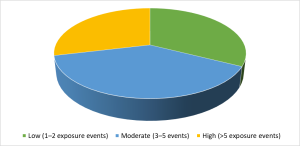
Figure 1: Exposure to wildfire smoke
Effectiveness of nursing interventions: The intervention components also received positive feedback from the participants, followed by Inhaler Technique Reinforcement: mean score 8.1±1.1, closely followed by Symptom Monitoring Support, with a mean score of 8.0±1.2. Participants also highly scored asthma education and environmental trigger Counseling, which scored 7.8 ± 1.3 and 7.5 ± 1.6, respectively. On average, the intervention assessment was rated at 7.9 ± 1.4, indicating participants’ general satisfaction (Table 2).
| Intervention component | Mean score ± SD (Range 1–10) |
| Asthma education | 7.8 ± 1.3 |
| Inhaler technique reinforcement | 8.1 ± 1.1 |
| Environmental trigger counseling | 7.5 ± 1.6 |
| Symptom monitoring support | 8.0 ± 1.2 |
| Overall effectiveness score | 7.9 ± 1.4 |
Table 2: Effectiveness of nursing interventions
Negative statistical correlations were identified between exposure frequency and all intervention outcomes measured using Pearson correlation analysis. In other words, a moderate negative relationship developed between exposure frequency and overall effectiveness score (r = -0.44, p = 0.001) and education effectiveness (r = -0.41, p = 0.002). Results also demonstrated that an increase in exposure was associated with low effectiveness in support of inhaler technique (r = -0.38, p = 0.004) and trigger counseling (r = -0.35, p = 0.007) (Table 3).
| Variable pair | Pearson’s r | p-value | Interpretation |
| Exposure frequency vs. Education effectiveness | -0.41 | 0.002 | Moderate negative correlation |
| Exposure frequency vs. Inhaler technique support | -0.38 | 0.004 | Moderate negative correlation |
| Exposure frequency vs. Trigger counseling | -0.35 | 0.007 | Weak-to-moderate correlation |
| Exposure frequency vs. Overall effectiveness score | -0.44 | 0.001 | Moderate negative correlation |
Table 3: Correlation between wildfire smoke exposure and nursing intervention effectiveness
Discussion
Our investigation aimed to determine the impact of wildfire smoke exposure on nursing-led methods for alleviating asthma symptoms in patients at Saidu Group of Teaching Hospitals (SGTH). A moderate inverse relationship was observed between the frequency of exposure to wildfire smoke and the effectiveness of healthcare nurses in managing asthma. High doses of smoke exposure seem to reduce the effectiveness of routine asthma management by nurses. However, such measures are always attempted and consist of educational techniques, instruction on inhalers, and environmental guidelines.
Our findings support the work of those who have observed that increased exposure to wildfire smoke pollutants aggravates respiratory symptoms and frustrates routine asthma management.[17] The study, conducted through longitudinal research, reported that wildfire smoke exposure significantly increased ER visits and rendered inhaled corticosteroids ineffective in patients.[18] Our results align with those in patients with repeated smoke exposures, suggesting that continuing irritants from wildfire smoke may disrupt the physiologic gains made possible by nursing care.
Nursing care in urban hospitals demonstrated consistent efficiency across various air quality levels, indicating a low level of variation. However, their investigation did not individually analyze wildfire smoke but grouped it with different pollutants. The particular chemical makeup of wildfire smoke, which differs from that of regular urban air pollution, may partly explain why results differed across studies.[19]
Notably, the elements of care, including aspects of inhaler technique training, were robust among high smoke exposure participants, while trigger counseling and asthma education suffered more harm. It is a perception that nurses’ capacity for transmitting skill-based knowledge is perpetual, while providing behavioral and environmental advice encounters more barriers in areas that are continuously polluted by smoke. The findings support the conclusion that the presence of external environmental factors, such as wildfire events, limits patients’ ability to change their behaviors and adhere to prescribed care.[20]
Request for deeper scrutiny based on demographic category helped us to better interpret the results. There was a small improvement in management scores among female participants, compared to males, but no statistical significance was achieved. Better educational achievement was associated with greater retention of nursing advice, which further demonstrates the importance of health literacy in chronic disease care. These findings examine the relationship between education and defense work in response to public health interventions in high-risk areas.[21]
The relatively weak correlational relationship identified in the current study holds considerable importance for nurses’ method of care. Such results indicate the need for revision of current protocols for managing asthma during wildfire to preserve their effectiveness. The results suggest that nurses should adopt more fluid and adaptive care plans, specifically through increased monitoring, timely medication adjustments, and consistent check-ins. This aligns with the adaptive interventionist framework, which supports interventions by modifying chronic care plans based on environmental health risks.[22]
Recommendations: In this study, recommendations are provided, suggesting that nursing practices in healthcare settings within areas affected by wildfires be revised to include procedures for targeted education on smoke pollution brought about by wildfires, continual surveillance, and responsive care plans to suit changing environmental factors. It is essential that healthcare organizations guarantee specialized training to nurses in asthma management during periods of high smoke exposure. Nurses and public health authorities need to collaboratively ensure that practical instructional resources explaining the ways to reduce smoke exposure are accessible to patients. Research is necessary for evaluating the utilization of technological devices, such as mobile applications and remote monitoring, to facilitate asthma self-management when on-site nurse care is unavailable due to environmental disasters.
Conclusion
The research showed that exposure to wildfire smoke significantly affects how effectively nursing interventions regulate asthma. They found moderate negative overlapping, which means increased exposure to wildfire smoke makes the outcome of standard nursing practices weaker, especially in terms of symptom control, educating the patient, and reducing environmental risks. The results reiterate that while technical treatments such as inhaler use are still effective, the behavioral and educational aspects of asthma management are particularly vulnerable to environmental hazards such as smoke exposure. These results highlight the necessity to change approaches to asthma care so that different respiratory threats from wildfire smoke can be addressed.
References
- Ashraf H, Butt M, Akhtar S, et al. Asthma incidence, prevalence, and mortality in the United States and worldwide, 1990–2019: findings from the Global Burden of Disease study. J Asthma. 2025:1–11. doi:10.1080/02770903.2025.2482998 PubMed | Crossref | Google Scholar
- Baeza Romero MT, Dudzinska MR, Amouei Torkmahalleh M, et al. A review of critical residential buildings parameters and activities when investigating indoor air quality and pollutants. Indoor Air. 2022;32(11):e13144. doi:10.1111/ina.13144 PubMed | Crossref | Google Scholar
- Merhej T, Zein JG. Epidemiology of Asthma: Prevalence and Burden of Disease. Adv Exp Med Biol. 2023;1426:3-23. doi:10.1007/978-3-031-32259-4_1 PubMed | Crossref | Google Scholar
- Palmisani J, Gilio A, Viana M, de Gennaro G, Ferro A. Indoor air quality evaluation in oncology units at two European hospitals: low-cost sensors for TVOCs, PM2.5 and CO₂ real-time monitoring. Build Environ. 2021;205:108237. doi:10.1016/j.buildenv.2021.108237 Crossref | Google Scholar
- Pettit T. Botanical Biofilters for the Phytofiltration of Urban Air Pollutants. Dissertation. University of Technology Sydney; 2021. Botanical Biofilters for the Phytofiltration of Urban Air Pollutants
- Piscitelli P, Miani A, Setti L, et al. The role of outdoor and indoor air quality in the spread of SARS-CoV-2: Overview and recommendations by the research group on COVID-19 and particulate matter (RESCOP commission). Environ Res. 2022;211:113038. doi:10.1016/j.envres.2022.113038 PubMed | Crossref | Google Scholar
- Segakweng CK, van Zyl PG, Liousse C, et al. Measurement report: size-resolved chemical characterisation of aerosols in low-income urban settlements in South Africa. Atmos Chem Phys. 2022;22(15):10291–10317. doi:10.5194/acp-22-10291-2022 Crossref | Google Scholar
- D’Evelyn SM, Jung J, Alvarado E, et al. Wildfire, Smoke Exposure, Human Health, and Environmental Justice Need to be Integrated into Forest Restoration and Management. Curr Environ Health Rep. 2022;9(3):366-385. doi:10.1007/s40572-022-00355-7 PubMed | Crossref | Google Scholar
- Festa N, Throgmorton KF, Davis-Plourde K, et al. Assessment of Regional Nursing Home Preparedness for and Regulatory Responsiveness to Wildfire Risk in the Western US. JAMA Netw Open. 2023;6(6):e2320207. doi:10.1001/jamanetworkopen.2023.20207 PubMed | Crossref | Google Scholar
- Bayram H, Rice MB, Abdalati W, et al. Impact of Global Climate Change on Pulmonary Health: Susceptible and Vulnerable Populations. Ann Am Thorac Soc. 2023;20(8):1088-1095. doi:10.1513/AnnalsATS.202212-996CME PubMed | Crossref | Google Scholar
- Braggio JT. Remote sensing technologies quantify the contribution of ambient air pollution to asthma severity and risk factors in greenness, air pollution, and wildfire ecological settings: a literature review. Atmosphere. 2024;15(12):1470. doi:10.3390/atmos15121470 Crossref | Google Scholar
- Brooks EJ. Wholistic healing: the physician perspective of the Tibetan medical philosophy. Dissertation. Walden University; 2022. Wholistic healing: the physician perspective of the Tibetan medical philosophy
- Covert HH, Abdoel Wahid F, Wenzel SE, Lichtveld MY. Climate change impacts on respiratory health: exposure, vulnerability, and risk. Physiol Rev. 2023;103(4):2507-2522. doi:10.1152/physrev.00043.2022 PubMed | Crossref | Google Scholar
- Heaney E, Hunter L, Clulow A, Bowles D, Vardoulakis S. Efficacy of Communication Techniques and Health Outcomes of Bushfire Smoke Exposure: A Scoping Review. Int J Environ Res Public Health. 2021;18(20):10889. doi:10.3390/ijerph182010889 PubMed | Crossref | Google Scholar
- Kapri A, Pant S, Gupta N, et al. Asthma history, current situation, an overview of its control history, challenges, and ongoing management programs: an updated review. Proc Natl Acad Sci India Sect B Biol Sci. 2023;93:539–551. doi:10.1007/s40011-022-01428-1 PubMed | Crossref | Google Scholar
- Mbata A, Soyege O, Nwokedi C, et al. Preventative medicine and chronic disease management: reducing healthcare costs and improving long-term public health. Int J Multidiscip Res Growth Eval. 2024;5:1584-1600. doi:10.54660/IJMRGE.2024.5.6.1584-1600 Crossref | Google Scholar
- Siddiqua A, Hahladakis JN, Al-Attiya WAKA. An overview of the environmental pollution and health effects associated with waste landfilling and open dumping. Environ Sci Pollut Res Int. 2022;29(39):58514-58536. doi:10.1007/s11356-022-21578-z PubMed | Crossref | Google Scholar
- Shupler M. Multinational modeling of household air pollution. Dissertation. University of British Columbia; 2021. Multinational modeling of household air pollution
- Tanzilli A, Cibelli A, Liotti M, Fiorentino F, Williams R, Lingiardi V. Personality, Defenses, Mentalization, and Epistemic Trust Related to Pandemic Containment Strategies and the COVID-19 Vaccine: A Sequential Mediation Model. Int J Environ Res Public Health. 2022;19(21):14290. doi:10.3390/ijerph192114290 PubMed | Crossref | Google Scholar
- Tran HM, Tsai FJ, Lee YL, et al. The impact of air pollution on respiratory diseases in an era of climate change: A review of the current evidence. Sci Total Environ. 2023;898:166340. doi:10.1016/j.scitotenv.2023.166340 PubMed | Crossref | Google Scholar
- Vázquez-González N, Leiva-Fernández J, Cotta-Luque VM, et al. Effectiveness of an educational intervention about inhalation technique in healthcare professionals in primary care: a cluster randomized trial. Front Pharmacol. 2023;14:1266095. doi:10.3389/fphar.2023.1266095 PubMed | Crossref | Google Scholar
- Wilgus ML, Merchant M. Clearing the Air: Understanding the Impact of Wildfire Smoke on Asthma and COPD. Healthcare (Basel). 2024;12(3):307. doi:10.3390/healthcare12030307 PubMed | Crossref | Google Scholar
Acknowledgments
The authors would like to express their sincere gratitude to Dr. Shah Hussain, Principal/Assistant Professor, Zalan College of Nursing, Swat, for his invaluable supervision, guidance, and support throughout the course of this study.
Funding
This research did not receive any specific grant from funding agencies in the public, commercial, or not-for-profit sectors.
Author Information
Corresponding Author:
Nageena Bibi
Department of Nursing
Midwest Institute of Sciences, Islamabad, Pakistan
Email: [email protected]
Co-Authors:
Uzma Shaheen
Department of Nursing
Professional College of Nursing and Allied Health Sciences, Islamabad, Pakistan
Mehrun Nisa
Department of Nursing
College of Nursing Benazir Bhutto Hospital, Rawalpindi, Pakistan
Shah Hussain
Department of Nursing
Zalan College of Nursing, Swat, Pakistan
Authors Contributions
Nageena Bibi, Uzma Shaheen, and Mehrun Nisa contributed to data collection and analysis. Shah Hussain was involved in data analysis and interpretation.
Ethical Approval
Ethical approval was obtained from the IRB of SGTH, Swat (Ref. No. SGTH/IRB/2025/33).
Conflict of Interest Statement
The authors declare no conflict of interest.
Guarantor
Nageena Bibi is the guarantor of this study and accepts full responsibility for the integrity and accuracy of the data and the data analysis.
DOI
Cite this Article
Bibi N, Shaheen U, Nisa M, Hussain S. Wildfire Smoke Exposure Data and Nursing Interventions for Asthma. medtigo J Med. 2025;3(2):e30623226. doi:10.63096/medtigo30623226 Crossref