Author Affiliations
Abstract
Background: A case of varicocele, with primary infertility and a deranged semen parameter, presenting at the surgery outpatient clinic. He had open varicocelectomy with a significant improvement in semen parameters.
Objective: To identify the significance of varicocelectomy in improving semen parameters in patients with varicocele. To identify the role of open varicocelectomy in managing a case of varicocele in areas where other modalities of management, such as embolization, laparoscopy, cannot be performed or are unaffordable for patients.
Case presentation: A 41-year-old man presenting at the surgery outpatient clinic with left scrotal swelling. It was noticed 10 years prior to presentation. Scrotal swelling was noticed to have gradually increased in size. There was a history of associated pain and discomfort. He also had a history of inability to achieve conception with several girlfriends. There was a positive history of penile discharge, no dysuria. There was a history of generalized rash which started from the perineum, but resolved on treatment, and reoccurs occasionally. He had a semen analysis done, which had a deranged result. He occasionally consumes alcohol and smokes locally prepared. With no significant improvement in achieving conception, he presented to our facility. Scrotal examination revealed a swollen left hemiscrotum with mild tenderness & a bag of worm feel of the spermatic cord. Seminal fluid analysis was deranged. An assessment of a grade 3 varicocele was made. Patients had open varicocelectomy done with subsequent improvement of semen parameters.
Conclusion: Varicocelectomy is a useful method of improving semen parameters in patients with male infertility caused by varicocele. Open varicocelectomy is accessible and affordable in the management of varicocele in areas where other methods, such as embolization or laparoscopy, cannot be performed or are unaffordable.
Keywords
Varicocele, Open varicocelectomy, Infertility, Semen, Seminal fluid.
Introduction
Varicocele is the dilatation, elongation, and tortuosity of the pampiniform plexus due to venous stasis. It is a condition involving spermatogenesis and a major cause of male infertility. It is a common condition worldwide. The etiology and pathogenesis of varicocele are multifactorial. There are two types. The primary and secondary varicocele. Primary varicocele is caused by defective venous valves; secondary varicocele is usually due to external venous compression (retroperitoneal mass). Varicoceles could be bilateral or Unilateral (left-sided in 90% of cases). Varicocele commonly affects semen parameters. Patients with varicocele usually benefit from varicocelectomy and other modalities of management, which in any case result in significant improvement of semen parameters. This is a case of varicocele with improvement of semen parameters following open varicocelectomy.
Objective
- To identify the significance of varicocelectomy in improving semen parameters in patients with varicocele.
- To identify the role of open varicocelectomy in managing a case of varicocele in areas where other modalities of management, such as embolization or laparoscopy, cannot be performed or are unaffordable for patients.
Case Presentation
A 41-year-old man presented at the surgery outpatient clinic with left scrotal swelling. It was noticed 10 years prior to presentation. Swelling was noticed to have gradually increased in size. There was a history of associated pain and discomfort. He also has a history of inability to achieve conception with several girlfriends. There was a positive history of penile discharge, no dysuria. There was a history of generalized rash which started from the perineum, but resolved on treatment, and reoccurs occasionally. He had a semen analysis done, which had a deranged result as claimed by the patient. Occasionally, alcohol is consumed and locally prepared. He used several self-medication and injectables. With no significant improvement in achieving conception, he presented to our facility.
Scrotal examination findings:
- Swollen left scrotum.
- Mild tenderness & a “bag of worms” feel of the spermatic cord.
Case Management
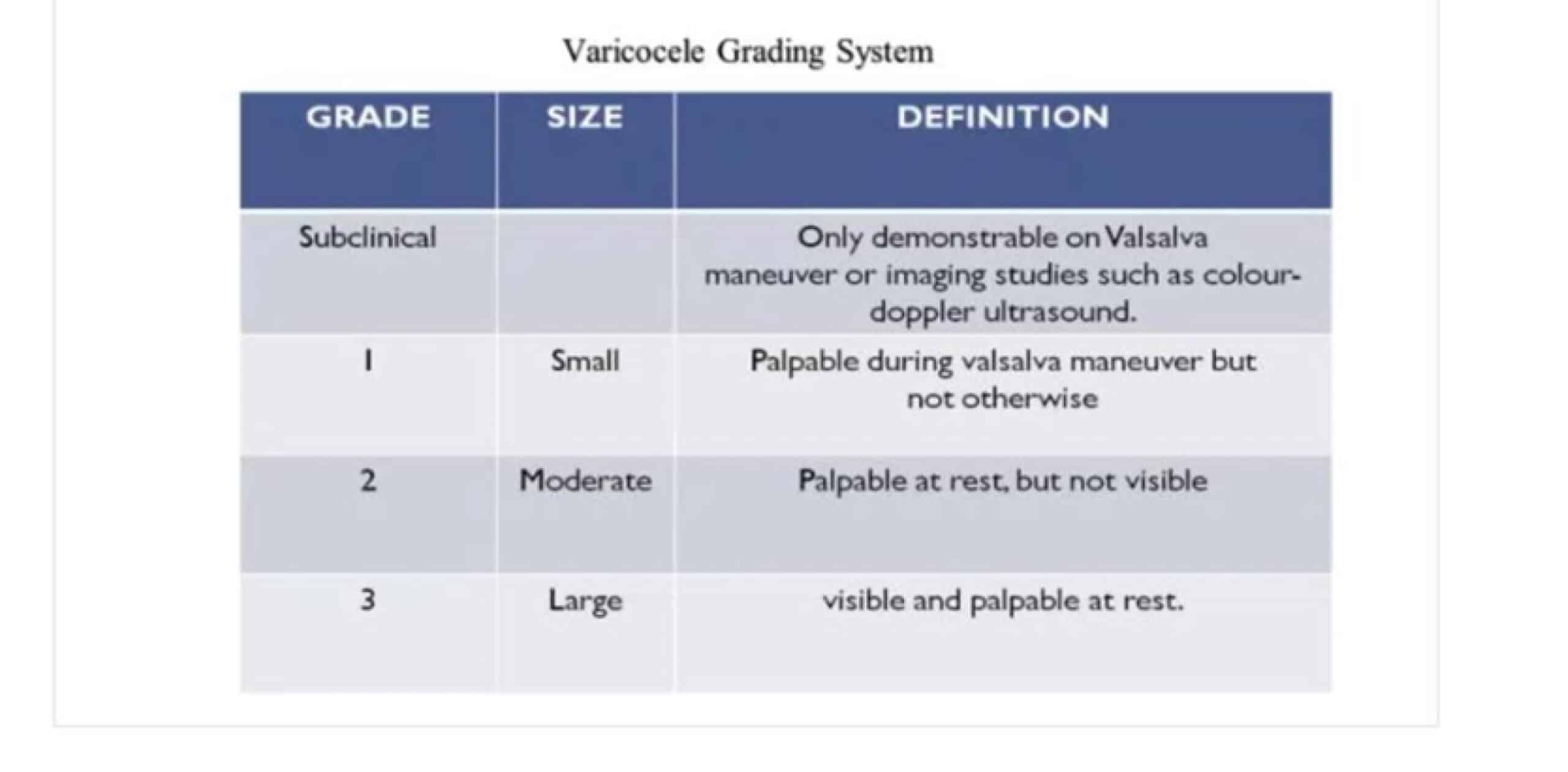
An assessment of grade 3 varicocele was made, and the patient was worked up for varicocelectomy. The scrotal Doppler ultrasound scan was deferred. The urinalysis was essentially normal.
Pre-operative seminal fluid analysis findings:
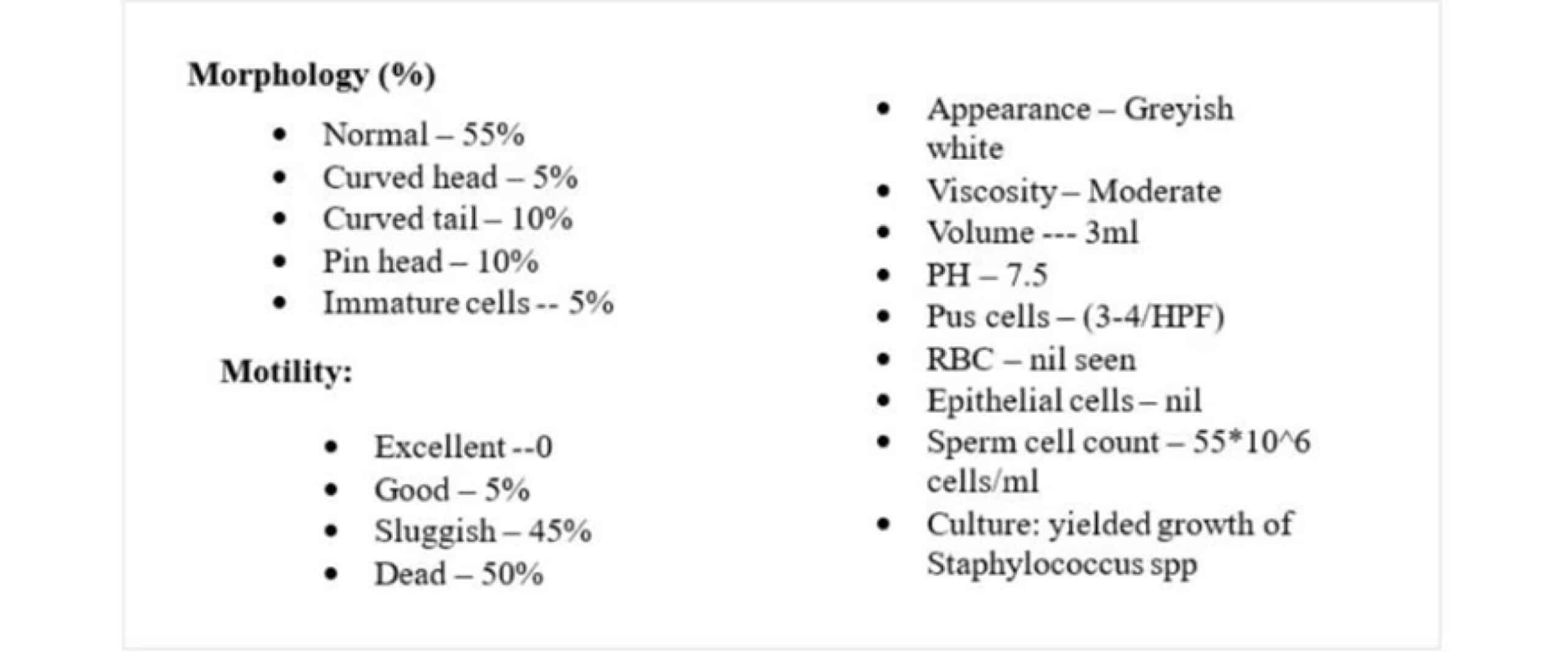
Intra-operative findings were tortuous and dilated pampiniform plexus of veins in the left hemiscrotum. The patient was thereafter discharged home and scheduled for a repeat seminal fluid analysis (SFA) 120 days post-op.
Seminal fluid analysis 120 days post-op findings:
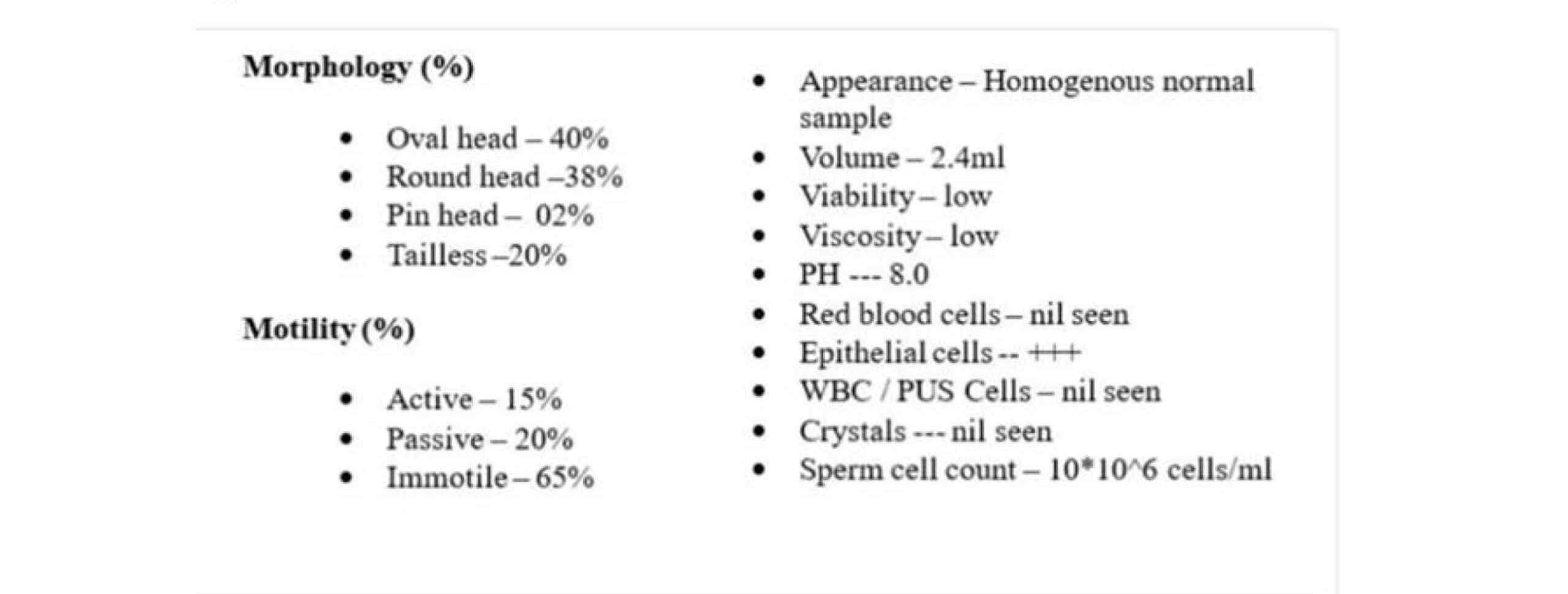
Patient was thereafter rescheduled for a repeat SFA in a month’s time, in order to compare results.
A Repeat SFA showed:
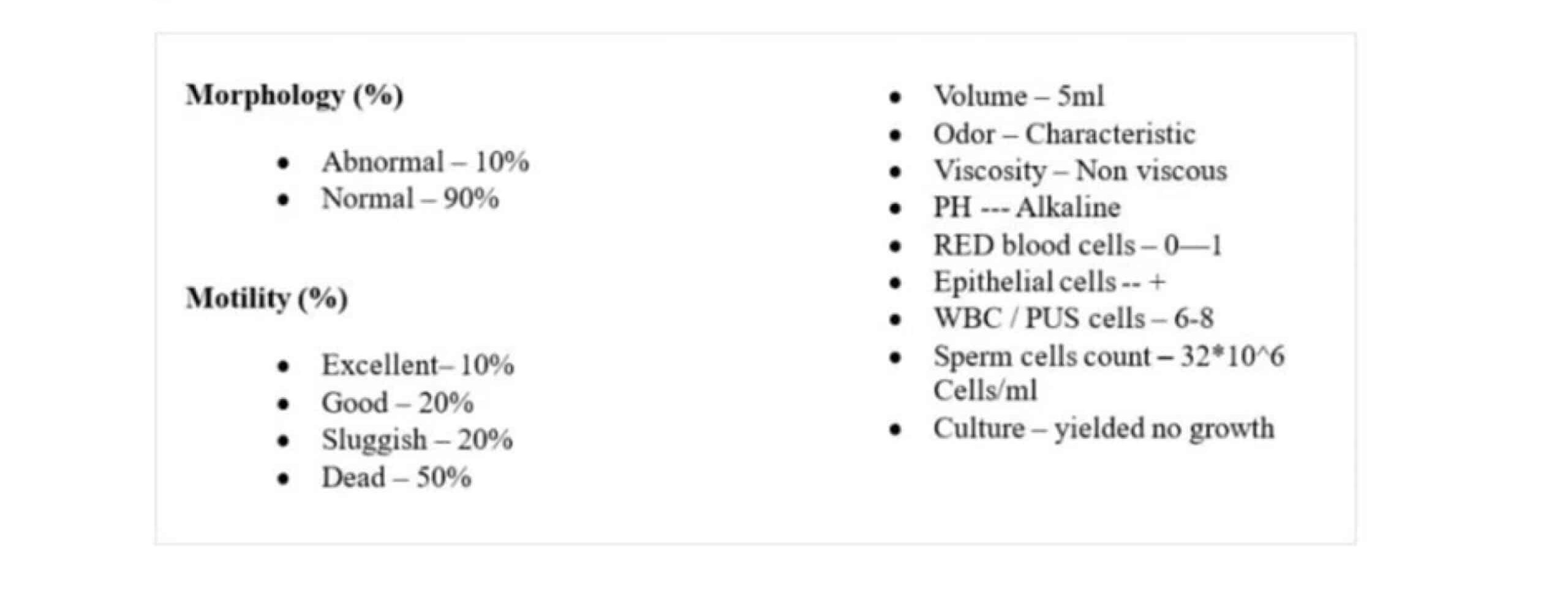
Patient had a significant improvement in semen parameters, he was counselled and discharged home for follow-up at the outpatient clinic.
Discussion
Varicocele is a condition involving spermatogenesis and a major cause of male infertility. It is a common condition worldwide. The prevalence of varicocele varies considerably between the general population and infertile men. Not all men with varicocele are infertile, but varicocele is more common in men attending the infertility clinic. Varicocele is more common in men with primary infertility than with secondary infertility. It is estimated that 10-15% of men and adolescent boys have varicocele. In men with abnormal semen analysis, the prevalence of varicocele is about 25%. It affects 8-22% of males in the general population, but rises to 21-39% in men attending an infertility clinic. Osifo et al. It is the most common and correctable cause of male factor infertility. It is often asymptomatic, and if symptoms do occur, they may include testicular discomfort and the presence of varicosities of the scrotal wall. Varicocele is identified as a mass of dilated & tortous veins above the testicle (“bag of worms”) which decompress on lying supine. Patient is also examined for testicular hypotrophy.
Diagnosis is made by the presence of a dull aching pain on the affected side, a scrotal swelling, a bag-of-worms feeling on palpation, and a bow sign. (The varicocele mass is held between finger and thumb, the patient is asked to bow, tension in the varicocele becomes appreciably less). Scrotal doppler ultrasonography, vasography (Gold standard), and a semen analysis (which could reveal a low or absent sperm count, reduced sperm motility, abnormal morphology) are helpful in the diagnosis of a varicocele. Modalities of management include embolization, laparoscopy, and surgical ligation of spermatic veins (which could be a high retroperitoneal (Palomo) approach, an Inguinal (Ivanissevich) approach, and a subinguinal approach. Surgical complications include Hydrocele / Hematoma formation, Ilioinguinal nerve damage, varicocele recurrence, and testicular atrophy. There is about a 95% success rate, and about 70% of men have an improvement in sperm parameters.
Conclusion
Varicocelectomy is a useful method of improving semen parameters in patients with male factor infertility caused by varicocele. Prompt management of a varicocele with seminal fluid analysis, however, is required to achieve success in management. Varicocelectomy is a cheap and accessible method of management of varicoceles in areas where other methods such as embolization, laparascopy cannot be affordable.
References
- Osifo OD, Agbugui JO. Male infertility secondary to varicocele: a study of the management of 45 patients. Afr J Reprod Health. 2008;12(1):54-59. Male infertility secondary to varicocele: a study of the management of 45 patients
- Punab M, Poolamets O, Paju P, et al. Causes of male infertility: a 9-year prospective monocentre study on 1737 patients with reduced total sperm counts. Hum Reprod. 2017;32(1):18-31. doi.10.1093/humrep/dew284 PubMed | Crossref | Google Scholar
- Ibrahim AG, Aliyu S, Ali N, Lawan AM. Varicocele Associated Infertility in Maiduguri North Eastern Nigeria. Int J Curr Res. 2015;7(6):17432-17434. Varicocele Associated Infertility in Maiduguri North Eastern Nigeria
- Osegbe DN, Amaku EO. The causes of male infertility in 504 consecutive Nigerian patients. Int Urol Nephrol. 1985;17(4):349-358. doi.10.1007/BF02083505 PubMed | Crossref | Google Scholar
- Reynard J, Brewster SF, Biers S, Neal NL. Infertility. In: Reynard J, Brewster SF, Biers S, Neal NL, eds. Oxford Handbook of Urology. 4th ed. Oxford University Press; 2019:555-580. doi.10.1093/med/9780198783480.003.0012 Crossref
- Chung E. Varicocele and male infertility: evidence in the era of assisted reproductive technology. Reprod Syst Sex Disord. 2014;3(1). Varicocele and male infertility: evidence in the era of assisted reproductive technology
- Kantartzi PD, Goulis ChD, Goulis GD, Papadimas I. Male infertility and varicocele: myths and reality. Hippokratia. 2007;11(3):99-104. Male infertility and varicocele: myths and reality
- Miyaoka R, Esteves SC. A critical appraisal on the role of varicocele in male infertility. Adv Urol. 2012;2012:597495. doi.10.1155/2012/597495 PubMed | Crossref | Google Scholar
- Shafi H, Esmaeilzadeh S, Delavar MA, Haydari FH, Mahdinejad N, Abedi S. Prevalence of varicocele among primary and secondary infertile men: association with occupation, smoking, and drinking alcohol. N Am J Med Sci. 2014;6(10):532-535. doi.10.4103/1947-2714.143285 PubMed | Crossref | Google Scholar
- Abdel-Meguid TA, Farsi HM, Al-Sayyad A, Tayib A, Mosli HA, Halawani AH. Effects of varicocele on serum testosterone and changes of testosterone after varicocelectomy: a prospective controlled study. Urology. 2014;84(5):1081-1087. doi.10.1016/j.urology.2014.05.029 PubMed | Crossref | Google Scholar
Acknowledgments
Not reported
Funding
Not reported
Author Information
Emele Cosmas U
Department of Surgery
State Specialist Hospital Asubiaro, Nigeria
Email: cosmase1@gmail.com
Author Contribution
The author contributed to the conceptualization, investigation, and data curation by acquiring and critically reviewing the selected articles and was involved in the writing – original draft preparation, and review & editing to refine the manuscript.
Informed Consent
Informed Consent was obtained from the patient to report this case.
Conflict of Interest Statement
None
Guarantor
None
DOI
Cite this Article
Emele CU. Varicocelectomy: An efficient and inexpensive treatment for male factor infertility. medtigo J Med. 2024;2(4):e30622428. doi:10.63096/medtigo30622428 Crossref