Author Affiliations
Abstract
Background: Digital addiction has emerged as a growing public health concern among young adults, particularly university students. Excessive digital engagement is associated with psychological distress, including depression, anxiety, and stress, which can impair academic performance and overall well-being.
Aim: The study aimed to assess the prevalence of digital addiction among students at the University of Swat and to examine its relationship with mental health outcomes.
Methods: A cross-sectional study was conducted at the University of Swat. The total population was 250 students, and the sample size was calculated using the OpenEpi calculator, yielding 333 participants. Data were collected using a standardized digital addiction scale and mental health assessment tools. Descriptive statistics, chi-square tests, and correlation analyses were performed using the Statistical Package for the Social Sciences (SPSS) version 27.
Results: The prevalence of digital addiction was high, with 30.6% classified as mild, 37.8% moderate, and 15% severe. Significant associations were found between higher addiction scores and symptoms of depression, anxiety, and stress (p < 0.05). Students with moderate to severe addiction reported lower academic satisfaction and increased psychological distress.
Conclusion: Digital addiction is a prevalent issue among young adults and is strongly linked to poor mental health outcomes. Context-specific preventive and supportive interventions are essential.
Keywords
Digital addiction, Mental health, Depression, Anxiety, Stress, Young adults, University students.
Introduction
Digital addiction is regarded as the excessive and compulsive non-medical use of digital devices such as smartphones, computers, game consoles, and social media sites, and it leads to impairments of functional and general well-being.[1] Mental health is the state of psychological, emotional, and socio-wellbeing that determines how individuals think, feel, and behave. Young adults, usually aged between 18 and 30 years, are the most susceptible to digital overuse due to developmental transition, social needs, and school pressure.[2] Clinical insights are organized professional observations and evidence-based findings on health behavior outcomes in specific populations.[3] Digital addiction in young adults has been witnessed to be on the rise globally, and it has been reported that the problem cuts across a range of one-fifth to one-third based on the method of measurement, coupled with regional disparity.[4] Gaming addiction has now been categorized as a clinical disorder, and smartphone addiction is also stated to have reached three out of four university students and to cause stress as well as poor academic performance.[5] The issue is even more rampant in South Asian contexts, with more than 40 % of young adults showing the symptoms of harmful digital use.[6]
Vast abuse of digital sites has been highly linked to adverse psychological consequences such as loneliness, depression, anxiety, and sleep disturbances. The excessive use of social media may diminish emotional regulation and enhance the feeling of isolation, and gaming-related issues tend to result in aggression, loss of focus, and shyness in social life.[3] Neurobiological research has shown that digital addiction impacts the regulation of the neurohormone dopamine, which promotes repetitive behavioral profiles in the same manner as substance-related issues.[7]
Adolescents are said to be a high-risk group, especially given that the demands of schoolwork and changing social roles, coupled with the necessity to establish independence, put them at risk. Access to digital platforms forms a source of stress management, and addiction to these platforms can arise in the near future.[1] The reliance further strengthens peer influence, since online participation is usually regarded as a vital condition of being part of the social group. Cultural conditions are a factor too: in collectivist cultures, always-on connectivity is something to be expected, whereas in individualist cultures, competitiveness and pressure to succeed may exacerbate the addictions of technology over-use.[8]
The consequences of digital addiction have reached even the clinical practice, as the number of consumers and addicts visits the psychological and psychiatric services. Another difficulty that has been commonly experienced is that there are no universally agreed-upon criteria in the diagnosis of digital addiction outside gaming disorder, which makes it hard to diagnose properly. Therapists observe that standard treatment methods like cognitive-behavioral therapy should be adapted to deal with compulsive digital behaviors.[9] In order to have a clear grasp of the treatment of digital addiction, we need to adopt a biopsychosocial view of digital addiction.[10] Evidence of neurobiology suggests that brain reward systems are overstimulated, psychological theories focus on maladaptive coping skills and poor self-regulation, and social factors imply environmental reinforcements through the constant notifications, online validation, and competitive gaming environments that become the perpetrators of compulsive use.[11]
There have been policy gaps and efforts on public health issues, mitigating such a growing issue. Digital detox regimens and rehabilitation camps have been prepared by some countries that are geared towards the youthful adults/teenagers. Institutions of higher learning are beginning to provide awareness programs, counseling support, and online well-being programs as a way of promoting the proper use of technology. The global health agencies emphasize the necessity of uniform diagnostic patterns and evidence-based principles to dispel digital addiction adequately and cut off the burden it has on mental health. Therefore, this study aims to answer the following research question: What is the prevalence of digital addiction among students at the University of Swat, and what is its relationship with depression, anxiety, and stress?
Methodology
The research was carried out at the University of Swat with the young adults who were pursuing various courses of study. The nature of the research design was quantitative and cross-sectional in researching the relationship between digital addiction and its impact on mental health. The target population was the male and female students who were above 18 years and aged below 30 years, and who had been using smartphones, computers, or gaming devices actively for over 6 months before data was collected. The total enrollment of the university is approximately 5,000 students. The calculation of the required sample size was carried out based on the OpenEpi sample size calculator with 95% confidence: 80 percent power, and a projected prevalence of digital addiction amounting to 30 percent based on results of earlier research. The computations provided a sample size of at least 333 participants. A sample size of 350 was used to ensure that any missing answers were taken into consideration.
Stratified random sampling was used to ensure proportional representation across all faculties (e.g., Sciences, Arts, Social Sciences) and gender groups. Within each faculty, participants were selected randomly from departmental student lists. They gathered data in the university environment for two months. Using an adopted questionnaire (CVI 0.84 and Cronbach Alpha 0.88), Digital addiction levels measured the degree of addiction (Young, Internet Addiction Test [IAT]), where a set of 20 items (scored on a five-point Likert scale) was subjected to higher ratings, the stronger the addiction. The Depression, Anxiety, and Stress Scale (DASS-21) is a validated instrument that was utilized to determine mental health outcomes, making it a well-established measure to assess mental health. Age, gender, and academic discipline demographics were also taken.
SPSS version 27 was used in analyzing data. To summarize both the demographic and clinical characteristics, descriptive statistics were adopted in the form of means, standard deviations, and frequencies. Group differences have been evaluated using independent t-tests and chi-square tests. The normality of the data was tested, and Pearson correlation analysis was run to check the connection of digital addiction with the variables of mental health. The results were deemed statistically significant at p < 0.05.
Results
A total of 333 students participated in the study. Table 1 presents the demographic characteristics of the sample. Of the participants, 176 (52.9%) were male and 157 (47.1%) were female. The mean age was 21.4 years (standard deviation (SD) = 2.6), with most respondents falling within the 18–20 years (39.6%) and 21–23 years (38.4%) categories. The majority were undergraduate students (71.5%), while 28.5% were enrolled in postgraduate programs. (Table 1)
| Variable | Categories | Frequency (n) | Percentage (%) |
| Gender | Male | 176 | 52.9 |
| Female | 157 | 47.1 | |
| Age group (years) | 18–20 | 132 | 39.6 |
| 21–23 | 128 | 38.4 | |
| 24–25 | 73 | 22.0 | |
| Academic level | Undergraduate | 238 | 71.5 |
| Postgraduate | 95 | 28.5 |
Table 1: Demographic characteristics of participants (N = 333)
The distribution of digital addiction severity is shown in Table 2. Based on the IAT, 55 participants (16.5%) demonstrated normal use, 102 (30.6%) reported mild addiction, 126 (37.8%) had moderate addiction, and 50 (15.0%) showed severe addiction. This indicates that more than half of the students (52.8%) were classified as having moderate to severe digital addiction (Figure 1).
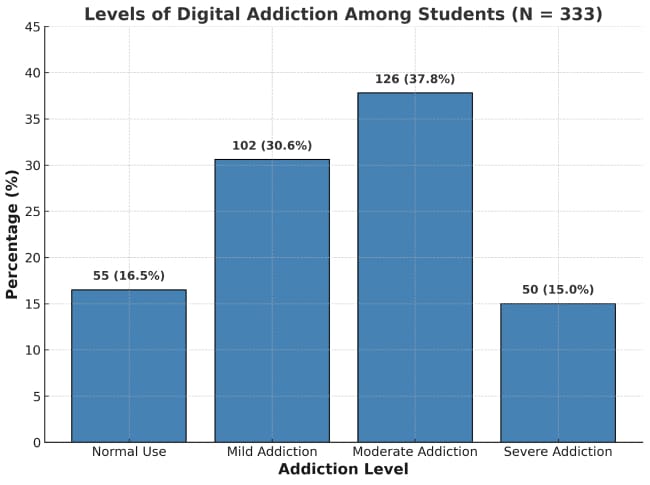
Figure 1: Distribution of digital addiction levels (IAT Categories)
Mental health outcomes measured through DASS-21 are summarized in Table 2. Regarding depression, 32.4% of participants scored in the normal range, while 24.0% had mild symptoms, 25.5% had moderate symptoms, and 18.0% were in the severe to extremely severe categories. For anxiety, 28.5% were normal, 24.6% reported mild symptoms, 26.4% moderate symptoms, and 20.4% had severe or extremely severe anxiety levels. Stress levels were similar, with 30.0% reporting no symptoms, 25.8% mild symptoms, 27.0% moderate symptoms, and 17.1% severe or extremely severe stress (Table 2).
| Domain | Normal n (%) | Mild n (%) | Moderate n (%) | Severe n (%) | Extremely severe n (%) |
| Depression | 108 (32.4) | 80 (24.0) | 85 (25.5) | 40 (12.0) | 20 (6.0) |
| Anxiety | 95 (28.5) | 82 (24.6) | 88 (26.4) | 45 (13.5) | 23 (6.9) |
| Stress | 100 (30.0) | 86 (25.8) | 90 (27.0) | 37 (11.1) | 20 (6.0) |
Table 2: Mental health outcomes of participants (DASS-21 scores)
Correlation analysis revealed statistically significant associations between digital addiction and all three mental health outcomes (Table 3). Digital addiction was moderately positively correlated with depression (r = 0.54, p < 0.001), anxiety (r = 0.49, p < 0.001), and stress (r = 0.52, p < 0.001). These findings indicate that higher digital addiction scores were consistently associated with higher levels of psychological distress among university students (Table 3).
| Variable pair | r | p-value |
| Digital addiction × Depression | 0.54 | < 0.001 |
| Digital addiction × Anxiety | 0.49 | < 0.001 |
| Digital addiction × Stress | 0.52 | < 0.001 |
Table 3: Correlation between digital addiction and mental health outcomes
Discussion
The results of the current study proved that the proportion of university students who were found to belong to the categories of moderate to severe associated with digital addiction was higher than 50 percent, which means a critical mental health issue. This is consistent with findings of other South Asian environments where university students have shown their predominance in problematic internet usage on smartphones, which underlines the fact that there is a vulnerability in commonness across academic institutions. Comparatively, research in the West has indicated rather lower levels of prevalence, implying that sociocultural and scholastic stresses can deepen the patterns of digital addiction in developing economies.[12]
The results confirm the evidence provided in the peer-reviewed literature that always points to the connection between digital addiction and unfavorable psychological consequences because noticeable correlations between digital addiction and depressive symptoms, anxiety, and stress symptoms have been found in the present research paper. Likewise, relations were observed in a meta-analysis of research across the world, strengthening the universality of the referred psychological dangers. Nevertheless, some East Asian studies indicated that the observed level of associations was heterogeneous, and anxiety was stronger than depression, which reflects a cultural variation in the expression of psychological distress.[13,14]
The findings also strengthen the argument of how educational and social pressures contribute to forming patterns of digital engagement. Pakistan and other studies in nearby countries had noted that academic pressure, the absence of recreational choices, and peer pressure were quite significant factors towards excessive usage of digital devices. On the other hand, European-based studies have cited overuse, both recreational and entertainment-related, and not academic, in motivational issues that belong to various cultural dynamics. This comparison gives a clue that such interventions need to be context-specific instead of being applied in general applications to the population.[15]
The significant effect of a tight connection between stress and digital addiction displayed within the given study can also be supported by the results of studies in the Middle East, where excessive use of digital technology was also considered as a coping tool as well as a stressor itself. North American studies also yielded similar findings and presented resiliency factors, including mindfulness and organized extracurriculars that limited the effect of screen time. This lack of protective structures within the current study sample gives way to the assumption of a lack of coping assets among the students in this environment.[16]
The findings also indicated that depression had a significant correlation with better addictions and its similarity with China and India findings that digital-usage overuse was highly correlated with emotional withdrawal and low physical activity. However, in studies carried out in Scandinavian countries, a weak connection was reported, which may be because the social support network and lifestyle choices are more conducive to good health. These disparities lead to the interrelation of culture and systemic variables in moderating the mental outcomes of online addiction.[17,18]
The findings on anxiety also reflect similar trends in Southeast Asia, where increased social media use was significantly related to the two factors that predict anxiety symptoms, social comparison and fear of missing out. Western population studies validated the same patterns but more frequently pointed out the body image issues and peer validation on the Internet as the key factors. These differences suggest that the linkage between digital use and anxiety is not limited to one particular part of the globe; however, its causes are contextual.[19,20]
The results are rather compelling to prove that digital addiction is a complex problem with severe mental health consequences for many populations. The given research is an addition to the world evidence community because it reveals the types of patterns that are peculiar to the example of university students in Pakistan and proves the presence of general risks that are typical of countries around the globe. As inferences based on comparisons with other studies, it has been realized that the relationship between digital addiction and mental health outcomes is consistent across studies, but it has also been established that there exist some cultural, systemic, and contextual variations with respect to prevalence, severity, and factors associated with digital addiction. The data confirms the necessity of the contextually specific prevention and intervention measures at the university level.
Limitations: While this study provides valuable insights, several limitations must be acknowledged. Firstly, a cross-sectional design captures data at a single point in time, which prevents the establishment of causal relationships between digital addiction and mental health outcomes. The reliance on self-reported measures introduces the potential for social desirability and recall bias. Furthermore, the study was conducted at a single university, which may limit the generalizability of the findings to all university students in Pakistan or other regions. Finally, the analysis did not control for potential confounding variables such as socioeconomic status, pre-existing mental health conditions, or physical activity levels, which could influence the observed associations. Future longitudinal studies involving multiple institutions and incorporating objective measures and confounding controls are recommended to strengthen these findings.
Recommendations
- Awareness programs: Universities need to conduct awareness programs to inform students regarding the overuse of digital media and the possibility of developing mental problems.
- Mental health services: Within academic institutions, there should be increased support and counseling services that can help carve out distress caused by digital addiction at its earliest stage.
- Structured interventions: Digital detox workshops, mindfulness sessions, and peer support groups can also be used to ensure that students control screen use.
- Curriculum integration: Long-term prevention can occur when digital literacy and comprehensive use of technology are included in the academic curricula.
- Policy development: The institutional policies must be developed with regard to the management of screen time, whereby it should be a balance between technology use in academics and leisure.
- Parental and faculty involvement: Both parents and teachers need to monitor and provide guidance about the digital behavior of the student and ensure a positive environment.
- Future research: The study needs to focus on future research by seeking protective factors and resilience interventions that can mitigate the impact of digital addiction among the university population.
Conclusion
The research indicated that digital addiction was very prevalent among university students at the University of Swat, who were found in large numbers to be in moderate and severe levels. The results have shown that there are highly influential correlations between digital addiction and adverse mental measures, especially depression, anxiety, and stress. These findings are an indication that too much use of digital devices in young adults has dangerous effects on their psyche. The trends identified using these patterns show that academic pressure, the lack of recreational activities, and the influence of peer pressure can be central factors to this environment, which demonstrates the local reasons behind addiction. The evidence in the study adds to the existing evidence that there is a problem in digital health challenges, and it is vital to understand it and recognize that digital addiction should be discussed as a health problem in need of an immediate solution.
References
- Wyonch R. Ounce of prevention is worth a pound of cure: seniors’ care after COVID-19. C.D. Howe Institute. 2021.
Ounce of prevention is worth a pound of cure: seniors’ care after COVID-19 - Oginyi C, Ibiam A, Nwonyi S, et al. Social media, job type, and socio-economic status as predators promoting psychological well-being in a depressed economy among EBSU staff. Niger J Soc Psychol. 2024;7(2).
Social media, job type, and socio-economic status as predators promoting psychological well-being in a depressed economy among EBSU staff - Naab F, van der Wath AE, Kyei JM, Armah D. “Spirituality as a Coping Strategy for Infertility”: A Scoping Review. J Relig Health. doi:10.1007/s10943-025-02302-w
PubMed | Crossref | Google Scholar - Patey AM, Fontaine G, Francis JJ, McCleary N, Presseau J, Grimshaw JM. Healthcare professional behaviour: health impact, prevalence of evidence-based behaviours, correlates and interventions. Psychol Health. 2022;38(6):766-794. doi:10.1080/08870446.2022.2100887
PubMed | Crossref | Google Scholar - Morena AL, Gaias LM, Larkin C. Understanding the Role of Clinical Champions and Their Impact on Clinician Behavior Change: The Need for Causal Pathway Mechanisms. Front Health Serv. 2022;2:896885. doi:10.3389/frhs.2022.896885
PubMed | Crossref | Google Scholar - Sarker MS, Imtiaz A, Haque S, Mahmud KT. The link between Facebook addiction and depression among university students: Evidence from a lower-middle income country. Health Sci Rep. 2023;6(12):e1755. doi:10.1002/hsr2.1755
PubMed | Crossref | Google Scholar - Sirisety M, Nekkanti MR, Datti RS, Bikkina N, Patrakov EV, Baturina L. Necessary condition analysis on the relationship between fear of missing out, social networking addiction, and psychological well-being. Eur J Ment Health. 2025;20:e0042:1-16. doi:10.5708/EJMH.20.2025.0042
Crossref | Google Scholar - Columb D, Keegan E, Griffiths MD, O’Gara C. A descriptive pilot survey of behavioural addictions in an adolescent secondary school population in Ireland. Ir J Psychol Med. 2024;41(2):189-201. doi:10.1017/ipm.2021.40
PubMed | Crossref | Google Scholar - Hussain Z, Griffiths MD. The associations between problematic social networking site use and sleep quality, attention-deficit hyperactivity disorder, depression, anxiety and stress. Int J Ment Health Addict. 2021;19:686-700. doi:10.1007/s11469-019-00175-1
Crossref | Google Scholar - Awopetu RG, Olabimitan BA, Kolawole SO, Newton RT, Odok AA, Awopetu AV. The systematic review of social media addiction and mental health of Nigerian university students: the good, the bad and the ugly. Eur J Theor Appl Sci. 2024;2(1):767-788. doi:10.59324/ejtas.2024.2(1).69
Crossref | Google Scholar - Ajewumi OE, Magbagbeola V, Kalu OC, Ike RA, Folajimi O, Diyaolu CO. The impact of social media on mental health and well-being. World J Adv Res Rev. 2024;24(1):107-121. doi:10.30574/wjarr.2024.24.1.3027
Crossref | Google Scholar - Meza BPL, Simões L, Ryan G, et al. Adolescent perspectives on the effect of cooperative classroom learning on social networks and health. PLoS One. 2025;20(7):e0328437. doi:10.1371/journal.pone.0328437
PubMed | Crossref | Google Scholar - Acheson R, Papadima M. The search for identity: working therapeutically with adolescents in crisis. J Child Psychother. 2023;49(1):95-119. doi:10.1080/0075417X.2022.2160478
Crossref | Google Scholar - Chadha Y, Patil R, Toshniwal S, Sinha N. Internet Addiction Management: A Comprehensive Review of Clinical Interventions and Modalities. Cureus. 2024;16(3):e55466. doi:10.7759/cureus.55466
PubMed | Crossref | Google Scholar - Floros G, Mylona I. A Psychoanalytic Approach to Internet Gaming Disorder. Int J Environ Res Public Health. 2023;20(15):6542. doi:10.3390/ijerph20156542
PubMed | Crossref | Google Scholar - Zhylin M, Mendelo V, et al. Innovative rehabilitation strategies for chemical dependency: integrating biochemical insights and psychosocial approaches. J Angiother. 2024;8(7):1-16. doi:10.25163/angiotherapy.879818
Crossref | Google Scholar - Singha R. The neuroscience of addiction: insights into treatment strategies through the multidimensional addiction behaviour scale. Mathivanan S, Mallik S, Sangeetha S, Soufiene B, Srinivasan S, eds. Advancing Medical Research Through Neuroscience. IGI Global Scientific Publishing; 2025:257-288. doi:10.4018/979-8-3693-5464-3.ch010
Crossref | Google Scholar - Theodoratou M, Argyrides M. Neuropsychological insights into coping strategies: integrating theory and practice in clinical and therapeutic contexts. Psychiatry Int. 2024;5:53-73. doi:10.3390/psychiatryint5010005
Crossref | Google Scholar - Champ RE, Adamou M, Tolchard B. Seeking connection, autonomy, and emotional feedback: A self-determination theory of self-regulation in attention-deficit hyperactivity disorder. Psychol Rev. 2023;130(3):569-603. doi:10.1037/rev0000398
PubMed | Crossref | Google Scholar - Anshari M, Almunawar MN, Ordóñez de Pablos P, eds. Impacts of Digital Technologies Across Generations. IGI Global Scientific Publishing; 2025. doi:10.4018/979-8-3693-6366-9
Impacts of Digital Technologies Across Generations
Acknowledgments
The authors would like to express their sincere gratitude to Dr. Shah Hussain, Principal/Assistant Professor, Zalan College of Nursing, Swat, for his invaluable supervision, guidance, and support throughout the course of this study.
Funding
This research did not receive any specific grant from funding agencies in the public, commercial, or not-for-profit sectors.
Author Information
Corresponding Author:
Shah Hussain
Department of Nursing
Zalan College of Nursing Swat, Pakistan
Email: shahpicu@gmail.com
Co-Authors:
Arzoo Khan, Laiba Arshad, Eiza Rubab
Department of Clinical Psychology
SZABIST University, Islamabad, Pakistan
Authors Contributions
Dr. Shah Hussain contributed to data analysis and interpretation. Arzoo Khan was involved in data collection and data analysis. Laiba Arshad contributed to data collection and literature review. Eiza Rubab was responsible for data collection and data organization.
Ethical Approval
Ethical approval was obtained from the University of Swat (Ref. No. US/IR/2025/102).
Conflict of Interest Statement
The authors declare no conflict of interest.
Guarantor
Dr. Shah Hussain is the guarantor of this study and takes full responsibility for the integrity and accuracy of the data and the data analysis.
DOI
Cite this Article
Hussain S, Khan A, Arshad L, Rubab E. Trapped in the Screen: Clinical Insights into Digital Addiction and Mental Health Among Young Adults. medtigo J Neurol Psychiatr. 2025;2(3):e3084234. doi:10.63096/medtigo3084234 Crossref