Author Affiliations
Abstract
Background: The appearance of social media nursefluencers has brought something new into nursing education, affecting the way nursing students create and manage their career identities. In the first year, nursing students are paying close attention to information that may affect their views on their profession.
Aim: This study aimed to examine the influence of nursefluencer content on the professional identity formation of first-year nursing students attending nursing colleges in Swat, Pakistan.
Methodology: A quantitative, cross-sectional descriptive design was employed. Participants in the study consisted of 1,200 first-year nursing students at both public and private colleges in Swat. Employing the Raosoft sample size calculator, researchers chose 320 students from the group by stratified random sampling. Data were taken through a self-administered questionnaire designed to assess demographics, how often participants use social media, the amount of nursefluencer content they are exposed to, and changes in their professional identification. Data analysis was carried out in the Statistical Package for the Social Sciences (SPSS) version 27, by using both descriptive statistics and Pearson’s correlation to study the relationships. Statistical significance was set at p < 0.05.
Results: Nursefluencer content reached nearly half of the respondents frequently. Clinical tutorial videos and vlogs that followed a clinician’s typical day were the ones people watched the most. There is a strong positive link (r = 0.612, p < 0.001) between how much nurses watch nursefluencers and how well their identity is developed. Spending time on social media each day was only weakly associated (r = 0.398, p < 0.01) with professional identity.
Conclusion: First-year nursing students can gain a sense of their career direction from looking at nursefluencer posts on social media. It is important to add digital media literacy and education to reliable sources in nursing teaching for the best outcomes.
Keywords
Nursefluencer, Professional identity formation, Nursing students, Social media, Digital learning.
Introduction
With new developments in digital communication, social media is now a key influence in many sectors, especially healthcare.[1] Now, it’s common for nurses with social media accounts to mix information about nursing with personal experiences, advice, and advocacy posts.[2] A nursefluencer describes a registered nurse who uses Instagram, TikTok, YouTube, or other online platforms to convey health advice, show aspects of nursing care, and impact other nurses and the public.[3] Professional identity formation (PIF) is when people develop their own values, behavior, and sense of self that aligns with the field they have chosen. When aspiring nurses start their formal nursing education, they are usually beginners with changing views about what it means to be a nurse.[4]
Nursefluencer content has become much more common in recent days. The American Nurses Association found that the amount of nurse-led social media content increased by 65% between 2020 and 2023, thanks to the pandemic and more people paying attention to healthcare careers.[5] On platforms such as TikTok, #nurselife and #nurseinfluencer have collected billions of views, proving that many people watch and engage with these hashtags.[6] It’s a combination of more interest in healthcare topics and more nurses deciding to join the conversation on social media that has led to this rise. Anyone has access to the information, but it especially draws the interest of future nurses, which may shape their view of the profession and future responsibilities.[7]
New nursing students are in a phase of intense learning, both in academic settings and clinical environments. These future nurses often enter their programs with preconceived notions shaped by media, societal norms, and, more recently, social media.[8] Nursefluencers often avoid the overly polished stories in traditional media, choosing instead to display all aspects of nursing, what is difficult, and what happens day to day in caring for patients. Since internships can match or go against the thinking taught at school, they play an important role in establishing students’ professional values.[9]
Some things affect professional identity formation, including the experience gained in practice, learning in school, advice from supervisors, and communication with other professionals.[10] Yet, stories shared online that people connect with easily, in a natural way, are not widely studied in academic research. Nursefluencers use stories, advocacy, humor, and information to guide others in a virtual way. These tales may teach important skills such as empathy, being strong, and critical analysis, or instead make the job look easier and more impressive than it really is. Because of their limited clinical experiences, these virtual presentations may greatly affect the opinions students have about the requirements of the profession.[11]
Furthermore, social media promotes a community culture where nursing students can read, like, and share, as well as speak to Nursefluencers directly and reply to their posts. Because of these exchanges, the learner and the influencer no longer remain separated, which builds a learning environment not found in traditional classrooms.[12,13] It makes us think about who decides on the right information in healthcare and what is expected from those who publish online content. For students, seeing what others go through online can be helpful for their emotions and make them feel like they are part of a group, but it might also give them access to wrong information or encourage unacceptable behavior.[14]
Most academic institutions struggle to see how informal learning platforms impact student learning. There are nursing classes that focus on media literacy, but very few include social media influencers in the hidden curriculum—how certain values and messages are handed down without being taught outright. Consequently, Nursefluencers’ content might influence students’ values and what they think nursing is without them noticing. Understanding the relationship between this content and real education helps nurses create a healthy and ethical identity.[15-17]
So, this study aims to understand how Nursefluencers’ content shapes the professional identity of newly enrolled nursing students. Analyzing how students perceive, react to, and make sense of nursefluencer information helps researchers understand nursing education now. Its goal is to alert educators, policymakers, and nurses to the upsides and downsides of digital impact in becoming a nurse.
Methodology
A quantitative, cross-sectional descriptive research design was chosen to study how the content produced by nursefluencers influences the professional identity development of first-year nursing students. The layout was chosen to show what students saw and understood about nursefluencer content and how it ties to building their professional identity. Nursing colleges in Swat, Pakistan, were selected, so the study included diversity in the institutions and their student bodies. All first-year nursing students attending public and private nursing colleges in the Swat district were part of the target population. Research from institutional documents and offices found that there were about 1,200 students in the school. Using the Raosoft sample size calculator made it possible to choose a sample that best demonstrates the population. With a margin of error set at 5%, a confidence level at 95%, and 50% of students answering, the sample size needed came out to 291 students. With some people not filling in all the data, the sample was boosted by 10%, giving us a final plan for 320 participants. Stratified random sampling was chosen so that each college and both public and private sectors were represented in the same way. At each institution, chosen students were taken from the official enrollment lists and included in the research if they met the study requirements. Students had to be first-year nursing students, have access to at least one social media platform, and provide written permission to take part. Students who already had healthcare jobs or training were not allowed to enter to keep the sample only of students who were brand new to the profession.
Data collection procedure: Information was gathered via a questionnaire designed by the researchers with the support of previous research and proven instruments. It consisted of four main parts: (1) statistics about the participants; (2) how they interacted with social media; (3) the different types of nursefluencer content they saw; and (4) how they felt about their job as nurses. The questionnaire was given to 30 students who did not participate in the main study to test its clarity and reliability. Cronbach’s alpha value was 0.84 for evaluating the internal consistency. The survey was delivered in person to each institution after permission was granted by the relevant college administrations. Research assistants skilled in ethical studies helped distribute and collect the questionnaires during class sessions to ensure as many students as possible responded. Both anonymity and confidentiality of responses were guaranteed to the participants, and clear consent forms were signed by everyone involved before data collection.
Data analysis procedure: Data analysis was performed using SPSS version 27. Data analysis for the study was based on calculating means, counting frequencies, and expressing rates on social media platforms. Peer’s son’s correlation statistical procedure was applied to explore a possible relationship between time spent with nursefluencer content and how professional identity was developed. Statistical significance was set at p < 0.05.
Results
Demographic characteristics of respondents: About two-thirds of participants (69.4%) were male, while the remaining 30.6% were female. The most prominent student age groups were 20–21 with 48.1%, 18–19 with 37.5%, and 22 years or older with 14.4%. Almost all learners were enrolled in private education institutions (89.1%), with a smaller number attending public colleges (10.9%). All participating individuals stated that they use social media (100%), indicating that social media is widespread among the sample (Table 1).
| Variable | Frequency (n) | Percentage (%) |
| Gender | ||
| Male | 222 | 69.4% |
| Female | 98 | 30.6% |
| Age group | ||
| 18–19 years | 120 | 37.5% |
| 20–21 years | 154 | 48.1% |
| 22 years and above | 46 | 14.4% |
| Type of institution | ||
| Public | 35 | 10.9% |
| Private | 130 | 89.1% |
| Social media access | ||
| Yes | 320 | 100% |
| No | 0 | 0% |
Table 1: Demographic characteristics of respondents
85.9% of respondents used TikTok the most, spending about 92 minutes each day on it. The second most-used app was Instagram, on which participants spent an average of 74 minutes per day. Over half of students, 59.4%, use YouTube, with an average of 81 minutes of usage each day. Facebook was used by 40% of students, with each person spending on average 67 minutes each day. Among the four, the least engagement happened on Twitter (X), which took only 17.5% of interactions, with users spending about 40 minutes there per day (Table 2).
| Platform | Users (n) | Percentage (%) | Average daily use (minutes) |
| TikTok | 275 | 85.9% | 92 |
| 208 | 65.0% | 74 | |
| YouTube | 190 | 59.4% | 81 |
| 128 | 40.0% | 67 | |
| Twitter (X) | 56 | 17.5% | 40 |
Table 2: Frequency and type of social media usage among students
About 44.4% of students said they come across nursefluencer content daily or several times a week. About 32.8% of students had frequent exposure to risky content, and 22.8% accessed it only now and then or less often. Many doctors chose to watch clinical skills tutorials the most (65.6%), and second were day-in-the-life vlogs (60%). Of all the categories, motivational or advocacy content was sought out by 46.3% of students, humorous or entertainment content by 33.1%, and educational Q&A/live sessions by 30% (Figure 1).
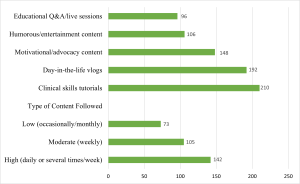
Figure 1: Exposure to Nursefluencer Content (N = 320)
Students who saw a lot of nursefluencer content had the most developed professional identity, with an average score of 4.18 (±0.43). Those who were moderately exposed to English scored an average of 3.72 (±0.39), which is moderate development. However, students with low levels of exposure scored an average of 3.31 (±0.45), which reflects a lower degree of professional identity. It appears that more exposure to nursefluencer content leads to stronger professional identity formation in first-year nursing students (Table 3).
| Exposure level | Mean PIF score (SD) | Interpretation |
| High | 4.18 (±0.43) | Strong identity development |
| Moderate | 3.72 (±0.39) | Moderate development |
| Low | 3.31 (±0.45) | Weak identity development |
Table 3: PIF scores by exposure level
The analysis found that there is a significant connection between how often nurses follow nursefluencers and how well they form a clear professional identity (r = 0.612, p < 0.001). A further positive relationship was seen (r = 0.398, p < 0.01) between daily social media time and the PIF score, meaning more time on social media also helps, though slightly less than the other factors. Both correlations show there is a strong relationship between digital engagement and students’ professional identity (Table 4).
| Variables | r-value | p-value | Interpretation |
| Nursefluencer exposure & PIF score | 0.612 | < 0.001 | Strong positive correlation |
| Daily social media use & PIF score | 0.398 | < 0.01 | Moderate positive correlation |
Table 4: Pearson correlation between nursefluencer exposure and professional identity formation
Discussion
Evidence from this study indicates that seeing nursefluencer posts is connected to how first-year nursing students form their professional identity in Swat, Pakistan. Those students who saw a lot of nursefluencer information developed a greater professional identity than those who saw less. It shows that social media has a big impact on students’ views, principles, and feelings of belonging to the nursing profession, mainly in the early years of learning. The findings support the increasing number of studies stressing the value of informal learning in workplace culture.
Following nurses on social media helped future nurses become more involved with important nursing principles like empathy, looking after patients, and evidence-supported practices.[18] Similarly, discovered in their qualitative research that sharing experiences digitally by more experienced nurses allowed new students to better understand day-to-day nursing work and close the gap between study and practical experience.[19] These investigations confirm the current research by proving that nursefluencers support professional attitudes by creating relatable and accessible materials.
Additionally, the current study contributes by measuring how much these factors influence each other using standard tools and a group of participants that’s big enough to draw strong conclusions from. Previously, research on nursefluencer content focused on opinions or small numbers of cases. However, the work done here uses correlation analysis to show that the effect on professional identity can be observed and not only sensed. It offers something unique and important to talk about digital environments in nursing education.
On the other hand, research warns people against using too much social media for their careers. For example, an alert that seeing content by nursefluencers who focus on fun or themselves may cause people to see nursing differently than its true nature.[20] Likewise, Study reported that sometimes social media pictures nursing situations in ways that might lower students’ ability to handle real nursing issues. A part of the study’s results suggests that low exposure to science led to lower professional identity among a few, probably because the inconsistent messages caused disengagement or confusion.[21]
Many students preferred to watch clinical skills videos and experience-based videos. These results are in line with a study that found that using storytelling and practicing certain skills improves a student’s confidence in their future career. It appears that having access to curated professional content helps students reach beyond entertainment by learning valuable insights into what nurses do, suggesting it’s worth adding more of this type of content to social media. The design also reflects a belief that students should interact both emotionally and mentally with nursing experiences outside of the classroom.[22]
More male students than expected were included in the sample, which is unusual since, internationally, women typically dominate nursing programs. Thanks to the way Swat residents attend nursing programs, how the universities advertise them, and the population’s age groups, local views towards nursefluencer content might differ. No analysis of gender preferences in content consumption was part of this study; this might be an important topic for future studies.[23]
Recommendations: Given these facts, it is suggested that nursing teachers and colleges take note of the impact social media has on students’ sense of professional identity. One way to develop critical media literacy is to talk about nursefluencers and digital professionalism in the classes. Content creators who set good examples and use ethical, proven, and real nursing practices should be the ones students follow.
Moreover, both nursing regulation groups and educators could join efforts with professional nursefluencers to make sure the information they share is suitable for educating nurses. It links what students are taught in school to the real world, encouraging more to choose the industry.
Further studies should investigate what nursefluencer content may do to clinical performance, moral judgments, and staying active in nursing over the long run. Also, qualitative methods can be used to learn about how students feel about their interactions with nursefluencers, what the students think, and what experiences they have.
In the end, procedures and ethical guidelines are needed to ensure that nurse-published material on the internet advances the profession and creates well-prepared, caring, and skilled future nursing staff.
Conclusion
The research found that social media nursefluencers contribute positively to how first-year nursing students form their professional identities. Students who participated more in this contest were more in line with the values, jobs, and self-view expected of future nurses. Many young nurses learned about nursing from TikTok, Instagram, and YouTube, discovering clinical tips and seeing what a nurse’s day looks like from others’ vlogs. According to the results, more students are finding digital media useful to support and enhance what happens at school.
Evidence indicated that students involved with posts with hands-on tips and for thoughtfully considered perspectives often had higher scores of professional identities. So, some educational materials are more important than others, and what you read or watch helps shape students’ minds. The fact that being exposed to nursefluencers affects professional identity formation means teachers should guide students to use the internet thoughtfully.
References
- Farsi D. Social media and health care, part I: literature review of social media use by health care providers. J Med Internet Res. 2021;23(4):e23205. doi:10.2196/23205 PubMed | Crossref | Google Scholar
- Pianese T, Belfiore P. Exploring the social networks’ use in the health-care industry: a multi-level analysis. Int J Environ Res Public Health. 2021;18(14):7295. doi:10.3390/ijerph18147295 PubMed | Crossref | Google Scholar
- Habow HD, Ibrahim RH. Investigating the dynamics of women’s health information on social media: nursing perspective. Malays J Nurs. 2024;16(2):191-200. doi:10.31674/mjn.2024.v16i02.019 Crossref | Google Scholar
- Chinn S, Hasell A, Hiaeshutter-Rice D. Mapping digital wellness content: implications for health, science, and political communication research. Journal of Quantitative Description: Digital Media. 2023;3:1-56. doi:10.51685/jqd.2023.009 Crossref | Google Scholar
- Chen J, Zhang X, Yang Y, Hu R. The transformation of ambivalent professional identity of nursing students following clinical placement in China: A qualitative study from the perspectives of the “post-00s” generation. Nurse Educ Pract. 2025. doi:10.1016/j.nepr.2025.104387 PubMed | Crossref | Google Scholar
- Eckert M, Kennedy K, Neylon K, et al. A scoping review of nurse-led randomised controlled trials. J Clin Nurs. 2023;32(17-18):5550-5561. doi:10.1111/jocn.16632 PubMed | Crossref | Google Scholar
- Lancaster R, Sanchez M, Maxwell K, et al. Original research: TikTok’s “dancing nurses” during the COVID-19 pandemic: A content analysis. Am J Nurs. 2022;122(12):24-31. doi:10.1097/01.NAJ.0000901844.48930.c8 PubMed | Crossref | Google Scholar
- Oliver TL, Shenkman R, Diewald LK, et al. Nursing students’ perspectives on observed weight bias in healthcare settings: A qualitative study. Nurs Forum. 2021;56(1):58-65. doi:10.1111/nuf.12522 PubMed | Crossref | Google Scholar
- González H, Errasti-Ibarrondo B, Iraizoz-Iraizoz A, et al. The image of nursing in the media: A scoping review. Int Nurs Rev. 2023;70(3):425-443. doi:10.1111/inr.12833 PubMed | Crossref | Google Scholar
- Tomlinson M, Jackson D. Professional identity formation in contemporary higher education students. Stud High Educ. 2019;46(4):885-900. doi:10.1080/03075079.2019.1659763 Crossref | Google Scholar
- Tull A, Hirt JB, Saunders S, editors. Becoming Socialized in Student Affairs Administration: A Guide for New Professionals and Their Supervisors. eBook. Taylor & Francis; 2023. Becoming Socialized in Student Affairs Administration: A Guide for New Professionals and Their Supervisors
- Sarginson D, Wendler MC. Social media in nursing education: A systematic review. J Nurs Educ. 2024;63(1):6-9. doi:10.3928/01484834-20231112-01 PubMed | Crossref | Google Scholar
- Saleem A, Kausar H, Deeba F. Social constructivism: A new paradigm in teaching and learning environment. Perennial J Hist. 2021;2(2):403-421. doi:10.52700/pjh.v2i2.86 Crossref | Google Scholar
- Yong SM, Thi LS. Online learning motivation during COVID-19 pandemic: The role of learning environment, student self-efficacy and learner-instructor interaction. Malays J Learn Instr. 2022;19(2):213-249. doi:10.32890/mjli2022.19.2.8 Crossref | Google Scholar
- Deveaux E. Uncovering the Hidden Curriculum of Canadian Digital Literacy Programs. Doctoral dissertation. Concordia University; 2023. Uncovering the Hidden Curriculum of Canadian Digital Literacy Programs
- Doungthai T. A comparative study of teaching methods to enhance fake news literacy skills. Dissertation. National Institute of Development Administration; 2023. A comparative study of teaching methods to enhance fake news literacy skills.
- Li X, Guo A, Zou H. Impact of the nurse-related information through social media use on undergraduate nursing students’ professional identity in nursing: A mixed-methods study. Nurse Educ Pract. 2022;65:103477. doi:10.1016/j.nepr.2022.103477 PubMed | Crossref | Google Scholar
- Levinson LM. Nurses’ work environment, attitudes, empathy, empowerment, and caring behaviors toward pregnant women using opioids. Dissertation. The Catholic University of America; 2023. Nurses’ Work Environment, Attitudes, Empathy, Empowerment, and Caring Behaviors Toward Pregnant Women Using Opioids
- Kleib M, Arnaert A, Nagle LM, et al. Newly qualified Canadian nurses’ experiences with digital health in the workplace: Comparative qualitative analysis. JMIR Med Educ. 2024;10:e53258. doi:10.2196/53258 PubMed | Crossref | Google Scholar
- González H, Errasti-Ibarrondo B, Iraizoz-Iraizoz A, et al. The image of nursing in the media: A scoping review. Int Nurs Rev. 2023;70(3):425-443. doi:10.1111/inr.12833 PubMed | Crossref | Google Scholar
- Giroux CM, Moreau KA. Nursing students’ use of social media in their learning: A case study of a Canadian school of nursing. BMC Nurs. 2022;21(1):195. doi:10.1186/s12912-022-00977-0 PubMed | Crossref | Google Scholar
- McDougal ER, Syrdal HA, Gravois R, Kemp AF. THE POWER OF STORY: USING STORYTELLING TO INCREASE STUDENTS’CONFIDENCE AND COMPETENCE IN APPLYING MARKETING CONCEPTS. Marketing Education Review. 2021;31(2):119-24. doi:10.1080/10528008.2020.1853573 Crossref | Google Scholar
- Kelly M, Le Rossignol K. Professional transitions: The eportfolio as a curated digital narrative. Industry and Higher Education. 2022;36(6):784-94. doi:10.1177/09504222221127565 Crossref | Google Scholar
Acknowledgments
The authors would like to express their sincere gratitude to Dr. Shah Hussain, Principal/Assistant Professor, Zalan College of Nursing, Swat, for his invaluable supervision, guidance, and support throughout the course of this study.
Funding
This research did not receive any specific grant from funding agencies in the public, commercial, or not-for-profit sectors.
Author Information
Corresponding Author:
Najam Ul Sabha
Department of Nursing
Dr. Faisal Masood Teaching Hospital, Sargodha, Pakistan
Email: najamulsabah@gmail.com
Co-Authors:
Firdos Kausar
Principal, Department of Nursing
Sharif College of Nursing, Lahore, Pakistan
Nageena Bibi
Department of Nursing
Midwest Institute of Sciences, Islamabad, Pakistan
Shah Hussain
Department of Nursing
Zalan College of Nursing, Swat, Pakistan
Authors Contributions
Najam Ul Sabha and Nageena Bibi contributed to data collection and analysis. Firdos Kausar was involved in data collection, organization, and interpretation. Shah Hussain contributed to data analysis and interpretation.
Ethical Approval
Ethical approval was obtained from the institutional review board of Zalan College of Nursing, Swat (Ref. No. ZCN/IRB/2025/05E).
Conflict of Interest Statement
The authors declare no conflict of interest.
Guarantor
Najam ul Sabha is the guarantor of this study and takes full responsibility for the integrity and accuracy of data analysis.
DOI
Cite this Article
Sabha NU, Kausar F, Bibi N, Hussain S. The Influence of ‘Nursefluencer’ Content on Professional Identity Formation Among First-Year Nursing Students. medtigo J Med. 2025;3(2):e30623227. doi:10.63096/medtigo30623227 Crossref