







 Author Affiliations
Abstract
Background: There is a paucity of research into whether social media use is inherently beneficial or harmful to adolescents’ mental health. Meanwhile, the United States (U.S.) is facing a mental health crisis among youth. The U.S. Surgeon General has called for more research on the potential harms of social media use to youth to inform policy.
Aim: This is a narrative review of the literature into the impact of social media use on adolescent mental health, and a theoretical model is proposed.
Methodology: Relevant clinical trials, survey data, and expert opinion were identified and reviewed. The review was narrowed to the focus of this paper. The data were evaluated and collated to provide a narrative summary.
Results: The data suggest social media may be beneficial as well as harmful for adolescent mental health. Social media use is a complex behavior whose effects appear to depend on personal and environmental factors and characteristics of the social media platform. Available research suggests associations but does not show causation. Research on interventions to prevent or treat harm associated with social media use remains embryonic.
Conclusion: There are gaps in our knowledge of the relationship between social media use and adolescent mental health. Social media appears to pose risks of harm to adolescents but may also offer benefits. However, the data are heterogeneous and inconsistent and insufficient to drive public health policy and treatment approaches. The “Augmented Vulnerability” model is proposed to explain the interactions between social media use and adolescent mental health.
Keywords
Adolescents, Mental health, Social media, Smartphone, Social media addiction, Fear of missing out, Screentime.
Introduction
Adolescence (defined as the life phase spanning the ages of 10 to 19) is a vulnerable time for young people. It represents a period of rapid and irregular development across multiple domains.[1] The brain is plastic and maturing, particularly the prefrontal cortex, which is central to impulse control, decision-making, and emotional regulation.[2] At the same time, brain regions involved in reward and emotion are highly active, making adolescents more susceptible to stress, peer pressure, maladaptive coping behaviors, risk-taking, and intense emotional responses.[2,3] The confluence of such volatile physical and psychological vulnerabilities with the pressures and potential harms associated with social media exposure may create conditions for mental health struggles.
The mental health (defined as the state of psychological and emotional well-being) of adolescents is in crisis and worsening.[4] Data from the 2023 U.S. National Survey of Children’s Health (NSCH) show that 20.3% of adolescents in the U.S. had a diagnosed mental health or behavioral disorder.[4] This represents an increase of 35% from 2016 (from 15.0% to 20.3%). During the same period, diagnosed adolescent anxiety disorders increased 61% (from 10.0% to 16.1%), and depression climbed 45% (from 5.8% to 8.4%).[4]
Data from the Centers for Disease Control and Prevention (CDC)’s youth risk behavior survey data summary & trends report: 2013-2023 show that in 2023, 20% of high school-age adolescents reported seriously considering attempting suicide in the past year, 16% made a suicide plan, and 9% attempted suicide at least once.[5] The suicidality rate for adolescents surged by 85.3% between 2007 and 2017.[6]
Social media has been defined as “a collection of Web 2.0 applications involving user-generated content, user profiles, and the connection of profiles into an online social network”[7] Social media profiles are connected to social networks that create “communication platforms that involve user-generated profiles, public connections to other users, and interactive content created by users”[7] There are well over 100 worldwide social media applications (“apps”), and many more regional or local social apps. Table 1 lists examples of the most popular social media apps that are available online.
| Type of app
|
Examples |
|
Social networking
|
Facebook/Messenger, Instagram, X (Twitter), Snapchat
|
|
Photo and video sharing
|
Instagram, TikTok, Snapchat, YouTube, Pinterest
|
|
Blogging and microblogging
|
X (Twitter), Threads, Bluesky, Mastodon |
|
Messaging
|
WhatsApp, Facebook |
|
Community forums and discussion
|
Reddit, Discord, Quora, Tumblr, X (Twitter) |
Table 1: Types of social media apps commonly used by adolescents with examples
Social media use is prevalent among adolescents; Pew research data from 2022 and 2024 show that 90-95% of teens use online social media, and 46% say they are online nearly constantly.[8] Figure 1 shows the prevalence of the use of the most popular apps among teens. A study by Taddi and colleagues found that, when asked whether they have difficulties balancing online and offline life, 21.6% of adolescents strongly agreed and 38.2% moderately agreed.[9]
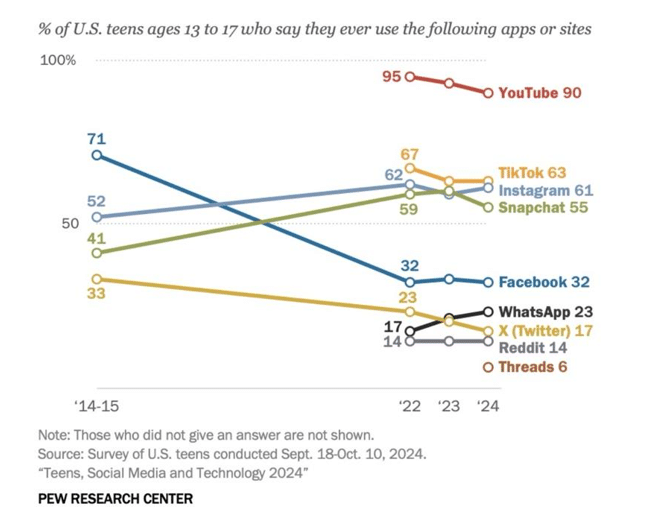
Figure 1: Teens’ use of the most popular social media apps in their demographic
Source: Faverio & Sidoti, 2024
Given the degree of integration of social media into adolescent life, it is reasonable to ask how social media influences how young people communicate, form identities, and perceive themselves, and how these processes collectively affect their mental health. This is an underexplored question, prompting policymakers and other stakeholders to seek research evidence to inform policy on regulating social media platforms and their use.[10,11] This urgent need resulted in the U.S. Surgeon General issuing a health advisory in 2023, calling for more research on the potential harms of social media use to youth: “At this time, we do not yet have enough evidence to determine if social media is sufficiently safe for children and adolescents”[12]
The relationship between social media use and adolescent mental health appears to be complex. While there are potential harms of concern to the use of mental health, there may also be factors that are protective for mental health.[9,11-15]
Methodology
Design: This article employed a narrative review methodology to synthesize and critically interpret the literature on the impact of social media use on adolescent mental health. A narrative review was chosen to enable a theme- and concept-based synthesis of a heterogeneous and conceptually fragmented research base, with the aim of identifying conceptual gaps, methodological limitations, and priorities for future research, rather than producing an exhaustive or quantitative aggregation of findings.
Literature search strategy: MEDLINE, PubMed, PsycINFO, and Google Scholar were searched using the keywords and Boolean operators “social media” OR “social networking site” AND “mental health” OR “depression” OR “well-being” OR “anxiety” OR “suicidality” AND “adolescents” OR “teen” OR “youth.” Additional articles were identified from the reference lists of the retrieved articles.
Study selection and data extraction: The full texts of articles were reviewed for relevance for inclusion in this review. Only English language publications were considered, and primary studies, reviews, consensus opinions, and surveys were included. Case reports or papers that did not report on the research focus were excluded unless otherwise noted. Sources were selected purposively to prefer higher-powered studies and longitudinal or experimental studies over cross-sectional designs. Where possible, studies from the past 6 years were selected due to rapid changes in social media use platforms and dynamics.
Included articles were reviewed using a standard approach according to the PRISMA guidelines. Papers were assessed according to risk of bias, quality of the study, relevance of the findings and outcomes, and effect. Key information was extracted from each included study, including study design, sample characteristics, measures of social media use, mental health outcomes assessed, principal findings, and noted limitations. The collective results were then included in a narrative synthesis and summarized to draw conclusions relevant to this review’s focus.
Synthesis and analytical approach: Findings were synthesized thematically to highlight dominant narratives, points of convergence and divergence, and emerging areas of concern, with attention to methodological limitations and gaps in the existing evidence base. Contradictory findings and methodological limitations were examined to avoid overgeneralization and to highlight areas of ongoing debate.
Results
Social media and mental health: Social media use has been associated with a range of adverse mental health outcomes in adolescents, including higher self-reported anxiety, depressive symptoms, stress, and compulsive online behaviors.[9,16-20] However, the magnitude and consistency of these associations vary across studies and populations. For example, in a 2024 cross-sectional survey, 18.6% of adolescents strongly agreed and 36.3% moderately agreed that they experienced stress or anxiety during social media use.[9] At the same time, some studies have reported neutral or even positive associations, particularly in smaller or methodologically limited samples.[17] For example, Minich and Morena conducted a small cross-sectional self-report study (n=253 adolescents) and found that adolescent smartphone use was positively associated with mood.[17] Larger and more rigorous studies have produced mixed findings, underscoring the heterogeneity of effects and the limits of generalization.[21,22]
Even in the absence of a defined mental health disorder, social media use may adversely impact adolescents’ mental well-being. These platforms and their dynamics among youth may intensify emotional struggles during adolescence, a developmental period characterized by psychological vulnerability, immaturity, and heightened emotional sensitivity.[3,13] Unkind social feedback (enhanced by the online disinhibition effect), curated images, idealized lifestyles, and misinformation may foster a distorted body image, toxic self-criticism, feelings of inadequacy, low self-esteem, and dissatisfaction with one’s life or achievements.[7,10,13,23]
The current body of evidence is not consensual on whether social media is harmful or supportive of mental health among adolescents. The dichotomy is highlighted by a large cross-sectional study that sampled adolescents’ experiences 6 times a day for 1 week and found that social media use was associated with not feeling better or worse in 44% of the adolescents, feeling better in 46%, and feeling worse in 10%.[14] Although cross-sectional and longitudinal studies have suggested associations between mental health and adolescent social media use, the body of research lacks evidence to establish directionality or causation.[16,17] Social media use may be a risk factor for mental health struggles, but it is not known if adolescents use social media as a coping mechanism when experiencing negative emotions or mood.[17]
Reframing social media as a heterogeneous construct: The impact of social media use on psychopathology appears to be complex, as it is not a homogeneous experience; specific patterns and experiences appear to matter. For example, fear of missing out (FOMO) appears to be an independent risk factor for poor mental health outcomes associated with social media use.[24] FOMO refers to anxiety, interrupted sleep, poor concentration on offline activities, and excessive screentime due to the apprehension that the individual may be missing out on social media content and interactions if they’re not online.
Similarly, cyberbullying appears to be a prevalent hardship of social media use.[25] Taddi and colleagues found that 37.3% of adolescents surveyed reported seeing someone bullied online.[9] Social media has extended the reach of bullying beyond the schoolyard and into the home, and at all hours.[25] Adolescents also report pressures related to online self-presentation, social validation, and balancing online and offline life, all of which may contribute to distress for some users.[9] Adolescents widely report feeling pressure to conform to online opinions and norms, refraining from self-expression due to fear of backlash and criticism, pressure to have an acceptable number of followers and “likes,” sleep disturbances due to late-night social media use and FOMO, and difficulties in disengaging from social media use.[9]
Personal characteristics: Personal characteristics also appear to moderate the association between social media use and mental health among adolescents, likely contributing to the heterogeneity observed across studies. Age, gender, temperament, and baseline psychological vulnerability shape how adolescents experience and interpret online interactions.[7,9,13,14] For example, Mougharbel and colleagues harvested data from the 2019 Ontario Student Drug Use and Health Survey. They found that user age, gender, and parental support moderated the association between social media use and psychological distress.[26]
Pre-existing mental health symptoms and conditions also appear to be moderators of social media-related outcomes.[16] Adolescents with higher baseline levels of depressive symptoms, anxiety, low self-esteem, or social anxiety appear more likely to engage in passive consumption and social comparison, which have been associated with negative affect and reduced well-being.[16,27,28] A large cross-sectional study (n=3,340 adolescents) further suggested that adolescents with underlying mental health struggles may be more susceptible to experiencing distress in response to negative online feedback, cyberbullying, or FOMO, raising the question of the dynamics and directionality between mental illness and maladaptive patterns of use.[29]
Environmental factors: Environmental factors also appear to shape adolescents’ susceptibility to harm or benefit, particularly their sociodemographic context. Family dynamics and factors, including parental support and monitoring, as well as peer environment, further influence adolescents’ online patterns of use and experiences, potentially buffering or aggravating potential harm.[26]
Patterns of social media use: The interaction between adolescent mental health and social media use appears to depend on patterns of social media use rather than overall exposure alone. For example, passive use (such as scrolling, viewing others’ content) has been related to lower well-being and increased depressive symptoms, whereas interactive, reciprocal engagement (such as messaging, commenting, and creating content) may promote social connectedness for some adolescents.[30,31] The social and temporal contexts of use further moderate mental health associations. Exposure to negative social interactions (such as cyberbullying and hostile feedback) is associated with internalizing symptoms, suicidal ideation, and emotional distress among adolescents.[32,33] Additionally, late-night and sleep-disruptive use has been linked to poor sleep duration and quality, depressed mood, and poor emotional regulation.[34,35]
Collectively, these findings support a person-centered framework in which the mental health impact of social media use reflects the interaction of individual vulnerabilities, developmental stage, and social context rather than exposure alone. This suggests that “social media use” should not be studied as a monolithic entity when examining its possible relationships to mental health; personal, environmental, and pattern-of-use factors relevant to social media use instead should be examined as individual risk factors that may affect mental well-being.
Social media use as an addiction: A particularly pernicious potential harm of social media use is its potential for causing obsessive use that may constitute an addiction, a subject that has been explored in the research literature.[36] Process (or behavioral) addictions such as “Internet Gaming Disorder” (IGD), which is included in the “for future consideration” section of Diagnostic and Statistical Manual of Mental Disorders, Fifth Edition, Text Revision (DSM-5TR), are concerning because of their pervasive disruption of individuals’ social, financial, and educational lives and day-to-day function.[37] Additionally, the high association of process addictions with myriad other psychopathologies makes the possibility of social media as an addiction especially relevant to adolescent mental health.[37]
Social media use as a disorder or addiction is not recognized as a distinct diagnosis or condition for future consideration in DSM-5TR. Still, in the research literature, the criteria for IGD are often used as guidelines for defining the entity for methodological purposes.[38,39] However, the lack of internationally agreed-upon terminology or identification criteria has led to considerable heterogeneity in research and difficulty in comparing and meta-analyzing findings.[38,39]
Social media disorder (SMD), problematic social media use (PSMU), social media addiction, problematic smartphone use (PSU), problematic smartphone use disorder (PSUD), and smartphone addiction are terms commonly used in the research literature.[13,40-42] They collectively, in general, describe relying on social media or a smartphone in general to regulate one’s mood, use that interferes with one’s ability to function properly, withdrawal symptoms (agitation, restlessness, anxiety, and cravings) in its absence, and an inability to control or reduce usage.[13,40-42]
Excessive social media use, especially to the point where it may meet the criteria of an addiction, has become a public health issue among adolescents because strong associations have been made between PSU and several adverse mental health outcomes, such as depression and anxiety, poor academic performance, substance use disorders, disordered sleep, eating disorders, FOMO, impulsivity, and neuroticism.[13,42]
These loosely defined disorders have all been identified in adolescents, although much remains to be known about their epidemiology, risk factors, causes, potential interventions, and the nature of their associations with other mental health disorders.[36,43] However, the lack of consensus nosology, definitions, and characterizations of such disorders prevents cohesive investigation.
Interventions: Given our current lack of understanding of the nature of the potential social media/adolescent mental health association, it is hardly surprising that the literature concerning possible interventions for prevention or treatment is nascent.[10]
Social media bans: Some countries and states have implemented bans and restrictions despite limited supporting evidence, and the literature has challenged the efficacy of such measures.[44] Australia has imposed a complete ban on social media use by children under 16, with fines of 50 million Australian dollars (AUD) for noncompliance by social media companies.[45] Our fragmentary understanding of the benefits and harm of social media use and the lack of study of the outcomes of bans make the wisdom of such draconian interventions questionable.[44] After all, several benefits, including for mental health and support, have been identified within the domain of social media use, especially for isolated or marginalized teens.
A small, randomized trial found that a 14-day abstinence from social media use was not associated with reduced depression, anxiety, FOMO, or loneliness among teens. However, body image dissatisfaction was significantly reduced in the abstinence group.[41] Such observations have led to suggestions to recognize the benefits of social media use, discontinue bans, and instead focus on fostering parental involvement, working on adolescents’ skills for emotional regulation, promoting social media awareness and self-regulation among youth, and holding social media companies responsible for content.[44,46] There are calls for social media bans in the literature, but these are based on opinion rather than empirical evidence.[47]
In its 2023 expert consensus opinion document Health Advisory on social media use in adolescence, the American Psychological Association (APA) recognized that our present knowledge base suggests that social media use’s impact on adolescents’ mental well-being is person- and situation-specific and made recommendations centered around “social media literacy” education for youth and monitoring for signs of “problematic social media use.”[48] The APA does not include a ban in its recommendations.
Screentime limitations: It makes intuitive sense that screentime may be a leading risk factor for deterioration in mental health and that limiting screentime is an appropriate preventive or treatment measure. However, this has not been borne out by the research data. For example, Yu and colleagues conducted a large longitudinal study (n=15,836) and found no association between social media screentime and mental health problems in the following year.[15] Further studies have supported this finding, with some finding that the biggest contributor to poor mental health is likes, comments, and followers.[9,15,16,20] Some conflicting data suggest screentime as a significant risk factor for depressive symptoms, but on balance, limiting screentime does not appear to be a worthwhile approach to supporting mental health.[49] The APA suggests, by consensus opinion, that social media use should be limited so as not to interfere with adolescents’ sleep and physical activity, but does not suggest by whom.[48]
Clinical interventions: Research is needed to identify which aspects of social media use should be targeted in preventive and therapeutic interventions. The available research has thus far suggested that limiting screentime may not be an effective strategy, whereas targeting FOMO may be more effective for mental health-related policy and interventions.[24,50,51] To this end, the FoMO Reduction (FoMO-R) intervention has been proposed and observed in practice.[24]
Preliminary research has shown positive effects of a metacognition and conceptual change model, commonly used in cognitive behavioral therapy (CBT) approaches, designed to improve the emotional and social self-regulation of smartphone use as a preventive measure.[43] Social media itself has been proposed as part of the solution to the social media/mental health link. For example, a focus group study by O’Reilly and colleagues found that social media may be an effective modality for promoting mental wellness among adolescents.[49] Others have suggested social media as a tool for recruiting participants for future clinical studies.[52,53] However, there is little federal guidance on the ethical issues involved in the use of social media for research, suggesting a need for ethical research, debate, and policy.[53]
Peer-to-peer support via social media has been investigated as a modality for addressing mental health struggles among teens.[54,55] However, research to date has identified unforeseen drawbacks to this approach, and the suggested interventions have been subjected to limited validation scrutiny.[54-58] Overall, there is insufficient evidence at this time to drive policy or interventions to mitigate whatever harms that social media use may bring to adolescents. However, parental involvement and youth education are recurrent themes in suggestions made in literature.
Research gaps and future directions: There is broad agreement in the research literature and consensus opinion that further research is urgently needed to understand the complex associations between social media use and mental health among adolescents and to identify effective strategies to prevent or treat social media-related psychopathology.[9,10]
The literature has highlighted barriers and shortcomings to the called-for research. There is currently significant heterogeneity in definitions of terms, study designs, target populations, and methodological approaches, which complicates comparisons, meta-analyses, and the synthesis of findings.[42,59] Standardized definitions, research design to establish causation, longitudinal studies, and cross-cultural validation are all lacking.[42] For example, a standardized definition and characterization of “social media disorder” or a similar entity in the next DSM and ICD iterations may lay the foundation for a narrower focus and commonality in terms and definitions among researchers.[59]
There have been efforts in standardizing definitions and diagnostic criteria. For example, the social media disorder scale (SMDS) is an internationally validated 9-item psychometric diagnostic instrument.[60] Separately, clinical classification and diagnostic criteria for social media disorder have been proposed.[59] The existing data suggest that personal dispositional, situational, use, and social factors determine the effects of social media use on the mental well-being of adolescents, rather than social media use as a whole.[14,42,61] Elucidating these factors may be necessary for understanding and appropriately addressing the social media-poor mental health link and may explain the heterogeneity of findings in the present research body.[13,22,36,62]
Of particular concern are the effects of social media use on adolescents with existing clinically diagnosed mental health disorders, yet few studies have investigated this dimension.[29] As well, the directionality and causation of social media and mental health remain unknown. Boer and colleagues found that SMU predicted mental health problems but not the reverse, but further research is required to validate these findings.[16]
A proposed model of social media’s effects on adolescent mental health: Based on this narrative review, we would like to propose a theoretical framework for further investigation into social media’s effects on adolescent mental health. We refer to this as the “Augmented Vulnerability” model. In this model, we propose that social media use is not inherently damaging or beneficial to adolescent mental health but that it augments adolescents’ vulnerabilities during a period of intense neurobiological, social, emotional, and psychological development and sensitivity. Social media platforms may augment psychological and emotional vulnerabilities (through features such as hyper-exposure to social evaluation, FOMO, disinformation, or obsessive use), or they may attenuate them (through other features such as supportive communication, valid mental health information, and self-expression) and result in altered mental health outcomes, positive or negative.
Our model proposes that social media use may result in secondary manifestations that may augment stress and vulnerability. For example, sleep deprivation, attentional diversion and disconnection from offline life, and distorted perceptions of the self and the social world may elevate innate psychological and emotional risk. Our model also proposes that the social media/mental health connection is bidirectional, where detrimental aspects of social media use may amplify or seed psychological constructs (such as low self-esteem, distorted body image, or low self-efficacy) that may lead to mental health disorders, reduce quality of life, and underpin stress. Conversely, adolescents who experience mental health symptoms may seek refuge in social media as a dysfunctional escape/avoidance coping strategy, worsening their mental well-being.
Limitations and strengths: This narrative review has limitations that should be considered when interpreting its findings and conclusions. First, the literature search was not conducted using a systematic or comprehensive methodology. As with all narrative reviews, this paper’s selection of sources and findings may be subject to publication, selection, and confirmation biases. As well, it is possible that relevant studies were missed or omitted. Consequently, the findings and conclusions should be viewed as a description of trends in the literature rather than as an exhaustive synthesis of all available evidence. Second, the limitations of the existing evidentiary base have already been discussed.
Discussion
This review provides some unique perspectives and outcomes compared to other recent reviews. Across recent syntheses (in the past 5 years), the relationship between adolescent social media use and mental health appears small or modest, heterogeneous, and strongly shaped by context and moderating factors. For example, a 2023 systematic review found that social media use relates to adverse effects on adolescent and youth mental health but that “ethical” use appears to have benefits.[63] A 2025 scoping review of reviews found that “problematic” use and passive consumption were most highly associated with adverse outcomes.[64] A 2024 systematic review and meta-analysis found a small but significant association between increased social media use and increased depressive symptoms, anxiety, loneliness, and low self-esteem.[65] The authors identified “several” moderating factors, which included age, gender, and type of social media platform.
These other recent reviews agree with this article in the potential association between social media use and adolescent mental health but differ in some respects. The present article has a greater emphasis on evidence gaps and policy relevance, a broader conceptual scope than other recent reviews (such as with social media use as an “addiction”), more attention to heterogeneity of use and person-specific factors, a more developed discussion of “social media addiction” and nosology, and a greater focus on interventions.
This narrative review is unique in that it proposes a theoretical model to explain the adolescent social media/mental health connection.
Conclusion
From the available evidence, it is evident that social media has potential associations with adverse mental health in youth but also has positive effects, particularly among some sub-populations and with some patterns of use. The current body of evidence is insufficient to inform clinical guidelines or public policy or to support the increasingly popular bans and restrictions on social media. Evidence is increasingly revealing that the link between social media use and mental health among adolescents is multifactorial, encompassing personal, environmental, and pattern-of-use dimensions. Identifying and characterizing the relative weight of these factors will likely provide therapeutic and preventive targets and a focus for public policy.
Social media addiction (or a similar entity) has been explored in research. It appears to be a valid mental health concern and risk factor for other psychopathologies, but the lack of agreed-upon terminology, definitions, and characterizations limits the research. A proposed typology and characterization of social media addiction in the next iteration of the DSM would be a helpful springboard for further inquiry into this possible diagnosis. The research community has been given its call to arms by no less than the U.S. Surgeon General to do its part to address an urgent clinical and public health need. As discussed in this review, there are myriad research gaps to be filled, and there is an appetite for this kind of research in scholarly journals. We propose the “Augmented Vulnerability” model for the social media/mental health connection, which may be suitable for experimental testing and may form a basis for further inquiry.
References
- Jaworska N, MacQueen G. Adolescence as a unique developmental period. J Psychiatry Neurosci. 2015;40(5):291-293. doi:10.1503/jpn.150268
PubMed | Crossref | Google Scholar - Liuzzi L, Pine DS, Fox NA, Averbeck BB. Changes in Behavior and Neural Dynamics across Adolescent Development. J Neurosci. 2023;43(50):8723-8732. doi:10.1523/JNEUROSCI.0462-23.2023
PubMed | Crossref | Google Scholar - Marciano L, Camerini AL, Morese R. The Developing Brain in the Digital Era: A Scoping Review of Structural and Functional Correlates of Screen Time in Adolescence. Front Psychol. 2021;12:671817. doi:10.3389/fpsyg.2021.671817
PubMed | Crossref | Google Scholar - Sappenfield O, Alberto C, Minnaert J, et al. National Survey of Children’s Health Adolescent Mental and Behavioral Health, 2023. Health Resources and Services Administration, Maternal and Child Health Bureau. 2024.
National Survey of Children’s Health Adolescent Mental and Behavioral Health, 2023 - Centers for Disease Control and Prevention. Youth Risk Behavior Survey Data Summary & Trends Report: 2013–2023. 2024.
Youth Risk Behavior Survey Data Summary & Trends Report: 2013–2023 - Woolf SH. The Youth Mental Health Crisis in the United States: Epidemiology, Contributors, and Potential Solutions. Pediatrics. 2025;156(5):e2025070849. doi:10.1542/peds.2025-070849
PubMed | Crossref | Google Scholar - Nesi J, Choukas-Bradley S, Prinstein MJ. Transformation of Adolescent Peer Relations in the Social Media Context: Part 1-A Theoretical Framework and Application to Dyadic Peer Relationships. Clin Child Fam Psychol Rev. 2018;21(3):267-294. doi:10.1007/s10567-018-0261-x
PubMed | Crossref | Google Scholar - Pew Research Center. Teens, Social Media and Technology. 2024.
Teens, Social Media and Technology 2024 - Taddi VV, Kohli RK, Puri P. Perception, use of social media, and its impact on the mental health of Indian adolescents: A qualitative study. World J Clin Pediatr. 2024;13(3):97501. doi:10.5409/wjcp.v13.i3.97501
PubMed | Crossref | Google Scholar - U.S. Department of Health and Human Services. Social Media and Youth Mental Health: The U.S. Surgeon General’s Advisory. 2023.
Social Media and Youth Mental Health: The U.S. Surgeon General’s Advisory - Cosma A, Black M, Vuckovic S, Pavic I, Fonseca H, Lazzerini M. The changing epidemiology of child and adolescent mental health requires an immediate policy response. Public Health Pract (Oxf). 2025;10:100655. doi:10.1016/j.puhip.2025.100655
PubMed | Crossref | Google Scholar - Nagata JM, Huang O, Hur JO, et al. Health benefits of social media use in adolescents and young adults. Curr Pediatr Rep. 2024;13(1):22. doi:10.1007/s40124-025-00357-7
PubMed | Crossref | Google Scholar - Ndayambaje E, Okereke PU. The psychopathology of problematic smartphone use (PSU): A narrative review of burden, mediating factors, and prevention. Health Sci Rep. 2025;8(5):e70843. doi:10.1002/hsr2.70843
PubMed | Crossref | Google Scholar - Beyens I, Pouwels JL, van Driel II, Keijsers L, Valkenburg PM. The effect of social media on well-being differs from adolescent to adolescent. Sci Rep. 2020;10(1):10763. doi:10.1038/s41598-020-67727-7
PubMed | Crossref | Google Scholar - Yu Y, Dykxhoorn J, Plackett R. The impact of different types of social media use on the mental health of UK Adults: Longitudinal observational study. J Med Internet Res. 2024;26:e56950. doi:10.2196/56950
PubMed | Crossref | Google Scholar - Boer M, Stevens GWJM, Finkenauer C, de Looze ME, van den Eijnden RJJM. Social media use intensity, social media use problems, and mental health among adolescents: Investigating directionality and mediating processes. Computers in Human Behavior. 2021;116:106645. doi:10.1016/j.chb.2020.106645
Crossref | Google Scholar - Minich M, Moreno M. Real-world adolescent smartphone use is associated with improvements in mood: An ecological momentary assessment study. PLoS One. 2024;19(5):e0298422. doi:10.1371/journal.pone.0298422
PubMed | Crossref | Google Scholar - Gao J, Zheng P, Jia Y, et al. Mental health problems and social media exposure during COVID-19 outbreak. PLoS One. 2020;15(4):e0231924. doi:10.1371/journal.pone.0231924
PubMed | Crossref | Google Scholar - Khalaf AM, Alubied AA, Khalaf AM, Rifaey AA. The impact of social media on the mental health of adolescents and young adults: A systematic review. Cureus. 2023;15(8):e42990. doi:10.7759/cureus.42990
PubMed | Crossref | Google Scholar - Beyari H. The relationship between social media and the increase in mental health problems. Int J Environ Res Public Health. 2023;20(3):2383. doi:10.3390/ijerph20032383
PubMed | Crossref | Google Scholar - Clayborne ZM, Wong SL, Roberts KC, et al. Associations between social media use and positive mental health among adolescents: Findings from the Canadian Health Behaviour in School-aged Children Study. J Psychiatr Res. 2025;181:333-339. doi:10.1016/j.jpsychires.2024.11.071
PubMed | Crossref | Google Scholar - Blackwell CK, Mansolf M, Rose T, et al. Adolescent social media use and mental health in the environmental influences on child health outcomes study. J Adolesc Health. 2025;76(4):647-656. doi:10.1016/j.jadohealth.2024.12.003
PubMed | Crossref | Google Scholar - van den Eijnden R, Koning I, Doornwaard S, van Gurp F, Ter Bogt T. The impact of heavy and disordered use of games and social media on adolescents’ psychological, social, and school functioning. J Behav Addict. 2018;7(3):697-706. doi:10.1556/2006.7.2018.65
PubMed | Crossref | Google Scholar - Alutaybi A, Al-Thani D, McAlaney J, Ali R. Combating fear of missing out (FoMO) on social media: The FoMO-R method. Int J Environ Res Public Health. 2020;17(17):6128. doi:10.3390/ijerph17176128
PubMed | Crossref | Google Scholar - Ray G, McDermott CD, Nicho M. Cyberbullying on social media: Definitions, prevalence, and impact challenges. J Cybersecurity. 2024;10(1):tyae026. doi:10.1093/cybsec/tyae026
Crossref | Google Scholar - Mougharbel F, Chaput JP, Sampasa-Kanyinga H, et al. Heavy social media use and psychological distress among adolescents: the moderating role of sex, age, and parental support. Front Public Health. 2023;11:1190390. doi:10.3389/fpubh.2023.1190390
PubMed | Crossref | Google Scholar - Cheng W, Nguyen DN, Nguyen PNT. The association between passive social network usage and depression/negative emotions with envy as a mediator. Sci Rep. 2023;13(1):10097. doi:10.1038/s41598-023-37185-y
PubMed | Crossref | Google Scholar - Le Blanc-Brillon J, Fortin J-S, Lafrance L, et al. The associations between social comparison on social media and young adults’ mental health. Front. Psychol. 2025;16. doi:10.3389/fpsyg.2025.1597241
PubMed | Crossref | Google Scholar - Moretta T, Wegmann E. Toward the classification of social media use disorder: Clinical characterization and proposed diagnostic criteria. Addict Behav Rep. 2025;21:100603. doi:10.1016/j.abrep.2025.100603
PubMed | Crossref | Google Scholar - Verduyn P, Ybarra O, Résiboi M, et al. Do social network sites enhance or undermine well-being? A critical review. Soc Issues Policy Rev. 2017;11(1):274-302. doi:10.1111/sipr.12033
Crossref | Google Scholar - Appel H, Gerlach AL, Crusius J. The interplay between Facebook use, social comparison, envy, and depression. Current Opinion in Psychology. 2016; 9;44-49. doi:10.1016/j.copsyc.2015.10.006
PubMed | Crossref | Google Scholar - Kowalski RM, Giumetti GW, Schroeder AN, Lattanner MR. Bullying in the digital age: a critical review and meta-analysis of cyberbullying research among youth. Psychol Bull. 2014;140(4):1073-1137. doi:10.1037/a0035618
PubMed | Crossref | Google Scholar - Hamm MP, Newton AS, Chisholm A, et al. Prevalence and effect of cyberbullying on children and young people: A scoping review of social media studies. JAMA Pediatr. 2015;169(8):770-777. doi:10.1001/jamapediatrics.2015.0944
PubMed | Crossref | Google Scholar - Scott H, Biello SM, Woods HC. Social media use and adolescent sleep patterns: Cross-sectional findings from the UK millennium cohort study. BMJ Open. 2019;9(9):e031161. doi:10.1136/bmjopen-2019-031161
PubMed | Crossref | Google Scholar - Twenge JM, Campbell WK. Associations between screen time and lower psychological well-being among children and adolescents: Evidence from a population-based study. Prev Med Rep. 2018;12:271-283. doi:10.1016/j.pmedr.2018.10.003
PubMed |Crossref | Google Scholar - Montag C, Demetrovics Z, Elhai JD, et al. Problematic social media use in childhood and adolescence. Addict Behav. 2024;153:107980. doi:10.1016/j.addbeh.2024.107980
PubMed | Crossref | Google Scholar - Brand M, Antons S, Bőthe B, et al. Current advances in behavioral addictions: From fundamental research to clinical practice. Am J Psychiatry. 2025;182(2):155-163. doi:10.1176/appi.ajp.20240092
PubMed | Crossref | Google Scholar - Arrivillaga C, Rey L, Extremera N. A mediated path from emotional intelligence to problematic social media use in adolescents: The serial mediation of perceived stress and depressive symptoms. Addict Behav. 2022;124:107095. doi:10.1016/j.addbeh.2021.107095
PubMed | Crossref | Google Scholar - Cheng C, Ebrahimi OV, Luk JW. Heterogeneity of prevalence of social media addiction across multiple classification schemes: Latent profile analysis. J Med Internet Res. 2022;24(1):e27000. doi:10.2196/27000
PubMed | Crossref | Google Scholar - Boer M, van den Eijnden RJJM, Finkenauer C, et al. Cross-national validation of the social media disorder scale: findings from adolescents from 44 countries. Addiction. 2022;117(3):784-795. doi:10.1111/add.15709
PubMed | Crossref | Google Scholar - de Hesselle LC, Montag C. Effects of a 14-day social media abstinence on mental health and well-being: results from an experimental study. BMC Psychol. 2024;12(1):141. doi:10.1186/s40359-024-01611-1
PubMed | Crossref | Google Scholar - Giansanti D. Smartphone addiction in youth: A narrative review of systematic evidence and emerging strategies. Psychiatry Int. 2025;6(4):118. doi:10.3390/psychiatryint6040118
Crossref | Google Scholar - Donati MA, Padovani M, Iozzi A, Primi C. Prevention of problematic smartphone use among adolescents: A preliminary study to investigate the efficacy of an intervention based on the metacognitive model. Addict Behav. 2025;166:108332. doi:10.1016/j.addbeh.2025.108332
PubMed | Crossref | Google Scholar - McAlister KL, Beatty CC, Smith-Caswell JE, Yourell JL, Huberty JL. Social Media Use in Adolescents: Bans, Benefits, and Emotion Regulation Behaviors. JMIR Ment Health. 2024;11:e64626. doi:10.2196/64626
PubMed | Crossref | Google Scholar - Turnbull T. Meta blocks 550,000 accounts under Australia’s social media ban. BBC News. 2026.
Meta blocks 550,000 accounts under Australia’s social media ban - Coyne I. ‘We Want Children to Have a Childhood’ Protecting Children from the Harms of Social Media. Compr Child Adolesc Nurs. 2025;48(1):1-4. doi:10.1080/24694193.2025.2454836
PubMed | Crossref | Google Scholar - Skinner A, Foljambe R. Debate: Social media in children and young people – time for a ban? It is time to take a precautionary approach. Why health professionals are calling for a ban on social media for under-16s. Child Adolesc Ment Health. 2025;30:419-421. doi:10.1111/camh.70037
PubMed | Crossref | Google Scholar - American Psychological Association. Health advisory on social media use in adolescence. 2023.
Health Advisory on Social Media Use in Adolescence - Stiglic N, Viner RM. Effects of screentime on the health and well-being of children and adolescents: a systematic review of reviews. BMJ Open. 2019;9(1):e023191. doi:10.1136/bmjopen-2018-023191
PubMed | Crossref | Google Scholar - Dam VAT, Dao NG, Nguyen DC, et al. Quality of life and mental health of adolescents: Relationships with social media addiction, Fear of Missing out, and stress associated with neglect and negative reactions by online peers. PLoS One. 2023;18(6):e0286766. doi:10.1371/journal.pone.0286766
PubMed | Crossref | Google Scholar - O’Reilly M, Dogra N, Hughes J, Reilly P, George R, Whiteman N. Potential of social media in promoting mental health in adolescents. Health Promot Int. 2019;34(5):981-991. doi:10.1093/heapro/day056
PubMed | Crossref | Google Scholar - Smith MVA, Grohmann D, Trivedi D. Use of social media in recruiting young people to mental health research: a scoping review. BMJ Open. 2023;13(11):e075290. doi:10.1136/bmjopen-2023-075290
PubMed | Crossref | Google Scholar - Sanchez C, Grzenda A, Varias A, et al. Social media recruitment for mental health research: A systematic review. Compr Psychiatry. 2020;103:152197. doi:10.1016/j.comppsych.2020.152197
PubMed | Crossref | Google Scholar - Naslund JA, Aschbrenner KA, Marsch LA, Bartels SJ. The future of mental health care: peer-to-peer support and social media. Epidemiol Psychiatr Sci. 2016;25(2):113-122. doi:10.1017/S2045796015001067
PubMed | Crossref | Google Scholar - Rayland A, Andrews J. From Social Network to Peer Support Network: Opportunities to Explore Mechanisms of Online Peer Support for Mental Health. JMIR Ment Health. 2023;10:e41855. doi:10.2196/41855
PubMed | Crossref | Google Scholar - Yuan S, Davidson G, Best P. Typology of online mental health peer support for young people: a systematic scoping review. CYS Rev. 2026;180:108662. doi:10.1016/j.childyouth.2025.108662
Crossref | Google Scholar - Yeo G, Fortuna KL, Lansford JE, Rudolph KD. The effects of digital peer support interventions on physical and mental health: a review and meta-analysis. Epidemiol Psychiatr Sci. 2025;34:e9. doi:10.1017/S2045796024000854
PubMed | Crossref | Google Scholar - Saha K, Yousuf A, Boyd RL, Pennebaker JW, De Choudhury M. Social Media Discussions Predict Mental Health Consultations on College Campuses. Sci Rep. 2022;12(1):123. doi:10.1038/s41598-021-03423-4
PubMed | Crossref | Google Scholar - Moretta T, Wegmann E. Toward the classification of social media use disorder: Clinical characterization and proposed diagnostic criteria. Addict Behav Rep. 2025;21:100603. doi:10.1016/j.abrep.2025.100603
PubMed | Crossref | Google Scholar - van den Eijnden RJJM, Lemmens JS, Valkenburg PM. The Social Media Disorder Scale. Comput Human Behav. 2016;61:478-487. doi:10.1016/j.chb.2016.03.038
Crossref | Google Scholar - Fassi L, Ferguson AM, Przybylski AK, Ford TJ, Orben A. Social media use in adolescents with and without mental health conditions. Nat Hum Behav. 2025;9(6):1283-1299. doi:10.1038/s41562-025-02134-4
PubMed | Crossref | Google Scholar - Orben A, Przybylski AK, Blakemore SJ, Kievit RA. Windows of developmental sensitivity to social media. Nat Commun. 2022;13(1):1649. doi:10.1038/s41467-022-29296-3
PubMed | Crossref | Google Scholar - Khalaf AM, Alubied AA, Khalaf AM, et al. The impact of social media on the mental health of adolescents and young adults: A systematic review. Cureus. 2023;15(8):e42990. doi:10.7759/cureus.42990
PubMed | Crossref | Google Scholar - Agyapong-Opoku N, Agyapong-Opoku F, Greenshaw AJ. Effects of social media use on youth and adolescent mental health: A scoping review of reviews. Behav Sci. 2025;15(5):574. doi:10.3390/bs15050574
PubMed | Crossref | Google Scholar - Gabrielle T, Sonne M, Indolo NN. The impact of social media on adolescent mental health: A meta-analysis. SciPsy. 2024;5(3),551-564. doi:10.37275/scipsy.v5i3.175
Crossref | Google Scholar
Acknowledgments
The authors would like to thank their families for their support and encouragement throughout the research and writing of this manuscript. The authors also acknowledge the contributions of the broader academic and clinical community whose published works informed this narrative review.
Funding
This research received no specific grant from any funding agency in the public, commercial, or not-for-profit sectors. No external funding was involved in the design, conduct, or reporting of this review.
Author Information
Corresponding Author:
Anish S Shah
Department of Psychiatry
Siyan Clinical Corporation, Santa Rosa, California, US
Email: [email protected]
Co-Authors:
Saayan A Shah
Researcher
Maria Carrillo High School, Santa Rosa, California, US
Aaryan Shah
Researcher
Valley Christian High School, San Jose, California, US
Amogh Sharma
Researcher
West View High School, San Diego, California, US
C. Andrew Proulx
Independent Addiction and Mental Health Researcher and Consultant
Author Contribution
All authors contributed to the conceptualization, design, and writing of this article. Anish S Shah, MD, conceived the study, led the literature review, and provided clinical oversight and expert interpretation of the findings as the corresponding author. Saayan A Shah, Aaryan Shah, Amogh Sharma, and C. Andrew Proulx contributed to the literature search, data curation, and critical review of selected articles. All authors were involved in drafting the original manuscript and participated in the review and editing process. All authors read, revised, and approved the final manuscript for submission.
Ethical Approval
Not applicable
Conflict of Interest Statement
Anish S Shah, MD, is the CEO and Medical Director of Siyan Clinical Corporation, a psychiatric practice in Northern California. Dr. Shah also serves as the founder of Siyan Digital Health, a digital therapeutics venture. These affiliations did not influence the design, conduct, analysis, or reporting of this narrative review, which does not involve any products or services of Siyan Clinical Corporation or Siyan Digital Health. The content of this article reflects an independent review of the published literature. Saayan A Shah, Aaryan Shah, Amogh Sharma, and C. Andrew Proulx declare no conflicts of interest.
Guarantor
Anish S Shah, MD, corresponding author and CEO/Medical Director of Siyan Clinical Corporation, accepts full responsibility for the finished work and the conduct of the study, had access to all data reviewed, and controlled the decision to publish. Dr. Shah guarantees that this manuscript is an honest, accurate, and transparent account of the review being reported, that no important aspects of the review have been omitted, and that any discrepancies from the review as originally planned have been explained.
DOI
Cite this Article
Shah AS, Shah SA, Sharma A, Shah A, Proulx CA. The Impact of Social Media on Adolescents’ Mental Health: Evidence Gaps and Calls for Research: A Narrative Review and Proposed Theoretical Model. medtigo J Neurol Psychiatr. 2025;3(2):e3084326. doi:10.63096/medtigo3084326 Crossref