








 Author Affiliations
Abstract
Background: Low back pain (LBP) is a prevalent condition that affects the quality of life (QOL) and daily functioning of individuals worldwide, particularly women. Despite its global significance, there is limited data on how LBP impacts women in regions like Quetta and Balochistan.
Objective: This case series aims to assess the impact of LBP on the physical, emotional, and social well-being of women in Quetta, Balochistan, highlighting the associated disability and QOL challenges.
Methods: Data were collected from ten women using a self-structured questionnaire and the Oswestry disability index (ODI) scale. The cases were analyzed to assess the degree of disability and its effect on various aspects of daily life, including physical activity, social participation, and emotional health.
Conclusion: The study emphasizes the significant burden of LBP on women’s lives in this region, calling for targeted interventions and management strategies to alleviate disability and improve QOL.
Keywords
Low back pain, Women’s health, Quality of life, Pain management, Oswestry disability index.
Introduction
Low back pain is a prevalent health condition that significantly impacts QOL. Women are disproportionately affected by this condition, often experiencing unique challenges due to gender-specific roles and societal expectations. LBP has a lifetime prevalence of 60–85%. At any one time, about 15% of adults have LBP. LBP poses an economic burden to society, mainly in terms of the large number of workdays lost (indirect costs) and less so by direct treatment costs. A substantial proportion of individuals with chronic LBP have been found to have chronic widespread pain. LBP is often associated with other pain manifestations such as headache, abdominal pain, and pain in different locations of the extremities. Widespread pain is associated with a worse prognosis compared to localized LBP.[2] LBP has become a great public health issue, resulting in considerable medical and economic burden (including direct and indirect costs) to individuals, families, and society.
There have been many studies on the epidemiology of LBP in the past several decades. However, accurately assessing the prevalence remains challenging, as there is limited scientific evidence on LBP diagnosis. Due to the heterogeneity of the study population, design, and methodology, the prevalence derived from different studies may not be directly comparable.[3] Prevention of LBP is recognized as a pivotal challenge in high-risk populations to help tackle high healthcare costs related to therapy and rehabilitation.[4] LBP is a considerable health problem in all developed countries and is most commonly treated in primary healthcare settings. It is usually defined as pain, muscle tension, or stiffness localized below the costal margin and above the inferior gluteal folds, with or without leg pain (sciatica).[5] LBP makes it hard to move and can affect QOL and mental well-being. It can limit work activities and engagement with family and friends. An estimated 619 million people live with LBP, and it is the leading cause of disability worldwide. LBP is a major public health issue. LBP is often associated with loss of work productivity and thus produces a huge economic burden on individuals and societies.[6-8] In Quetta, Balochistan, limited access to healthcare and cultural factors may further exacerbate the impact of LBP on women’s lives.
Specific etiologies, such as tumors, spinal instability, and infections, may be immediately treatable. There are other conditions, such as degenerative disc disease and spondylitis processes, whose contribution to back pain is incompletely understood.[9] Coping with pain may get harder with advancing age due to additional age-associated decline in physical, sensory, and other functions, resulting in higher disability and lower QOL. Indeed, coping strategies are subject to age-associated change.[10]
This case series aims to explore the impact of LBP on the QOL of women residing in Quetta, Balochistan. By understanding the specific challenges faced by women in this region, we can develop targeted interventions to improve their well-being.
Case Presentation
Case 1:
- Demographics:
- Age: 32 years
- Occupation: Healthcare worker
- Marital status: Single
- Education level: Master’s degree
- History of LBP:
- Duration: 3-6 months (sub-acute)
- Pain intensity: Severe
- Primary symptoms: Difficulty walking, unable to perform household chores
- ODI score:
- ODI score: 26% (Moderate disability)
- Main areas affected: Unable to lift heavy objects
- Impact on daily life:
- Physical: Unable to perform household chores due to pain
- Emotional: Reports feeling anxious and worried
- Social: Difficulty participating in hobbies and leisure activities
- Treatment history:
- Currently taking pain medications, but they have been ineffective in reducing the pain.
Case 2:
- Demographics:
- Age: 19 years
- Occupation: Student
- Marital status: Single
- Education level: College
- History of LBP:
- Duration: Less than 3 months (acute)
- Pain Intensity: Moderate
- Primary symptoms: Limited ability to lift heavy objects, requiring assistance in certain tasks
- ODI score:
- ODI score: 42% (moderate to severe disability)
- Main areas affected: Requiring assistance in personal care and lifting, restricted social life due to pain.
- Impact on daily life:
- Physical: Struggles to carry or lift objects and requires help with daily tasks
- Emotional: Reports poor concentration, affecting her studies
- Social: Reduced time spent with friends and family
- Treatment history:
- Taking pain medications that have limited effectiveness
Case 3:
- Demographics:
- Age: 25 years
- Occupation: Health care worker
- Marital Status: Single
- Education: High school or equivalent
- History of LBP:
- Duration: The participant is unsure of when the pain began
- Pain intensity: Mild
- Primary symptoms: Difficulty in carrying and lifting objects
- ODI score:
- ODI score: 8% (mild disability)
- Main areas affected: Prolonged standing and lifting heavy objects increase her discomfort.
- Impact on daily life:
- Physical: The participant has trouble lifting and carrying heavy objects
- Emotional: She reports a decreased energy level
- Social: Isolated due to inability to visit friends or family. Feels socially disconnected.
- Treatment history:
- Reduced time spent with friends and family
Case 4:
- Demographics:
- Age: 19 years
- Occupation: Healthcare worker
- Marital status: Single
- Education level: Some college or technical school
- History of LBP:
- Duration: Less than 3 months (acute)
- Pain intensity: Moderate
- Primary symptoms: Difficulty lifting objects and sitting for prolonged periods requires assistance with personal care
- ODI score:
- ODI score: 42% (Moderate to severe disability)
- Main areas affected: Unable to lift heavy objects, unable to sit for more than one hour, needing help in most aspects of self-care, and restricted social life due to pain
- Impact on daily life:
- Physical: Difficulty lifting or carrying objects
- Emotional: Difficulty concentrating
- Social: Reduced participation in social activities
- Treatment history:
- Currently taking pain medications, but they are not very effective.
Case 5:
- Demographics:
- Age: 23 years
- Occupation: Employed
- Marital status: Single
- Education level: Master’s degree
- History of LBP:
- Duration: Cannot remember
- Pain intensity: Mild
- Primary symptoms: Difficulty walking and lifting objects
- ODI score:
- ODI score: 33% (Moderate disability)
- Main areas affected: Unable to lift heavy objects and sit or stand for more than one hour, became isolated due to pain.
- Impact on daily life:
- Physical: Difficulty walking and unable to perform household chores
- Emotional: Reports mood swings and low energy level
- Social: Reduced participation in hobbies and leisure activities, and less time spent with family and friends
- Treatment history:
- Decided to take pain medication, but have not yet tried any treatment.
Case 6:
- Demographics:
- Age: 30 years
- Occupation: Homemaker
- Marital Status: Married
- Education level: College or technical school
- Number of children: 1
- History of LBP:
- Duration: More than 6 months (chronic)
- Pain intensity: Very severe
- Primary symptoms: Unable to lift heavy objects
- ODI score:
- ODI score: 10% (Mild disability)
- Main areas affected: Cannot stand for more than one hour
- Impact on daily life:
- Physical: Difficulty walking
- Emotional: Reports low energy level
- Social: Reduced participation in hobbies and leisure activities
- Treatment history:
- Has taken pain medications, but they have been completely ineffective.
Case 7:
- Demographics:
- Age: 63 years
- Occupation: Homemaker
- Marital Status: Married
- Education level: High school or equivalent
- Number of children: More than 4
- History of LBP:
- Duration: More than 6 months (chronic)
- Pain intensity: Very severe
- Primary symptoms: Difficulty walking, prolonged standing, and lifting objects
- ODI score:
- ODI score: 42% (Moderate to severe disability)
- Main areas affected: Unable to lift heavy objects, disturbed sleep due to pain, and unable to walk more than 100 meters, and sit or stand for more than an hour.
- Impact on daily life:
- Physical: Difficulty walking
- Emotional: Reports low energy level
- Social: Reduced participation in social activities
- Treatment history:
- Decided to take pain medication, but has not yet started any treatment.
Case 8:
- Demographics:
- Age: 46 years
- Occupation: Teacher
- Marital status: Single
- Education level: Master’s degree
- History of LBP:
- Duration: Cannot remember
- Pain intensity: Moderate
- Primary symptoms: Difficulty lifting objects and standing for prolonged periods
- ODI score:
- ODI score: 40% (Mild to moderate disability)
- Main areas affected: Unable to lift heavy objects, unable to sit or stand for more than half an hour, and difficulty with social life.
- Impact on daily life:
- Physical: Difficulty carrying or lifting objects
- Emotional: Reports low energy level
- Social: Limited participation in hobbies and leisure activities
- Treatment history:
- Currently taking somewhat effective pain medications
Case 9:
- Demographics:
- Age: 23 years
- Occupation: Student
- Marital status: Single
- Education level: Bachelor’s degree
- History of LBP:
- Duration: Less than 3 months (acute)
- Pain intensity: Moderate
- Primary symptoms: Unable to lift heavy weights, difficulty walking, standing, or lifting
- ODI score:
- ODI score: 48% (Moderate to severe disability)
- Main areas affected: Unable to lift heavy objects, unable to sit for more than 1 hour, unable to stand for more than half an hour, and unable to walk more than 500 meters.
- Impact on daily life:
- Physical: Unable to perform housework
- Emotional: Reports difficulty concentrating
- Social: Limited participation in hobbies and leisure activities
- Treatment history:
- Currently taking somewhat effective pain medications.
Case 10:
- Demographics:
- Age: 20 years
- Occupation: Student
- Marital status: Single
- Education level: Bachelor’s degree
- History of LBP:
- Duration: Cannot remember
- Pain intensity: Severe
- Primary symptoms: Unable to lift heavy objects, difficulty walking
- ODI score:
- ODI score: 28% (Moderate disability)
- Main areas affected: Unable to lift heavy objects, unable to walk more than 500 meters.
- Impact on daily life:
- Physical: Difficulty walking
- Emotional: Reports anxiety
- Social: Reduced time spent with friends and family
- Treatment history:
- Currently taking somewhat effective pain medications.
Discussion
The findings of this case series highlight the significant impact of LBP on the QOL of women in Quetta, Balochistan. Participants experienced varying levels of disability, as measured by the ODI, with moderate to severe disability being most common. The variability in disability levels among participants is illustrated in Figure 1, which highlights the distribution of ODI scores across cases. This visual representation emphasizes the predominance of moderate to severe disability, reflecting the significant burden of LBP on daily functioning. These findings align with global trends, emphasizing the need for targeted interventions to address LBP’s multidimensional impact on physical, emotional, and social well-being. Table 1 provides a summary of key demographics, ODI scores, and primary outcomes across the cases. This comparative overview highlights patterns in disability levels, age groups, and their impact on quality of life.
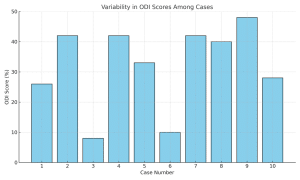
Figure 1: Variability in ODI scores among cases
| Case | Age | Occupation | ODI Score | Disability Level | Primary Symptoms | Impact on Daily Life | Treatment Effectiveness |
| 1 | 32 | Healthcare Worker | 26% | Moderate | Difficulty walking, unable to lift | Limited physical and social activities | Ineffective |
| 2 | 19 | Student | 42% | Moderate to Severe | Limited ability to lift, requires assistance | Poor concentration, restricted social life | Limited effectiveness |
| 3 | 25 | Healthcare Worker | 8% | Mild | Difficulty carrying/lifting | Trouble lifting, social isolation | Not specified |
| 4 | 19 | Healthcare Worker | 42% | Moderate to Severe | Lifting and prolonged sitting difficulties | Reduced social activity, personal care aid | Ineffective |
| 5 | 23 | Employed | 33% | Moderate | Difficulty walking, lifting | Isolation, reduced social engagement | No treatment tried |
| 6 | 30 | Homemaker | 10% | Mild | Cannot stand for more than one hour | Difficulty walking, reduced leisure activities | Ineffective |
| 7 | 63 | Homemaker | 42% | Moderate to Severe | Walking and prolonged standing issues | Reduced social activity | No treatment tried |
| 8 | 46 | Teacher | 40% | Mild to Moderate | Lifting and prolonged standing issues | Limited hobbies and leisure participation | Somewhat effective |
| 9 | 23 | Student | 48% | Moderate to Severe | Unable to lift, stand, walk for long | Limited hobbies, social participation | Somewhat effective |
| 10 | 20 | Student | 28% | Moderate | Walking and lifting difficulties | Anxiety, reduced social life | Somewhat effective |
Table 1: Summary of demographics and QoL across the cases
Limited healthcare access emerged as a critical systemic issue contributing to the burden of LBP in this population. Balochistan, being a resource-constrained region, faces significant challenges in providing adequate healthcare services, particularly for women. The lack of specialized physiotherapy centers and preventive care exacerbates the issue, leaving many women without an appropriate diagnosis or treatment. Additionally, cultural norms and societal expectations often prioritize caregiving and household responsibilities over personal health, delaying medical attention for LBP.
Occupational demands also play a pivotal role. Many women in this region engage in labor-intensive work, such as household chores, farming, or other manual labor, which places significant strain on the lower back. A recent study on coal miners in Balochistan highlighted similar occupational risk factors, such as lifting heavy loads and prolonged static postures, contributing to LBP and associated disabilities.[11] These parallels suggest a broader occupational health issue in the region that transcends gender and occupational roles.
Age-related differences in the experience and coping strategies for LBP were evident. Younger women reported a greater emotional impact, potentially due to disruptions in education or early career aspirations, while older women experienced more pronounced physical limitations, possibly compounded by age-related degenerative changes. The literature corroborates these findings, with evidence suggesting that factors such as age, smoking, and comorbidities, including respiratory conditions, amplify LBP severity and disability levels. Additionally, studies conducted in European adolescents have noted a gender disparity, with females more likely to report severe LBP.[7] This gender-related vulnerability aligns with findings from this case series, where women reported higher levels of disability and associated QOL impairments.
Pregnancy-related LBP is another systemic issue impacting women’s QOL globally. A recent meta-analysis reported the global prevalence of back pain in pregnancy as 40.5%, with prevalence rates increasing across trimesters. Such findings emphasize the necessity for healthcare systems to address pregnancy-related back pain through early intervention and education.[12] While this case series does not specifically analyze pregnancy as a factor, the broader implications of LBP during pregnancy highlight the importance of preventive care and support for women at all stages of life.
In comparison, a cross-sectional study conducted in Puducherry, India, found a 42% prevalence of LBP among women, with 60.9% experiencing moderate disability. While the Indian study noted that 72% of participants rated their QOL as good despite moderate disability.[1] Our findings indicate a more pronounced negative impact on social and emotional well-being in the Quetta population. These differences may stem from disparities in cultural norms, economic conditions, and healthcare access, underscoring the importance of context-specific interventions.
Coping strategies among participants varied widely. While some relied on pharmacological interventions, others employed physical therapy or lifestyle modifications. However, access to these resources was inconsistent, reflecting the broader healthcare inequities in the region. The lack of affordable and accessible physiotherapy services remains a significant barrier to effective LBP management. Evidence from studies on back pain interventions, such as the back school program, suggests that structured educational and therapeutic interventions can significantly improve QOL and reduce disability.[8] Implementing such programs in resource-limited settings like Balochistan could mitigate the burden of LBP and enhance overall well-being.
Limitation: This case series provides valuable insights into the impact of low back pain on the quality of life among women in Quetta, Balochistan. However, the findings should be interpreted with caution due to the small sample size of 10 participants, which limits the generalizability of the results. While the case series design was chosen to explore the topic in depth, future research with larger, more diverse samples is needed to confirm these findings and assess their applicability to broader populations.
Conclusion
This case series demonstrates the significant impact of LBP on the QOL of women in Quetta, Balochistan. The findings reveal that most women experience moderate to severe disability, affecting their physical, emotional, and social well-being. LBP’s multifaceted impact is similar to that found in other studies, highlighting the need for targeted interventions. Addressing LBP through community-based programs, including physical therapy and education, could help alleviate the burden of disability and improve overall QOL in this population.
References
- Ahdhi GS, Subramanian R, Saya GK, Yamuna TV. Prevalence of low back pain and its relation to quality of life and disability among women in rural area of Puducherry, India. Indian J Pain. 2016;30(2):111-115. doi:10.4103/0970-5333.186467 Crossref | Google Scholar
- Balagué F, Mannion AF, Pellisé F, Cedraschi C. Clinical update: low back pain. Lancet. 2007;369(9563):726-728. doi:10.1016/S0140-6736(07)60340-7 PubMed | Crossref | Google Scholar
- Ge L, Pereira MJ, Yap CW, Heng BH. Chronic low back pain and its impact on physical function, mental health, and health-related quality of life: a cross-sectional study in Singapore. Sci Rep. 2022;12(1):20040. doi:10.1038/s41598-022-24703-7 PubMed | Crossref | Google Scholar
- Knezevic NN, Candido KD, Vlaeyen JW, Van Zundert J, Cohen SP. Low back pain. Lancet. 2021;398(10294):78-92. doi:10.1016/S0140-6736(21)00733-9 PubMed | Crossref
- Koes BW, Van Tulder M, Thomas S. Diagnosis and treatment of low back pain. BMJ. 2006;332(7555):1430-1434. doi:10.1136/bmj.332.7555.1430 PubMed | Crossref | Google Scholar
- World Health Organization. Low back pain fact sheet. 2023. Low back pain fact sheet
- Pellisé F, Balagué F, Rajmil L, et al. Prevalence of low back pain and its effect on health-related quality of life in adolescents. Arch Pediatr Adolesc Med. 2009;163(1):65-71. doi:10.1001/archpediatrics.2008.512
PubMed | Crossref | Google Scholar - Tavafian SS, Jamshidi AR, Montazeri A. A randomized study of back school in women with chronic low back pain: quality of life at three, six, and twelve months follow-up. Spine (Phila Pa 1976). 2008;33(15):1617-1621. doi:10.1097/BRS.0b013e31817bd31c PubMed | Crossref | Google Scholar
- Waterman BR, Belmont PJ Jr, Schoenfeld AJ. Low back pain in the United States: incidence and risk factors for presentation in the emergency setting. Spine J. 2012;12(1):63-70. doi:10.1016/j.spinee.2011.09.002
PubMed | Crossref | Google Scholar - Wettstein M, Eich W, Bieber C, Tesarz J. Pain intensity, disability, and quality of life in patients with chronic low back pain: does age matter? Pain Med. 2019;20(3):464-475. doi:10.1093/pm/pny062 PubMed | Crossref | Google Scholar
- Arif M, Kawish AB, Nasim M, Zeb A. Lower back pain and disability: An occupational public health dilemma of Chamalang, Balochistan coal miners. Found Univ J Dent. 2021;1(1):18-24. Lower back pain and disability: An occupational public health dilemma of Chamalang, Balochistan coal miners
- Salari N, Mohammadi A, Hemmati M, et al. The global prevalence of low back pain in pregnancy: a comprehensive systematic review and meta-analysis. BMC Pregnancy Childbirth. 2023;23(1):830. doi:10.1186/s12884-023-06151-x PubMed | Crossref | Google Scholar
Acknowledgments
The authors would like to extend heartfelt thanks to all the participants of this study for their time and cooperation. A special thanks to our families for their constant support and encouragement throughout the research process. Additionally, we express our sincere gratitude to medtigo Journal for providing the opportunity for free publication and enabling us to share our work with a broader audience.
Funding
This research received no specific grant from any funding agency in the public, commercial, or not-for-profit sectors.
Author Information
Corresponding Author:
Hafsa Khan
Department of Physical Therapy
University of Balochistan, Pakistan
Email: hfsakhn89@gmail.com
Co-Authors:
Zarmina Khan
Department of Pharmacy
University of Balochistan, Pakistan
Sidra Khan
Department of Psychology
Sardar Bahadur Khan Women University, Pakistan
Authors Contributions
All authors contributed to the conceptualization, investigation, and data curation by acquiring and critically reviewing the selected articles. They were collectively involved in the writing – original draft preparation, and writing – review & editing to refine the manuscript. Additionally, all authors participated in the supervision of the work, ensuring accuracy and completeness. The final manuscript was approved by all named authors for submission to the journal.
Informed Consent
Each participant was informed about the nature of the study, its purpose, and their right to withdraw at any time without consequences. The privacy and confidentiality of the participants were maintained throughout the study.
Conflict of Interest Statement
Not applicable
Ethical Approval
Not applicable
Guarantor
Hafsa Khan, lead researcher, is the guarantor of this study. She affirms the accuracy and integrity of the study data and its adherence to ethical standards.
DOI
Cite this Article
Hafsa K, Zarmina K, Sidra K. The Impact of Low Back Pain on Quality of Life of Women in Quetta, Balochistan. medtigo J Neurol Psychiatry. 2025;2(1):e3084215. doi:10.63096/medtigo3084215 Crossref