








 Author Affiliations
Abstract
Background: The core component of nursing education comprises self-directed learning (SDL), which allows students to master their educational processes through goal setting and resource utilization. Nursing students in complex healthcare environments must learn SDL abilities to improve their academic results, clinical capabilities, and critical thinking performance. A research study investigated the relationship between SDL abilities and academic outcomes in Swat, Pakistan.
Methodology: A cross-sectional descriptive correlation design guided research, collecting data through self-administered questionnaires from 180 nursing students. Second, third, and fourth-year nursing students participated in this study; first-year students were excluded from data collection. The association between SDL abilities and academic achievement was established through chi-square tests (X2) that the research team analyzed within a statistical package for the social sciences (SPSS) version 22.
Results: According to the findings, academic performance positively correlated with SDL abilities (p-value = 0.001). Students who scored higher in SDL also earned better academic results because they displayed stronger abilities in clinical problem-solving and critical thinking. The study participants faced difficulties with time management and motivational challenges.
Conclusion: The research demonstrates that SDL improves nursing students’ academic performance and clinical results. Educational institutions should encourage SDL by providing proper supportive learning environments, mentorship, and resources for students to enhance their independent learning aptitudes.
Keywords
Self-directed learning, Nursing education, Academic performance, Clinical competence, Critical thinking, Nursing students.
Introduction
A student engages in SDL by actively identifying necessary educational goals and selecting suitable resources, which involves designing learning approaches and assessing personal progress.[1] Nursing students need SDL to develop independent learning capabilities during their educational journey and to foster lifelong professional personal growth.[2] To maintain preparedness in advancing medical science and evolving healthcare needs, nursing students must develop their SDL abilities. Nursing students must succeed by demonstrating high marks in theoretical studies, clinical coverage skills, and exceptional critical thinking abilities to deliver quality patient care.[3] The rising complexity in healthcare has turned independent learning ability into a core requirement in nursing educational programs.[4]
The nursing profession demands practitioners maintain constant learning abilities and develop adaptability techniques while resolving healthcare issues.[5] Teacher-directed instruction methods no longer meet the requirements to educate students in the ever-changing clinical practice environment.[6] According to research studies, Academic performance and clinical competence correlate positively with students who demonstrate effective SDL skills. The practice of SDL helps students develop their abilities to think critically and solve problems while effectively approaching educational content materials.[7] Nurses who learn to direct their education develop better abilities to handle complex patient conditions while keeping their clinical practice knowledge current and performing well in decision-making tasks. The education of nursing students requires SDL promotion because it leads to skilled healthcare professionals.[8]
Multiple variables determine a nursing student’s capacity to perform effectively at SDL. Student success in SDL depends on their motivation levels and beliefs about their ability to learn independently, resulting in increased initiative.[9] Learning resources, mentorship, institutional support, and access are essential for developing SDL abilities.[10] Nursing programs with digital instruments, flexible educational environments, and interactive teaching strategies help students become responsible for their learning journey. Students without access to required resources or inadequate guidance find it hard to create SDL habits, affecting their academic and professional achievements.[11]
Strong evidence demonstrates that nursing student achievement depends on their ability to implement SDL practices. Students who practice self-directed approaches in their studies typically improve their ability to judge situations clinically while strengthening their adaptability and problem-solving competency.[12] Nursing staff need these competencies because they operate in dynamic environments that demand critical thinking abilities and decision-making skills. The development of lifelong learning habits is another benefit of SDL because nursing as a profession requires knowledge to evolve constantly.[13] Nursing students who integrate SDL achieve better results in their studies and become more proficient and assured in clinical settings, leading to superior patient treatment results.[14]
Students encounter difficulties when teachers incorporate SDL methods in their academic training. Students face challenges with time management when they need to handle academic tasks and their clinical workload. Students who lack proper guidance and motivation avoid active participation in SDL activities.[15] Educational institutions adopting teacher-centered teaching models fail to give students important opportunities to build independent learning competencies.[16] Students face barriers from cultural and institutional perspectives that prevent them from gaining control of their education, so educational environments need to develop supportive mechanisms that enhance student participation and learning autonomy.[17]
Research should focus more intensely on SDL in nursing education because of its critical impact on student performance.[18] Research on how nursing students’ SDL abilities affect their clinical competence and academic performance will guide teachers in creating superior teaching methods.[19] The research evaluates the importance of SDL in nursing education by studying the elements that promote or challenge students’ ability to learn independently. Research findings will guide nursing programs to effectively incorporate SDL approaches, preparing students professionally against their future career requirements, including essential lifelong learning and high-quality patient care ability development.[20]
Methodology
The research design used a cross-sectional descriptive correlation approach to examine nursing students’ SDL aptitudes. Researchers gathered data from students at Pak Swiss Nursing College and Swat College of Nursing owing to their convenient access. Nursing students from both colleges formed the study population, but they omitted 1st-year students. The Raosoft sample size calculator revealed that 180 students would be sufficient for the research. A random method was implemented to guarantee that participants received an impartial selection. The research period spanned six months between April 2024 and September 2024. The research involved students enrolled in their second, third, and fourth years of nursing but excluded first-year students. This research examined the relationship that existed between nursing students’ abilities to direct their learning and their academic achievements. Two nursing colleges were selected to collect data from diverse students while providing easy access to participants. Research conclusions will serve to enhance student-directed learning methods within nursing educational frameworks.
Data collection procedure: A research study was conducted with students from Pak Swiss Nursing College and Swat College of Nursing. Students from Swat College of Nursing used self-filled questionnaires during their hospital clinical rotations, while Pak Swiss Nursing College students completed questionnaires inside their lecture hall. The study received Institutional Review Board (IRB) approval from PSNC IRB before research activities began. The research tools consisted of a questionnaire for demographic information with additional scales to evaluate self-learning capabilities and final grade formalization. The evaluation instruments measured how well SDL competencies correlated with academic outcomes. Standardized procedures for data collection were established to sustain reliability throughout the research. This research followed ethical requirements to guarantee participant privacy and maintain voluntary consent. The research findings will advance SDL approaches in the nursing curriculum.
Data analysis procedure: Researchers used SPSS version 22 to process data through assessment stages, starting with coding and ending with validation and analysis. Visual representations, including frequency tables alongside graphs, helped present the study results for better clarity. An X2 statistical test determined the significance level of the implemented intervention. The assessment method allowed researchers to measure how well SDL skills contribute to student achievements. The analysis methods enabled researchers to correctly understand relationships among variables. The study revealed information that can enhance nursing education methods.
Ethical considerations: All research ethical guidelines were followed to protect participants’ safety and rights and preserve confidential information. The study received ethical approval from the institutional review board (IRB) of Pak Swiss College of Nursing, Swat, under reference number PSNC/PRIN/IRB/24/03/014. Before consent, all participants received detailed information about the study’s purpose and procedures, potential risks, and benefits. All participants could discontinue the study at any time without facing adverse effects. All data records were de-identified to maintain participant confidentiality and anonymity throughout the study. The research design protected participants from harm through beneficence and non-maleficence principles while maintaining full transparency while disclosing the findings.
Results
A total of 180 nursing students participated in the study, and most students were in the 23-25 years age range (49.4%) while showing a high male representation (88.9%). Most students took a different path than marriage, with 83.3 % of respondents and 72.2 % living off-campus, alongside 27.8 % living in hostels. Of the participants, 68.3% earned their intermediate degree in private educational facilities, whereas 31.7% obtained their credentials through a public institution. This data reveals the population breakdown of nursing students involved in the study.
| Variable | Category | Frequency (n) | Percentage (%) |
| Age (years) | 20-22 | 86 | 47.8% |
| 23-25 | 89 | 49.4% | |
| 26-28 | 5 | 2.8% | |
| Gender | Male | 160 | 88.9% |
| Female | 20 | 11.1% | |
| Marital status | Married | 23 | 16.7% |
| Unmarried | 150 | 83.3% | |
| Living condition | Hostel | 50 | 27.8% |
| Non-hostel | 130 | 72.2% | |
| Intermediate pass out | Private institute | 123 | 68.3% |
| Government institute | 57 | 31.7% |
Table 1: Demographic characteristics of participants
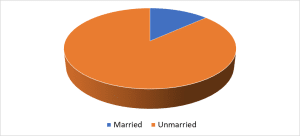
Figure 1: Marital status of participants
The table below shows that among 180 nursing students, there were more students with a grade (of 3.1 GPA) (31.7%) versus B+ (3.45 GPA) (24.4%) and B- (2.8 GPA) (18.9%). The percentage of students receiving A+ (4.0 GPA) equaled 5.6%, and C (2.0 GPA) had the fewest occurrences, with 2.8%. Most students achieved B and B grade levels based on their GPA scores, while very few students had higher and lower scores.
| Cumulative Grade Point Average (CGPA) Category | Frequency (n) | Percentage (%) |
| A+ (4.0 GPA) | 10 | 5.6% |
| A (4.0 GPA) | 3 | 1.7% |
| A- (3.8 GPA) | 17 | 9.4% |
| B+ (3.45 GPA) | 44 | 24.4% |
| B (3.1 GPA) | 57 | 31.7% |
| B- (2.8 GPA) | 34 | 18.9% |
| C+ (2.45 GPA) | 10 | 5.6% |
| C (2.0 GPA) | 5 | 2.8% |
| Total | 180 | 100.0% |
Table 2: CGPA distribution of participants
The SDL survey showed that 51.6% of 180 nursing students received high scores between 150-200, while 46.6% scored in the average range from 100-150. Students scored 50 or less on the SDL scale in only 1.6% of the population, while no one scored below 50 points. Students displayed an average strength in SDL ability, as shown by their mean SDL score of 147.74. However, the most common score was 156, which belonged to the mode, while the median score equaled 151.
| SDL score range | Category | Frequency (n) | Percentage (%) |
| 150 – 200 | High | 93 | 51.6% |
| 100 – 150 | Average | 84 | 46.6% |
| 50 – 100 | Below average | 3 | 1.6% |
| Below 50 | Low | 0 | 0% |
| Total | – | 180 | 100.0% |
| Mean score | 147.74 | Median score | 151.00 |
| Mode score | 156.00 | Valid cases | 180 |
Table 3: SDL score distribution
Younger students who studied at government schools and practiced strongly, SDL achieved better academic results. The study evidence supports this link with 100% Confidence. The analysis revealed no effect of student gender (91%) or marital status (86%) on GPA scores and the quality of their living arrangement (69%). Students’ educational background and study methods significantly affect their academic results, but their gender and home situation make little difference.
| Variable | X2 Value | df | p-value | Significance | Mean CGPA |
| Age | 38.976 | 14 | 0.000 | Significant | 20-22: 3.27 23-25: 3.15 26-28: 2.86 |
| Gender | 6.179 | 7 | 0.519 | Not significant | Male: – Female: – |
| Marital status | 8.443 | 14 | 0.865 | Not significant | Married: 3.19 Unmarried: 3.19 |
| Living condition (hostelized) | 4.691 | 7 | 0.698 | Not significant | Hospitalized: – non-hospitalized: – |
| Intermediate pass-out | 73.171 | 28 | 0.000 | Significant | Private: 3.14 Government: 3.29 |
| SDL & CGPA | 576.352 | 476 | 0.001 | Highly significant | High SDL: Higher CGPA Low SDL: Lower CGPA |
Table 4: Relationship of demographic and academic factors with CGPA
Discussion
The mean SDL score was 147 out of 200 total scores, which is an average of the total scores: 93 (51.6%) students got high scores, 84 (46.6%) students got average scores, 3 (1.6%) students got below average scores while there are no students in low category. An X2 test between two categorical variables, CGPA and SDL score, shows a significant association with a 0.001 p-value, much lower than the conventional threshold of 0.05. SDL allows learners to take control of their education, making their own choices about what and how to learn.
Those who engage in SDL often perform better academically and feel more satisfied with their learning. By creating supportive environments, teaching goal setting, encouraging teamwork, and using technology, we can promote SDL effectively. This approach leads to more engaged and successful learners ready to thrive in any situation.[21] The findings indicate that SDL significantly enhances nursing students’ critical thinking, problem-solving, and clinical decision-making abilities.[22] Those actively engaged in SDL demonstrated better preparedness for handling complex clinical situations, aligning with previous studies. For instance, it was reported that SDL promotes cognitive flexibility and the ability to integrate theoretical knowledge into practice, which is critical for effective nursing care.[23] Additionally, SDL fosters independence and self-efficacy, essential in clinical environments requiring quick, autonomous decision-making.
Reflective practice, often a component of SDL, was another area of improvement noted in this study. Students who engaged in SDL were more likely to critically reflect on their learning experiences, enhancing their ability to internalize knowledge and make meaningful connections between theory and practice.[24] This is supported by O’Shea, who emphasized the importance of reflection in professional growth and its role in developing lifelong learning habits.[25] Thus, SDL improves technical abilities and promotes the soft skills required for continuous professional development in nursing.
The study also examined the correlation between SDL and academic success, which was measured through academic performance, clinical competence, and professional growth. The results suggest that students practicing SDL achieved higher grades and showed improved clinical competence compared to those who followed more traditional, instructor-led learning methods. This echoes findings from Garrison, who demonstrated that students with greater control over their learning process often experience higher academic achievement due to increased motivation and deeper learning strategies.[26] While SDL has shown significant benefits in terms of academic success, some students reported difficulties adapting to this learning style, particularly in managing their time and staying motivated. This challenge is common, as previous research by Knowles et al. highlighted that SDL requires a certain level of intrinsic motivation and self-regulation, which not all students may possess at the beginning of their studies.[27] To mitigate this, institutions could implement support systems such as mentorship programs and time-management workshops to help students gradually build the skills necessary for successful SDL engagement.
The comparison between SDL and traditional teaching methods revealed that students who relied solely on instructor-led learning often adopted a more passive role, which limited their ability to develop independent learning skills and critical thinking. Although traditional methods can provide structured and guided learning, they may fail to cultivate the autonomy needed in nursing practice.[28] This finding is consistent with findings from Lee et al., who argued that traditional teaching models tend to produce learners more reliant on external feedback rather than developing their ability to assess their learning progress. However, a blended learning approach combining SDL with guided instruction could serve as a more balanced educational model. This approach allows students to benefit from independent learning and structured guidance, addressing individual learning preferences and ensuring a comprehensive skill set. Studies by Dolmans et al. have shown that integrating SDL into a broader curriculum, rather than using it as the sole method, leads to greater student satisfaction and learning outcomes.[29]
To implement SDL effectively, nursing educators must provide students with the necessary tools and resources to succeed. This includes teaching students how to set realistic learning goals, self-assess their progress, and seek learning opportunities independently. Furthermore, institutions should create a supportive learning environment where students feel empowered to take charge of their education while still having access to guidance and feedback when needed.
Recommendation: Future research should aim to use larger, more diverse samples and employ objective measures of learning outcomes to strengthen the validity of the findings. Moreover, future studies could explore specific aspects of SDL, such as the role of technology in enhancing SDL.
Limitation: While this study contributes to understanding the impact of SDL on nursing students, there are several limitations. The relatively small sample size may limit the generalizability of the findings. In addition, the study relied on self-reported data, which may introduce bias.
Conclusion
In conclusion, SDL is a vital approach that empowers individuals to take charge of their educational journeys. Self-directed learners often achieve better academic results by setting personal goals, identifying resources, actively engaging in learning, and developing essential skills for lifelong success. In our study, an X2 between two categorical variables, CGPA and SDL score, shows a significant association with a 0.001 p-value, which is much lower than the conventional threshold of 0.05, which means there is strong evidence to reject the null hypothesis (null hypothesis = there is no association between SDL and CGPA). So, this association shows that if someone does self-study, they will get good grades.
References
- Yuan HB, Williams BA, Fang JB, Pang D. Chinese baccalaureate nursing students’ readiness for self-directed learning. Nurse Educ Today. 2012;32(4):427-431. doi.10.1016/j.nedt.2011.03.005 PubMed | Crossref | Google Scholar
- Jeon J, Park S. Self-Directed Learning versus Problem-Based Learning in Korean Nurse Education: A Quasi-Experimental Study. Healthcare (Basel). 2021;9(12):1763. doi:10.3390/healthcare9121763
PubMed | Crossref | Google Scholar - Chakravarthi S, Vijayan P. Analysis of the psychological impact of problem-based learning (PBL) towards self-directed learning among students in undergraduate medical education. Int J Psychol Stud. 2010;2(1):38. doi.10.5539/ijps.v2n1p38 Crossref | Google Scholar
- Li S, Jia X, Zhao Y, Ni Y, Xu L, Li Y. The mediating role of self-directed learning ability in the impact of educational environment, learning motivation, and emotional intelligence on metacognitive awareness in nursing students. BMC Nurs. 2024;23(1):789. doi:10.1186/s12912-024-02457-z PubMed | Crossref | Google Scholar
- Harvey BJ, Rothman AI, Frecker RC. Effect of an undergraduate medical curriculum on students’ self-directed learning. Acad Med. 2003;78(12):1259-1265. doi.10.1097/00001888-200312000-00015 PubMed | Crossref | Google Scholar
- Cadorin L, Suter N, Dante A, Williamson SN, Devetti A, Palese A. Self-directed learning competence assessment within different healthcare professionals and amongst students in Italy. Nurse Educ Pract. 2012;12(3):153-158. doi.10.1016/j.nepr.2011.10.013 PubMed | Crossref | Google Scholar
- Bahn D. Orientation of nurses towards formal and informal learning: motives and perceptions. Nurse Educ Today. 2007;27(7):723-730. doi.10.1016/j.nedt.2006.10.006 PubMed | Crossref | Google Scholar
- Dante A, Valoppi G, Saiani L, Palese A. Factors associated with nursing students’ academic success or failure: a retrospective Italian multicenter study. Nurse Educ Today. 2011;31(1):59-64. doi.10.1016/j.nedt.2010.03.016
PubMed | Crossref | Google Scholar - Cadorin L, Suter N, Saiani L, Naskar Williamson S, Palese A. Self-Rating Scale of Self-Directed Learning (SRSSDL): preliminary results from the Italian validation process. J Res Nurs. 2011;16(4):363-373. doi.10.1177/1744987110379790 Crossref | Google Scholar
- Visiers-Jiménez L, Palese A, Brugnolli A, et al. Nursing students’ self-directed learning abilities and related factors at graduation: A multi-country cross-sectional study. Nurs Open. 2022;9(3):1688-1699. doi:10.1002/nop2.1193
PubMed | Crossref | Google Scholar - Chen ZH, Ma YY, Feng XH, Lin Y. Correlation analysis of self-directed learning ability, self-efficacy and academic burnout of junior nursing college students in closed management colleges. Nurs Open. 2023;10(4):2508-2518. doi:10.1002/nop2.1509 PubMed | Crossref | Google Scholar
- Alkorashy HA, Alotaibi HA. Locus of Control and Self-Directed Learning Readiness of Nursing Students during the COVID-19 Pandemic: A Cross-Sectional Study from Saudi Arabia. Nurs Rep. 2023;13(4):1658-1670. doi:10.3390/nursrep13040137 PubMed | Crossref | Google Scholar
- Ye S, Yue W, Chen Y, et al. The relationship between psychological capital and self-directed learning ability among undergraduate nursing students-a cross-sectional study. Front Psychol. 2024;15:1413151. doi:10.3389/fpsyg.2024.1413151 PubMed | Crossref | Google Scholar
- Sukkamart A, Pimdee P, Leekitchwatana P, Kongpiboon W, Kantathanawat T. Predicting student-teacher self-directed learning using intrinsic and extrinsic factors: a Theory of Planned Behavior adoption. Front Psychol. 2023;14:1211594. doi:10.3389/fpsyg.2023.1211594 PubMed | Crossref | Google Scholar
- Dogham RS, Elcokany NM, Ghaly AS, Dawood TM, Aldakheel FM, Llaguno MB, Mohsen DM. Self-directed learning readiness and online learning self-efficacy among undergraduate nursing students. International Journal of Africa Nursing Sciences. 2022 Jan 1;17:100490. Crossref | Google Scholar
- Yu Y, Qiao Y, Zhu Y, et al. The impact of unfolding case studies combined with think-aloud strategies on the clinical reasoning and self-directed learning abilities of postgraduate students: A mixed methods study. Nurse Educ Pract. 2024;80:104132. doi:10.1016/j.nepr.2024.104132 PubMed | Crossref | Google Scholar
- Hu P, Kong LN, Chen SZ, Luo L. The mediating effect of self-directed learning ability between professional identity and burnout among nursing students. Heliyon. 2024;10(6):e27707. doi:10.1016/j.heliyon.2024.e27707
PubMed | Crossref | Google Scholar - The effect of self-directed learning abilities of student nurses on success in Turkey. Nurse Educ Today. 2012;26(2):159-165. doi:10.1016/j.nedt.2011.07.006 PubMed | Crossref | Google Scholar
- Garrison DR. Self-directed learning: toward a comprehensive model. Adult Educ Q. 1997;48(1):18-33. doi:10.1177/074171369704800103 Crossref | Google Scholar
- Effectiveness of the small private online course-based flipped teaching program for enhancing nursing students’ self-directed learning ability in the surgical nursing course: a practical study. Nurse Educ Pract. 2022;65:103387. doi.10.1016/j.nepr.2022.103387 Crossref | Google Scholar
- Hu P, Kong LN, Chen SZ, Luo L. The mediating effect of self-directed learning ability between professional identity and burnout among nursing students. Heliyon. 2024;10(6):e27707 doi:10.1016/j.heliyon.2024.e27707
PubMed | Crossref | Google Scholar - Dolmans DH, De Grave W, Wolfhagen IH, van der Vleuten CP. Problem-based learning: future challenges for educational practice and research. Med Educ. 2005;39(7):732-741. doi:10.1111/j.1365-2929.2005.02205.x
PubMed | Crossref | Google Scholar - O’Shea E. Self-directed learning in nurse education: a review of the literature. J Adv Nurs. 2003;43(1):62-70. doi.10.1046/j.1365-2648.2003.02673.x PubMed | Crossref | Google Scholar
- Garrison DR. Self-directed learning: toward a comprehensive model. Adult Educ Q. 1997;48(1):18-33. doi.10.1177/074171369704800103 Crossref | Google Scholar
- Singaram VS, Naidoo KL, Singh S. Self-Directed Learning During the COVID-19 Pandemic: Perspectives of South African Final-Year Health Professions Students. Adv Med Educ Pract. 2022;13:1-10. doi:10.2147/AMEP.S339840
PubMed | Crossref | Google Scholar - Lee YM, Mann KV, Frank BW. What drives students’ self-directed learning in a hybrid PBL curriculum. Adv Health Sci Educ. 2010;15(3):425-437. doi.10.1007/s10459-009-9210-2 PubMed | Crossref | Google Scholar
- Dolmans DH, De Grave W, Wolfhagen IH, Van der Vleuten CP. Problem-based learning: future challenges for educational practice and research. Med Educ. 2005;39(7):732-741. doi.10.1111/j.1365-2929.2005.02205.x
PubMed | Crossref | Google Scholar - Murniati CT, Hartono H, Nugroho AC. The challenges, supports, and strategies of self-directed learning among college students. Journal of Education and Learning (EduLearn). 2023;17(3):365-73. The challenges, supports, and strategies of self-directed learning among college students
- Henderson KJ, Coppens ER, Burns S. Addressing Barriers to Implementing Problem-Based Learning. AANA J. 2021;89(2):117-124. Addressing Barriers to Implementing Problem-Based Learning
Acknowledgments
Not reported
Funding
Not reported
Author Information
Corresponding Author:
Asaf Shah
Department of Nursing
Pak-Swiss Nursing College Swat, Pakistan
Email: asefshaa@gmail.com
Co-Authors:
Muhammad Asad
Department of Nursing
Pak-Swiss Nursing College Swat, Pakistan
Rahatullah Rahat, Abdullah Abdul, Yasin Malak, Sami Ullah, Muhammad Numan, Muhammad Ilyas
Department of Nursing
Saidu Teaching Hospital Swat, Pakistan
Authors Contributions
Asaf Shah was responsible for data analysis and interpretation. Muhammad Asad contributed to data collection and analysis. Rahatullah, Abdullah, Yasin Malak, Sami Ullah, Muhammad Numan, and Muhammad Ilyas were involved in the data collection.
Ethical Approval
All research ethical guidelines were followed to protect participant’s safety and rights and preserve confidential information. The study received ethical approval from the IRB of Pak Swiss College of Nursing, Swat, under reference number PSNC/PRIN/IRB/24/03/014.
Conflict of Interest Statement
Not reported
Guarantor
None
DOI
Cite this Article
Asaf S, Asad M, Rahatullah R, et al. The Effect of Self-Directed Learning Abilities of Nursing Students on Their Success in Swat and Pak-Swiss Colleges of Nursing, Swat. medtigo J Med. 2025;3(2):e3062322. doi:10.63096/medtigo3062322 Crossref