Author Affiliations
Abstract
Hemophilia is an X-linked recessive chromosomal bleeding disorder in which there is an anomaly in the synthesis of clotting factors. These patients experience heavy episodes of bleeding even from minor cuts. Hemophilia is a condition of great interest for orthopedic surgeons due to its clinical manifestations. Our aim is to present a case of hemophilia A with proximal femoral fracture and its management. An eighteen-year-old boy with Hemophilia A, who was presented after a road traffic accident at a hospital, where he was managed with fresh frozen plasma (FFP) and blood transfusion. His treatment was delayed due to the unavailability of factor VIII at the hospital, and his family arranged it on their own. His surgery was planned after 2 days of admission, and internal fixation by cephalomedullary nailing was done. Hemophilia diagnosis involves a combination of factor VIII level assays and abnormal bleeding episodes in the patient. The treatment involves prophylactic administration of factor VIII. In case of femoral fractures in these patients, intramedullary nailing is preferred while maintaining the levels of factor VIII at the same time. Management of the fracture in this hemophilia patient was a difficult task. Early presentation at the hospital had a positive impact, while the unavailability of recombinant factor VIII concentrated on time had a negative impact on the outcome.
Keywords
Hemophilia, Subtrochanteric fractures, Intramedullary nailing, Factor VIII, Blood clotting.
Introduction
Hemophilia is an X-linked recessive chromosomal bleeding disorder. It is of two types: hemophilia A and hemophilia B, characterized by deficiency of coagulation factor VIII in the former and factor IX in the latter.[1] Among hemophilia A and B, hemophilia A is more common and present in 80-85% of cases.[2,3]
Hemophilia is suspected in individuals with easy bruising, spontaneous bleeding, excessive blood loss after trauma or surgery, and hemarthrosis.[3,4] Disease is graded into 3 categories based on the concentration of clotting factors. It can either be mild, moderate or severe. In mild cases, concentration is >5% of normal, and in severe cases it is <1% of normal. In moderate cases, it is between 1% and 5%.[5,6]
Hemophilic patients should be less prone to fractures due to their less active lifestyle, but they, aware of the adverse consequences of non-stop bleeding episodes, are reluctant to take part in physical activities. As a result, bone mass and bone mineral density are inadequate in these patients, hence they are more susceptible to fractures, indeed. Exact mechanism of reduced bone strength in hemophilia is not known. Inadequate bone mass due to decreased physical activity can be one cause, but studies suggest that coagulation factors also have some role in bone formation and inhibition of bone resorption.[7] Hemophilia causes increased risk of hemorrhages, hemarthrosis, and muscular hematomas. 80% of hemorrhages occur in the musculoskeletal system, which is why it is a condition of great interest for orthopedic surgeons.[8]
Case Presentation
History: An eighteen-year-old male patient presented at Sheikh Zayed Teaching Hospital, Rahim Yar Khan, Pakistan, with a proximal femoral shaft fracture after a road traffic accident. He was diagnosed with hemophilia A at the age of six months after excessive bleeding from a minor blade cut at a barber’s shop. He has four siblings, two brothers and two sisters, and all of them are normal. He has no history of bleeding disorders in his maternal or paternal relatives. He hada history of bleeding episodes since infancy. At the time of infancy, his factor VIII assays were done and found to be 19% of normal. According to hemophilia grading, he was suffering from mild hemophilia A.
Physical exam: After the accident, he was presented in the hospital with complaints of tenderness in the right thigh near the gluteal region and inability to move the right lower limb. Upon physical examination, his vital signs were within normal limits except the pulse rate, which showed a mild tachycardia (108 beats per minute), and the body temperature, which showed a mild degree of fever (99.5ºF). His right thigh was found swollen. No external bleeding was observed.
Diagnosis: Necessary investigations were made, including complete blood count (CBC) and X-ray. Results of laboratory tests are shown in Table 1. Blood reports show a decrease in hemoglobin level and an increase in prothrombin time (PT) and activated partial thromboplastin time (aPTT) along with alterations in other analytes.
| Text | Report | Normal Range |
| Blood glucose | 200 mg/dl | 80-140 mg/dl |
| Blood urea nitrogen (BUN) | 10 mg/dl | 9-23 mg/dl |
| Serum creatinine | 0.7 mg/dl | 0.9-1.3 mg/dl |
| Serum alkaline phosphatase | 139 U/L | 30-120 U/L |
| Serum sodium | 138 mmol/L | 136-145 mmol/L |
| Serum potassium | 3.4 mmol/L | 3.5-5 mmol/L |
| Chloride | 106 mmol/L | 96-106 mmol/L |
| Hemoglobin | 11.2g/dl | 13.5-17g/dl |
| WBC count | 25800/mm3 | 4000-11000/mm3 |
| Neutrophils | 86% | 40-75% |
| Lymphocytes | 10% | 20-45% |
| Monocytes | 2% | 2-10% |
| Eosinophils | 2% | 1-6% |
| Platelet Count | 306000/mm3 | 150000-450000/mm3 |
| PT | 16secs | 14secs |
| aPTT | 35secs | 33secs |
Table 1: Lab investigations
The X-ray confirmed a spiral sub-trochanteric fracture of the right femur as shown in figures 1 and 2.
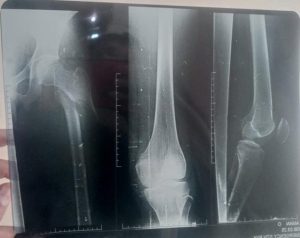
Figure 1: X-Ray of right femur after fracture-posteroanterior (PA) views and lateral view
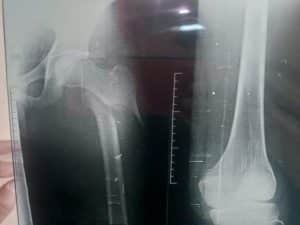
Figure 2: Post-fracture X-ray of the right femur at the hip and knee joints- PA view
Case Management
Treatment/Intervention: He was given intravenous analgesics to reduce pain. To prevent internal hemorrhage, he was given 1250 units of recombinant factor VIII (r FVIII). His Hb levels dropped to 6.6g/dl on the immediate post-trauma night. He was given 2 units of whole blood, which improved his Hb levels. A discussion regarding procedure was made between orthopedic surgeons, hematologists, and attending physicians, along with the family of the patient. The family gave informed consent for the procedure. During surgery, 4 units of blood were transfused. A total of 7750 IU of r FVIII was given from the beginning till the end of the procedure. Fracture was reduced by using the cephalomedullary type of intramedullary nailing. His factor VIII levels were again assessed post-operatively to investigate any bleeding complications, but they were normal. On the 8th day of surgery, he was discharged from the hospital.
Clinical course/outcome: The patient underwent a tapered follow-up regimen, transitioning from intensive to routine monitoring over an eight-month period. Following surgery, the patient exhibited steady rehabilitation progress. Initially, non-weight-bearing mobility was maintained using a wheelchair for 10 weeks, supplemented by physical therapy sessions. At the 10 th week, weight-bearing was initiated by assistive devices that facilitated a partial weight-bearing status. By 18 weeks, the patient was able to walk without assistance with a gradual increase in walking distances and intensity. Ultimately, full recovery and return to pre-injury functional status were achieved at 6 months of surgery. After 8 months, his femur was found completely reduced.
Discussion
Hemophilia is an inherited bleeding disorder that is more common among males due to its X-linked recessive inheritance pattern. There are two common types: hemophilia A and hemophilia B. Primary defects in hemophilia A and hemophilia B are reduced synthesis of factor VIII and factor IX, respectively.[1] Disease is transmitted from the grandfathers of the maternal lineage to the grandsons through the mothers as carriers. Female generally do not manifest the disease because they have one intact X chromosome.[8] The incidence of hemophilia is 1 in 10000 live births.[4] Hemophilia A is more common than hemophilia B, with the prevalence of one in 5000 male live births as compared to one in 30000 male live births.[7]
Blood coagulation takes place by two pathways: the extrinsic pathway and the intrinsic pathway. Both pathways involve several clotting factors, including factor VIII and factor IX. Deficiency or dysfunction of these factors decreases the tendency of the clotting process because these pathways cannot be appropriately activated.[4] Hemophilia is diagnosed by assessing the levels of clotting factors in blood. Patients having a family history of hemophilia or having abnormal bleeding episodes are susceptible to hemophilia. Hemophiliacs often present in clinics with post-circumcision bleeding, excessive bleeding episodes after trivial trauma or cut, after tooth extraction, or after surgery. Patients can present with hematomas, hemarthroses, hemophilic arthropathy, and internal and external hemorrhages.[4,8]
Hemophilia severity is classified according to plasma concentration of factor VIII, the severe form have concentration <1% of normal, moderate form have factor VIII level 1-5% while mild form have concentration of >5%.[5,6] An Index patient possessing 19% of normal factor VIII level can be categorized as mildly hemophilic. The ideal treatment for hemophilia is intravenous infusion of missing clotting factors (FVIII in hemophilia A and FIX in hemophilia B), but only 15-20 % of patients have access to this treatment worldwide. Clotting factors may be either blood-derived or recombinant.[8,9] Factor VIII is given to patients to prevent any abnormal bleeding during the procedure.[10] Pre-operatively, the level VIII should be maintained at 100% of normal value; post-operatively, till the 14th day, it should be maintained at 60% of normal. From 3 rd to 8 th week, it should be maintained at 30% normal.[8]
Occurrence of fractures in hemophiliacs needs urgent replacement of factor VIII.[4] Cephalomedullary nailing, a type of intramedullary nailing, is generally used to reduce sub-trochanteric fractures due to less operative time, fewer complications, and decreased loss of blood. Internal fixation is preferred over external fixation.[8] Hemophiliacs are more prone to fractures due to less physical activity and reduced bone mineral density. Fracture risk in patients with hemophilia is increased fourfold as compared to the general population.[7]
Conclusion
Despite being aware of the risks associated with his condition, an eighteen-year-old young hemophilia patient suffered a sub-trochanteric femoral fracture in a bike accident. A multidisciplinary team comprising hematologists and orthopedic surgeons collaborated to manage his complex case, achieving a successful discharge within a week. This case highlights the importance of integrated care in optimizing outcomes for hemophilia patients with orthopedic complications. However, the experience also emphasizes the need for improved accessibility and affordability of recombinant factor VIII concentrate, particularly in low-resource countries like Pakistan, to ensure timely and effective treatment for these vulnerable patients.
References
- Pezeshkpoor B, Oldenburg J, Pavlova A. Insights into the Molecular Genetic of Hemophilia A and Hemophilia B: The Relevance of Genetic Testing in Routine Clinical Practice. Hamostaseologie. 2022;42(6):390-399. doi:10.1055/a-1945-9429 PubMed | Crossref | Google Scholar
- Atilla B, Güney-Deniz H. Musculoskeletal treatment in haemophilia. EFORT Open Rev. 2019;4(6):230-239. doi:10.1302/2058-5241.4.180068 PubMed | Crossref | Google Scholar
- Srivastava A, Brewer AK, Mauser-Bunschoten EP, et al. Guidelines for the management of hemophilia. Haemophilia. 2013;19(1):e1-47. doi:10.1111/j.1365-2516.2012.02909.x PubMed | Crossref | Google Scholar
- Franchini M, Mannucci PM. Past, present, and future of hemophilia: a narrative review. Orphanet J Rare Dis. 2012;7:24. doi:10.1186/1750-1172-7-24 PubMed | Crossref | Google Scholar
- Castaman G, Matino D. Hemophilia A and B: molecular and clinical similarities and differences. Haematologica. 2019;104(9):1702-1709. doi:10.3324/haematol.2019.221093 PubMed | Crossref | Google Scholar
- Blanchette VS, Key NS, Ljung LR, et al. Definitions in hemophilia: communication from the SSC of the ISTH. J Thromb Haemost. 2014;12(11):1935-1939. doi:10.1111/jth.12672 PubMed | Crossref | Google Scholar
- Alito A, Bellone F, Portaro S et al. Haemophilia and fragility fractures: from pathogenesis to multidisciplinary approach. Int J Mol Sci. 2023;24(11):9395. doi:10.3390/ijms24119395 PubMed | Crossref | Google Scholar
- Rodriguez-Merchan EC. Musculoskeletal complications of hemophilia. HSS J. 2010;6(1):37-42. doi:10.1007/s11420-009-9140-9 PubMed | Crossref | Google Scholar
- Miesbach W, Schwäble J, Müller MM, Seifried E. Treatment Options in Hemophilia. Dtsch Arztebl Int. 2019;116(47):791-798. doi:10.3238/arztebl.2019.0791 PubMed | Crossref | Google Scholar
- Medda S, Reeves RA, Pilson H. Subtrochanteric Femur Fractures. ebook. StatPearls Publishing LLC; 2023 Subtrochanteric Femur Fractures
Acknowledgments
The authors extend their gratitude to the dedicated healthcare professionals in the department of orthopedics and trauma, and hematology at Sheikh Zayed teaching hospital, Rahim Yar Khan. Specifically, we thank Dr. Nadeem Khan, hematologist, for his valuable insights on this case.
Funding
No funding support for this project.
Author information
Corresponding Author:
Ali Abdul Basit
Department of Orthopedics and Trauma and Hematology
Rawalpindi Medical University, Rawalpindi
Email: ab7197139@gmail.com
Co-Author:
Muhammad Usman
Department of Orthopedics and Trauma and Hematology
Rawalpindi Medical University, Rawalpindi
Authors Contributions
All authors contributed to the conceptualization, investigation, and data curation by acquiring and critically reviewing the selected articles. They were collectively involved in the writing – original draft preparation, and writing – review & editing to refine the manuscript. Additionally, all authors participated in the supervision of the work, ensuring accuracy and completeness. The final manuscript was approved by all named authors for submission to the journal.
Informed Consent
The patient provided informed written consent for publication of this case report, confirming that the identifiable information had been removed or anonymized to protect their privacy, in accordance with guidelines from the institutional review board (IRB) of Rawalpindi Medical University, Pakistan.
Conflict of Interest Statement
The author declares no conflict of interest.
Guarantor
Not applicable
DOI
Cite this Article
Ali AB, Muhammad U. Sub-Trochanteric Femoral Fracture in a Young Hemophilia A Patient and Its Management. medtigo J Med. 2024;2(4):e30622440. doi:10.63096/medtigo30622440 Crossref