







 Author Affiliations
Abstract
Chronotherapy is an established therapeutic approach that aligns drug administration with endogenous circadian rhythms, leading to better drug efficacy and fewer side effects. The circadian rhythms, which are primarily regulated by the suprachiasmatic nucleus (SCN) and molecular clock genes (CLOCK, BMAL1, PER, CRY), affect physiological processes such as metabolism, hormone release, and disease activity. These oscillations have a profound influence on drug pharmacodynamics and pharmacokinetics and offer a scientific rationale for the concept of time-dependent therapy. Chronotherapy has proven to be especially beneficial for diseases with circadian symptoms such as asthma, hypertension, rheumatoid arthritis, diabetes, and cancer. New drug delivery systems like time-controlled release drug delivery systems, stimuli-responsive hydrogels, osmotic systems, programmable infusion pumps, and nanotechnology-based carriers have been developed to match drug release with biological rhythms. The use of nighttime statin therapy, timing antihypertensive therapy, chronomodulated chemotherapy, and scheduled asthma therapy has been shown to produce improved therapeutic effects and less toxicity. However, formulation stability, patient compliance, regulatory clearance, and high-scale manufacture are still significant challenges. The future looks promising for further advancements, such as incorporating circadian biomarkers, wearable monitoring devices, machine learning algorithms, and drug delivery systems that adapt treatment times to individual patient needs, to enhance the timing of treatment. In conclusion, chronotherapy is a significant breakthrough in precision medicine that harnesses the principles of circadian biology for therapeutic strategies and clinical applications.
Keywords
Chronotherapy, Circadian rhythms, Therapeutic potential, Drug delivery systems, Controlled release, Personalized medicine, Nanotechnology.
Introduction
Chronotherapy is a therapeutic approach in which the timing of the drug is adjusted in accordance with the biological rhythms in the body to maximize the therapeutic effect of the drug and minimize the adverse effects of the drug. Biological rhythms are those natural biological processes in the human body that occur in an almost 24-hour cycle, controlled by a group of cells in the brain named the suprachiasmatic nucleus (SCN). The biological rhythms affect the progression of the disease as well as the drug profile.[1]
Circadian variations have also been found to affect the onset and progression of various diseases, such as asthma, hypertension, arthritis, peptic ulcer diseases, and cardiovascular diseases. Asthma, for example, is worse in the early hours of the morning, and myocardial infarction and strokes are more frequent in the morning. These circadian variations highlight the need for a therapeutic approach that is based on the body’s internal biological clock. Chronotherapy is a type of therapy that is based on the optimal time for the delivery of drugs in such a way that the highest concentration of the drug in the body is at the time when the body is more susceptible to the drug.[2]
In general, conventional drug delivery systems release drugs in a constant manner without considering the circadian changes in physiological processes. However, it has been observed that the conventional method may lead to either reduced efficacy or increased side effects. To overcome this disadvantage, scientists have developed chronotherapeutic drug delivery systems (CDDS) that release the drugs according to a particular time schedule. In this type of drug delivery system, the release of the drugs may be delayed, pulsatile, or programmed to release the drugs after a particular lag time.[3]
Progress achieved in pharmaceutical formulation and drug delivery systems has paved the way for the development of various chronotherapeutic approaches, such as time-controlled release systems, pH-dependent delivery systems, osmotic pump systems, pulsatile drug delivery systems, and nanotechnology-based delivery systems such as liposomes and polymeric nanoparticles. These advanced drug delivery systems can provide precise control over the release of active pharmaceutical agents.
Several reviews have discussed chronotherapy and chronotherapeutic drug delivery systems. However, the rapid progress in formulation science and drug delivery platforms has produced a lot of new evidence that calls for an updated focus on formulations. This review aims to fill this gap by providing an overview of contemporary formulation approaches in chronotherapeutic drug delivery systems. These approaches include time-controlled release systems, pH-responsive systems, osmotic technologies, pulsatile delivery platforms, and new nanotechnology-based carriers.
Additionally, this review highlights the connection between formulation design and the timing of drug release with circadian rhythms. It covers recent advances, formulation challenges, and future opportunities for clinical use. By combining the latest developments in pharmaceutical technology with chronotherapeutic principles, this review provides valuable insights for researchers, formulation scientists, pharmacists, and healthcare professionals interested in improving drug therapy through rhythm-based drug delivery.
Methodology
In this literature review, I analyzed studies to provide a clear understanding of chronotherapy and its related interventions, including drug delivery systems and new technologies. I conducted a systematic search across major scientific databases like Scopus, PubMed, Web of Science, SciELO, Google Scholar, and ScienceDirect. To focus on recent developments, I only included articles published between 2015 and 2024. I identified relevant studies using keywords related to chronotherapy, circadian rhythms, chronotherapeutic drug delivery systems, pulsatile drug delivery, controlled-release formulations, nanotechnology-based delivery systems, and pharmaceutical formulation strategies. I prioritized peer-reviewed research articles, reviews, and clinically relevant studies that helped explain recent advances in formulation methods for chronotherapeutic applications.
Circadian rhythms
Biological clock and SCN: Halberg was the first to use the phrase “circadian rhythms” to describe cyclic endogenous alterations that take place over a 24-hour period. These changes are relative to the light and dark cycle, in other words, the daily rotation of the earth. These rhythms serve as an inbuilt clock that modifies internal physiological processes in response to outside inputs.[4] Several aspects of mammalian physiology, including sleeping patterns, immune responses, metabolism, etc., are regulated by this circadian clock.[5] Even if clock disruption cannot cause immediate fatality, it can surely lead to acute and chronic detrimental effects on mental and physical well-being.[6] The circadian clock in humans and mammals is made up of peripheral tissue clocks and a central clock. The peripheral tissue clocks are synchronized by the central clock. The hypothalamus’s SCN, which houses the central clock, acts as the body’s master pacemaker by coordinating physiological rhythms with the changing environment.[7] This process is termed “entrainment,” through which the phase of the SCN’s master circadian clock is synchronized with external cues.[8] The term used for these external cues is “zeitgeber.” Light is the principle zeitgeber in mammals and instantly enters the SCN, where it is integrated with various non-photic time cues.[9] Research has shown that neurotransmitters play a role in enticing the SCN to the light-dark cycle. These include glutamate and pituitary adenylate cyclase activating peptide (PACAP), which are released by the retinohypothalamic tract. In addition, it depends on the paracrine system that releases synchronizers mostly in the form of γ-aminobutyric acid (GABA), arginine vasopressin (AVP), and vasoactive intestinal polypeptide (VIP).[10]
Molecular mechanisms of circadian gene expression: Surprisingly, one of the earliest genes to be recognized as regulating behavior was the circadian clock gene.[5] A key set of “clock genes” works together to form a transcriptional/translational feedback loop (TTFL), which includes cis-regulatory elements like ROR-elements (RREs), D-boxes, and E-boxes.[11] Although the precise mechanism of the TTFL varies slightly depending on the type of cell, all of them depend upon the key set of clock genes.[12] The transcription factors in mammals are CLOCK and NPAS2, which stand for neuronal PAS domain-containing protein 2 and circadian locomotor output cycles kaput, respectively. These factors create heterodimers with BMAL1 (also called aryl hydrocarbon receptor nuclear translocator-like protein, or ARNTL). By directly binding to the E-box enhancer element throughout the day, the heterodimers also stimulate the expression of the genes encoding cryptochromes 1 and 2 (CRY1 and CRY2) and period circadian protein homologues 1, 2, and 3 (PER1, PER2, and PER3).[13] A heterodimer of CRY and PER proteins is formed in the evening, which also combines with casein kinase (CK1δ and CK1ε). The complex interacts with the previously mentioned heterodimer (BMAL1 and CLOCK) to suppress their transcriptional activity after translocating into the nucleus. This transcriptional activity will be restored once the negative-feedback repression is removed, and a new cycle will begin the next morning.[14] Additionally, recent research indicates another negative feedback loop with RORα and REV-ERBα, which are orphan nuclear receptors.[11] The transcription of the clock gene BMAL1 is also greatly affected by these nuclear receptors.[15] The interaction of epigenetic modifiers and circadian transcription factors guarantees strong and regular gene expression. Activation of enhancers and suppressors, acetylation and deacetylation of histones and other proteins, and DNA methylation are some of the epigenetic mechanisms involved in circadian regulation.[16] This also links the circadian clock to more general physiological functions, including cellular division, metabolism, and aging.
Circadian influence on disease pathophysiology: Animals would not be able to adapt to the cyclical changes in their environment without the temporal control mechanism. The temporal synchronization of physiological functions requires circadian rhythms, as demonstrated by experimental studies.[17] Numerous essential biological functions are influenced by circadian rhythms.[18] It is now established that several cardiovascular processes, including blood pressure, heart rate, thrombus development, and endothelial functions, are controlled by the circadian clock. Furthermore, there is circadian rhythmicity in the start of acute myocardial infarction, stroke, arrhythmias, and other detrimental cardiovascular events.[19] A study was conducted by Scheer et al. in 2021 to understand the contribution of the circadian system in patients with asthma. They underwent two complementary gold-standard circadian protocols, which demonstrated that the endogenous circadian system significantly influences the modulation of lung function and the severity of asthma regardless of external cues.[20]
Circadian rhythm disturbances and deregulations have been linked to several pathologic diseases. Humans with forced sleep-wake misalignment secrete insulin, leptin, and norepinephrine without planning, while cortisol, epinephrine, and glucose maintain a regular diurnal secretion rhythm. Sleep loss causes a circadian misalignment that elevates insulin resistance and inflammatory markers.[21] Studies conducted in recent years have also shown that pharmacokinetic processes exhibit circadian cycles.[22] Circadian rhythm is also a key regulator of innate immunity, including macrophages and stromal cells. Remarkably, several metabolic processes are circadiantly regulated when they experience inflammatory stress. Some regularly used anti-inflammatory medications exhibit both off-target toxicity and time-of-day fluctuation in therapeutic response; hence, the dependency between inflammation and the core clock has significant clinical implications.[23] Also, there is evidence that circadian pharmacokinetics can be translated to chrono-toxicity and chrono-efficacy.[22]
Formulation strategies in chronotherapy: Chronotherapy is an advanced therapeutic approach that aligns the timing of drug administration with the body’s endogenous circadian rhythms to maximize therapeutic efficacy and minimize adverse effects. Many pathological conditions such as asthma, hypertension, arthritis, cancer, and epilepsy display predictable circadian variations in onset and symptom severity. Conventional drug delivery systems, which release drugs immediately after administration or maintain constant plasma levels, may not align with these temporal patterns, leading to suboptimal efficacy or unnecessary side effects. This has led to the development of specialized formulation strategies that allow drugs to be released at the right time, in the right place, and in the right concentration to match the biological clock.
The following sections outline key formulation strategies in chronotherapy, including time-controlled release systems, stimuli-responsive delivery platforms, multi-particulate dosage forms, gastroprotective systems, and nanotechnology-based systems. Each is engineered with mechanisms that ensure synchronization between pharmacokinetics and the temporal pattern of disease symptoms.
Time-controlled release systems: Time-controlled release systems (also known as Pulsatile Drug Delivery Systems (PDDS)) are systems that release drugs after a delay, then release the drug at a high rate. These are especially helpful for diseases that may be worse at certain times of the day, like nighttime asthma and early morning rheumatoid arthritis. They do not maintain constant drug levels as is done in conventional sustained-release systems, thus minimizing unnecessary drug exposure when there are no symptoms.[24]
A frequent approach towards ensuring a lag phase is to place a drug-free external layer, which must be penetrated by the drug before it reaches the release medium. In this case the lag time is proportional to the square of the thickness of the outer layer and the resistance of the drug to diffusion. This enables the accuracy of the start of the therapeutic effect. On multi-layer devices, sequential release profiles of two or more drugs may be formed by empty layers of variable thickness between layers containing drugs.[25]
Hydrogel plug systems are another approach. In these, a plug, composed of swellable or erodible polymers, is inserted inside a capsule to physically prevent drug release until the desired period. On exposure of the dosage forms to the entering of the gastrointestinal phase, the plug swells or dissolves, eventually being excreted, and the drug is released. Common examples are the use of hydroxypropyl methylcellulose (erodible) or polymethacrylates (swellable).[24]
Press-coated tablets stand out as a formidable structure since two layers are enveloping an impregnated core. This outer coat dissolves or erodes during a regulated period, allowing the lag times that do not depend on pH or motility changes. For example, time-clock tablets have been developed to time-synchronize their release of payload to match the circadian rhythms and act on a predetermined time delay after consumption 5, which has the benefit of addressing disease outbreaks early in the morning.[26] Tablet-in-capsule may also be used to provide dual pulsatile release where the capsule can include both immediate- and delayed-release units. This enables such things as bedtime dosing, where the second pulse happens immediately before the onset of symptoms in the morning. The creation of time-controlled systems to control a multiplicity of diseases encompasses epilepsy, where the seizures can be diurnal or not, such that there is a need to create circadian-controlled plasma peaks.[27]
Stimuli-responsive drug delivery systems: Stimuli-responsive drug delivery systems deliver drugs when triggered by an internal or external stimulus and not at a predetermined time.
Targeted drug delivery: Internal systems such as pH changes (e.g., enteric coatings), enzyme activity in specific areas (e.g., colon), or conditions in the microenvironment of tumors (e.g., pH, redox, or enzyme activity).[28-31] Press-coating techniques provide even greater precision, allowing for multi-layer systems to respond to these stimuli and to position and time release.[28] An external stimuli-responsive system allows higher spatial and temporal control using near-infrared (NIR) light and ultrasound. NIR-responsive systems utilize nanoparticles dispersed in polymer matrices, which absorb the NIR radiation, and release heat at the point of contact, causing the polymer matrix to undergo a phase transition or disruption and causing drug release at the target site. For polymeric systems, the same is true, and ultrasound can mechanically break down the system to help release the material when needed. These methods can also be combined with biosensors to form closed-loop systems, such as an implant that detects physiological signals (e.g., glucose level) and releases a drug (e.g., insulin) accordingly.[25]
Multi-particulate drug delivery systems: Multi-particulate drug delivery systems (MPDDS) are composed of small units (pellets, beads, granules, or microspheres) used to deliver a drug as a whole. These units are capable of being customized to give various release profiles, allowing prolonged dosing regimens to be achieved using a single formulation. In chronotherapy, MPDDS has a number of benefits: dose dumping is reduced, gastrointestinal distribution is better, and immediate, delayed, and sustained release may be used all in the same dosage form. Pelletization techniques result in matrix or reservoir systems, in which release is regulated by polymer diffusion, erosion, or membrane coatings. Different coatings can be programmed to be released at different times so that the release of the drug is controlled by the time when the body is most in need (for example, in hypertension, some pellets are released immediately, and the other ones will be delayed to release their contents to match the early morning blood pressure surge).[25,32]
Gastroretentive drug delivery systems: Gastroretentive drug delivery system (GRDDS) is intended to stay in the stomach relatively long and increases the time during which the drug can be released in the upper gastrointestinal tract. It is also specifically useful in chronotherapy where the absorption site of a drug is proximal or where there is a need to avoid awakening the patient by dosing during the night. The principle of gastric retention by floating drug delivery systems (FDDS) is via buoyancy.[33]
Non-effervescent FDDS: Non-effervescent FDDS are single-use products that use low-density sweofable polymers that trap air and keep products floatable. An extended retention can further be achieved via mucoadhesive interactions with the lining of the stomach.[33]
Effervescent FDDS: Effervescent FDDS contains gas-generating factors (e.g., sodium bicarbonate + citric acid) that combine with gastric supplies to form CO₂, which decreases system density.[33]
Mucoadhesive systems: Mucoadhesive systems also attach directly to the gastric mucosa through bioadhesive polymers and therefore stay in proximity with the absorption site and release in a prolonged manner.[31]
In chronotherapeutic applications, GRDDS has the potential to provide medication at night to coincide with early-morning fluctuations of symptoms. An example would be a floating tablet that would release the drug before waking up (example: say at bedtime it would sit in the stomach 6-8 hours, releasing the drug on the way to waking up).
Nanotechnology-based systems: Nanotechnology can provide future advanced tools in chronotherapy such as increased solubility, stability, and application of targeted delivery. Nanoparticles, nanocrystals, and nanosuspensions are further designed to adhere to a time-based release, stimuli-based release, or hybrid release. This is evidenced by one of the studies developed to make valsartan nanocrystals as a chronotherapeutic strategy to control hypotension. They were made through a modified anti-solvent precipitation technique to give them more surface area to obtain faster dissolution. The formulation facilitated dual pulsatile delivery in a tablet-in-capsule product, with one dose released instantaneously and a second delayed after a programmed lag in time to match the circadian blood pressure rhythms.[26] Nanoparticles may also be combined with stimuli-responsive platforms. For example, thermally responsive polymer/nanoparticle combinations can be used to release drugs upon exposure to NIR light.[25] The external triggering in this case makes this combination of nanoscale delivery highly localized and time-specific in effective therapy.
Chronotherapeutic devices and technologies: Chemical formulations like enteric coatings and multi-particulate systems offer a basic approach for timed drug release. However, the next step in chronotherapy goes further. It involves devices and materials that can actively respond to the body’s changing biological needs throughout the day. Rather than just dissolving at a specific time, these technologies are either programmed beforehand, driven by physics, or able to react to biological signals in real time. Together, they mark a shift from passive formulation to active, intelligent drug delivery that is truly in sync with the body’s internal clock.[1]
| Technology/system | Core mechanism | Chronotherapeutic role | Key applications/examples | Major advantages | Limitations/status |
| Programmable infusion pumps (PIPs) | Electronic pumps adjust infusion rates over 24 h | Aligns dosing with circadian rhythms and toxicity cycles | Chronomodulated chemotherapy (5-FU, oxaliplatin) | Better tolerability, improved timing, and avoidance of manual night dosing | Needs hardware; hospital-based use |
| Osmotic systems (OROS) | Water influx drives drug release via osmotic pressure | Time-controlled, pH- and food-independent release | Bedtime antihypertensives for morning BP surge | Precise, predictable, circadian-aligned release | Complex, costly formulation |
| Smart polymers & hydrogels | Stimuli-responsive structural change | Adaptive, physiology-driven release | RA, IBD, wearable systems | Personalized, reduced drug exposure | Mostly experimental |
| Temperature-responsive hydrogels | LCST-triggered phase change | Exploits circadian inflammation and heat changes | Anti-inflammatory delivery in RA | Natural trigger, reduced off-peak release | Hard to fine-tune thresholds |
| pH-responsive systems | Dissolve/swell at specific pH | GI-targeted release via pH gradients | Colon-targeted IBD therapy | Local delivery, fewer systemic effects | pH variability issues |
| Photo-responsive materials | Light-triggered activation | External time-controlled release | Wearable light patches | Non-invasive, programmable | Needs external device, early stage |
| Electro-responsive materials | Electrical stimulation triggers release | Real-time adjustable dosing | Biosensor-linked systems | Highly precise, personalized | Early research, complex |
| Closed-loop systems | Sensors auto-regulate drug release | Real-time circadian + physiological control | Smart implants/wearables | Fully adaptive therapy | Conceptual/under development |
Table 1: Advanced chronotherapeutic drug delivery systems and their mechanisms, applications, and therapeutic significance in synchronizing medication release with circadian rhythms and physiological triggers.[34-36]
Clinical evidence and applications
Chronotherapy in cardiovascular disorders: Both blood pressure (BP) and cardiovascular risk have strong circadian rhythms, with a nocturnal decline and a dangerous early-morning peak. Chronotherapeutic approaches to therapy attempt to individualize anti-hypertensive therapy to accompany or counteract these rhythms. For instance, changing once-daily medications from morning to bedtime has been found to enhance 24-hour blood pressure control and reduce the morning peak.[37]
In a landmark trial, Hermida et al. randomized patients with hypertension to bedtime or waking dosing of slow-release nifedipine (GITS 30 mg). Bedtime dosing led to significantly larger blood-pressure reductions in sleep time, increased ambulatory blood-pressure control rate, nighttime blood-pressure profile conversion of most “non-dipper” profiles to dipping, and significant reduction of morning surge in blood pressure. Most significantly, bedtime dosing also reduced the frequency of peripheral edema from 13% to 1%.[38]
On the other hand, ACE inhibitor dosing times influence BP profiles. In a single crossover investigation using enalapril 10 mg, morning dosing primarily reduced daytime BP, whereas evening dosing further depressed nocturnal BP and changed the 24-hour BP profile to a net reduction. Recent studies concluded that the 24-hour blood pressure profile is significantly affected by the timing of enalapril administration. Broadly, the literature supports the notion that evening administration of antihypertensive agents tends to improve overall 24-hour blood pressure control, although the optimal dosing schedule may vary depending on the specific pharmacological properties of each drug.[39]
More recent works show how slight changes in dosing time without adjusting dose can considerably improve efficacy and tolerability. Indeed, a meta-review of multiple trials proved that chronomodulated antihypertensive therapy has the potential to double efficacy and increase safety versus standard administration. Recent findings suggest cardiovascular chronotherapy for drugs like nifedipine, enalapril, valsartan, etc. It can be a useful tool to optimize BP control and reduce event risk, especially strokes early in the morning.[37]
Chronotherapy in respiratory disease: Asthmatic symptoms and airway inflammation have a circadian rhythm, commonly exacerbating at nighttime (nocturnal asthma). According to Burioka et al. asthma symptoms tend to aggravate in early morning hours, and pulmonary function tends to decline at the same hour, supporting the role of chronotherapy. Consequently, many asthma medications are deliberately timed toward the evening or night to prevent nocturnal attacks. For example, sustained-release theophylline given at bedtime has been shown to flatten the usual overnight dip in airflow: One trial found that an evening dose of theophylline abolished the nocturnal trough in peak expiratory flow and prevented nighttime symptoms in patients with nocturnal asthma.[40,41]
More recent studies of inhaled corticosteroids suggest another consideration about timing. One randomized crossover beclomethasone trial (400 μg) evaluated once-daily dosing in the morning, afternoon, or evening. Dosage at 15-16h in mid-afternoon provided maximum benefit upon control of nocturnal asthma: by 22:00 it increased FEV₁ by -100 mL more when compared to morning dosing, and overnight indices of airway inflammation were significantly reduced by afternoon dosing when compared to typical regimens. These, and other, studies support asthma drug dosing in the evening or at circadian valleys as effective chronotherapies to yield markedly improved control of nocturnal symptoms, fewer awakenings, and improved morning pulmonary function when compared to standard timing. These chronotherapies are specific recommendations for patients who have asthma that worsens at night.[41]
Chronotherapy in cancer: Circadian rhythms act on cell division, DNA repair, and drug metabolism in tumor and normal cells. Chronochemotherapy aims to release cytotoxics when they are less well tolerated by normal tissues but more active against tumoral ones. There is an increasing volume of clinical support: trials show that when properly timed, infusions decrease toxicity while keeping or improving effectiveness. In metastatic colorectal cancer, Levi et al. and Giacchetti et al. demonstrated that 5-day-infusion 5-fluorouracil (5-FU)/leucovorin (LV) with chronomodulated peaks (administered late at bedtime to early morning) could be administered with extremely low grade 3-4 toxicity. Giacchetti’s phase III trial supplemented her previous 5-day chrono-5-FU/LV schedule single daily dose of 5-FU and LV with oxaliplatin on day 1; in spite of intensified chemotherapy, just 10-43% of courses caused grade ≥3 diarrhea or hematologic toxicity, and neuropathy stayed moderate. However, efficacy increased strongly; the overall response rate increased from 16% (5-FU/LV) to 53% (with oxaliplatin), and median progression-free survival significantly increased (6.1→8.7 months, p=0.048). Chrono modulation made it possible to deliver safely full-dose chemotherapy (5-FU, LV, oxaliplatin) to produce much better tumor control.[42]
Meta-analyses and multi-center clinical trials have substantiated these benefits, with one review indicating that phase III chronotherapy trials demonstrated up to a fivefold improvement in tolerability and approximately double the therapeutic efficacy compared to conventional treatment schedules. In clinical practice, this often entails programming infusion pumps to ensure that peak drug concentrations align with empirically determined optimal circadian times (e.g., oxaliplatin in the late afternoon and 5-fluorouracil in the early morning). Overall, time-adjusted chemotherapy represents a promising therapeutic strategy; by aligning drug administration with the patient’s endogenous biological rhythms, clinicians may safely deliver higher effective doses or drug combinations while minimizing adverse effects. This chronotherapeutic approach has been adopted in select European oncology centers for colorectal and other cancers and remains an active area of investigation, including applications in chrono-immunotherapy.[43]
Chronotherapy in rheumatoid arthritis and diabetes: Some chronic illnesses also require the administration of medications to be associated with circadian biological rhythms. In rheumatoid arthritis (RA), levels of pro-inflammatory cytokines such as interleukin-6 (IL-6) tend to rise during the night, while endogenous cortisol, a natural anti-inflammatory hormone, is at its lowest, contributing to pronounced morning stiffness. Chronotherapeutic glucocorticoid regimens are designed to address this temporal imbalance. For instance, modified-release (MR) prednisone at a dose of 5 mg, administered at 22:00 with a formulation timed to release around 2-3 AM, has been shown to significantly alleviate morning symptoms. Findings from large-scale clinical trials have demonstrated that MR prednisone provides superior reductions in early-morning stiffness and fatigue compared to conventional morning dosing, with no additional risk of adrenal suppression and comparable safety. In practical settings, patients receiving MR prednisone often report a halving of morning stiffness duration and a reduced need for daily steroid intake over time.[44]
In Type 1 diabetes, a similar chronobiological challenge is presented by the early-morning circadian increase in insulin resistance, known as the “dawn phenomenon.” Studies shown by Takayoshi et al. indicated that a small dose of rapid-acting insulin administered upon waking nearly eliminated the early-morning glucose surge and post-breakfast hyperglycemia relative to omitting the dose. Moreover, modern therapeutic approaches such as insulin pump therapy and closed-loop systems now routinely adjust basal insulin rates overnight to preemptively counteract dawn hyperglycemia, effectively applying principles of chronotherapy. RA and diabetes, these time-sensitive therapeutic strategies exemplify how synchronizing drug delivery with circadian biological patterns can enhance treatment efficacy without introducing additional risk.[45]
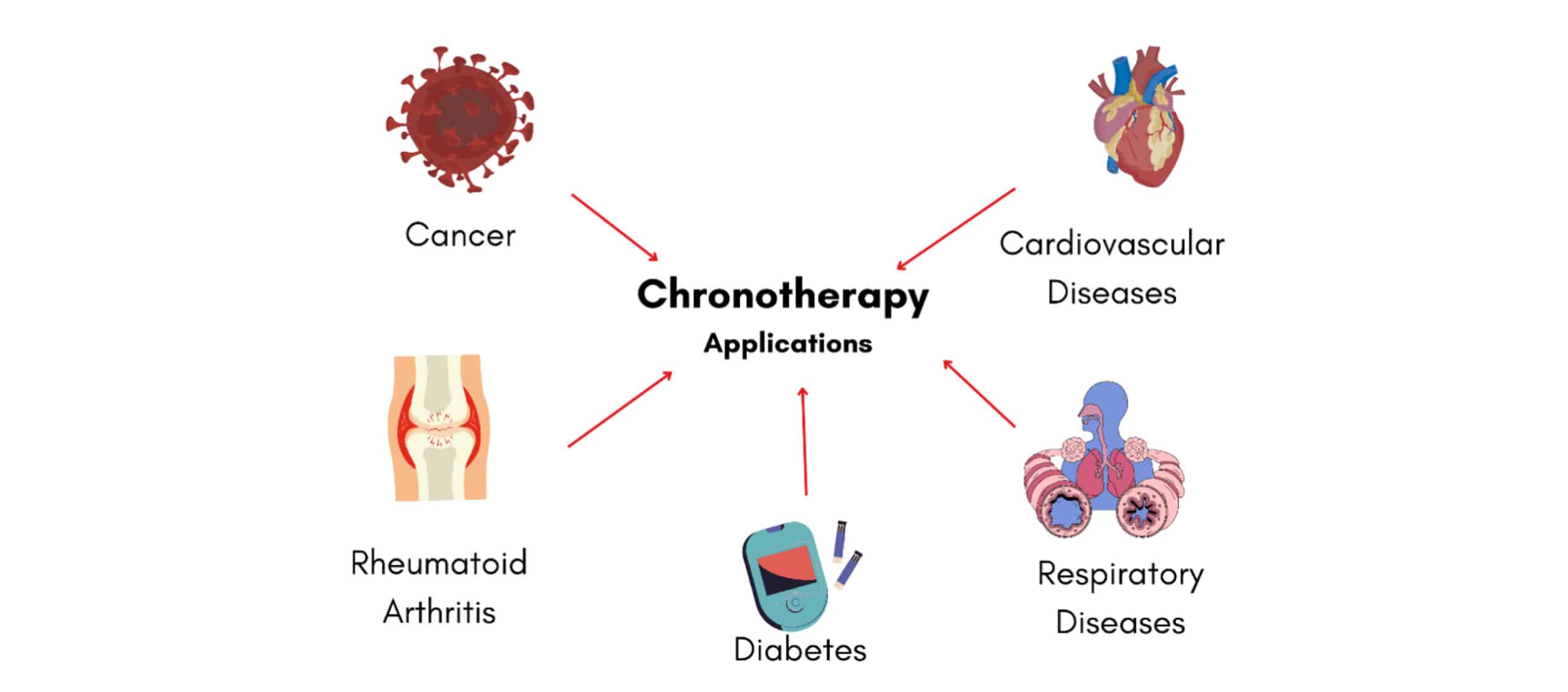
Figure 1: Different disease areas that have chronotherapy applications, including cancer, cardiovascular diseases, respiratory diseases, rheumatoid arthritis, and diabetes
Regulatory and manufacturing challenges
Stability and reproducibility of time-dependent formulations: Drug stability is an important quality characteristic that influences not just the effectiveness of therapeutic products but also patient safety. The US Pharmacopeia (USP) defines drug stability as “the degree to which a drug substance or product maintains, under the specified conditions, the same properties and characteristics that it possessed at the time of manufacture.” As a result, stability testing is now a regulatory requirement by law for pharmaceutical products and their ingredients at every step of the therapeutic development process. Drug stabilization is a major priority in formulation development, manufacturing, and extemporaneous compounding. Pharmacological compounds can be subjected to many types of chemical degradation during preservation, and certain drug molecules may even be degraded in living cells, such as stomach fluid, before being transported to the bloodstream.[46]
Drug polymorphism, which influences a drug’s solubility, stability, and bioavailability, differs between its various crystalline forms, or polymorphs. Polymorphism can be difficult to formulate since each polymorph may have different chemical and physical properties. To maintain consistent performance, the polymorphic form of a medicine must be discovered and regulated during the formulation process. Polymorphism is investigated and handled utilizing modern analytical techniques, including differential scanning calorimetry and X-ray diffraction.[8]
Regulatory guidance and patient compliance issues: Regulatory organizations such as the FDA and EMA do not provide a standard for chronotherapeutic systems, particularly AI-assisted individualized dosing. Trials should be transformed based on time of day; hence, stratified sampling with chronobiological outcomes is required. Chronotherapy often involves sophisticated equipment (wearable sensors, programmable pumps) that challenges regulatory classification and approval. Chronotherapy is frequently dependent on smart technology (e.g., wearables, sensors), making its classification and approval by regulators difficult.[47,48]
Medication dosing requires precise scheduling (e.g., 10 PM in antihypertensive therapy), which is frequently incompatible with patients’ daily routines and sleep patterns. Most other types of drugs, including supplements, have an appropriate (circadian) time to be administered. This has received little attention. Pulsatile or programmable devices can be intimidating to patients, particularly the elderly. Smart dosage methods and circadian monitoring devices are not widely available in communities that are underprivileged.[28]
Cost-effectiveness and scalability: There are several limitations to chronotherapy, including practical, economic, and regulatory issues. Strictly timed dosing regimens are aligned with circadian rhythms, making time-dependent drug delivery studies complex and expensive, and there are only a few products commercially available (which are primarily cardiovascular products).[48] Manufacturers are not interested in developing these drugs because of the high costs and the unpredictable behavior of drugs based on their rhythm and lengthy approval processes, although there are long-term benefits such as more effective drugs, fewer side effects, and greater patient compliance. Literature on asthma suggests that worsening symptoms are evident during the night and that there is no difference in efficacy or safety between once-daily timed dosing and multiple daily doses, but there is better convenience and adherence with once-daily dosing.[49-51] But with strict adherence to exact timing still being a problem for patients. Advancements in circadian biology, development of cost-effective delivery systems, and progress in the field of nanocarriers and personalized medicine are all vital to future progress.[52] Other challenges are related to scale-up problems, absence of commercial benchmarks, and regional regulatory differences.[46,51]
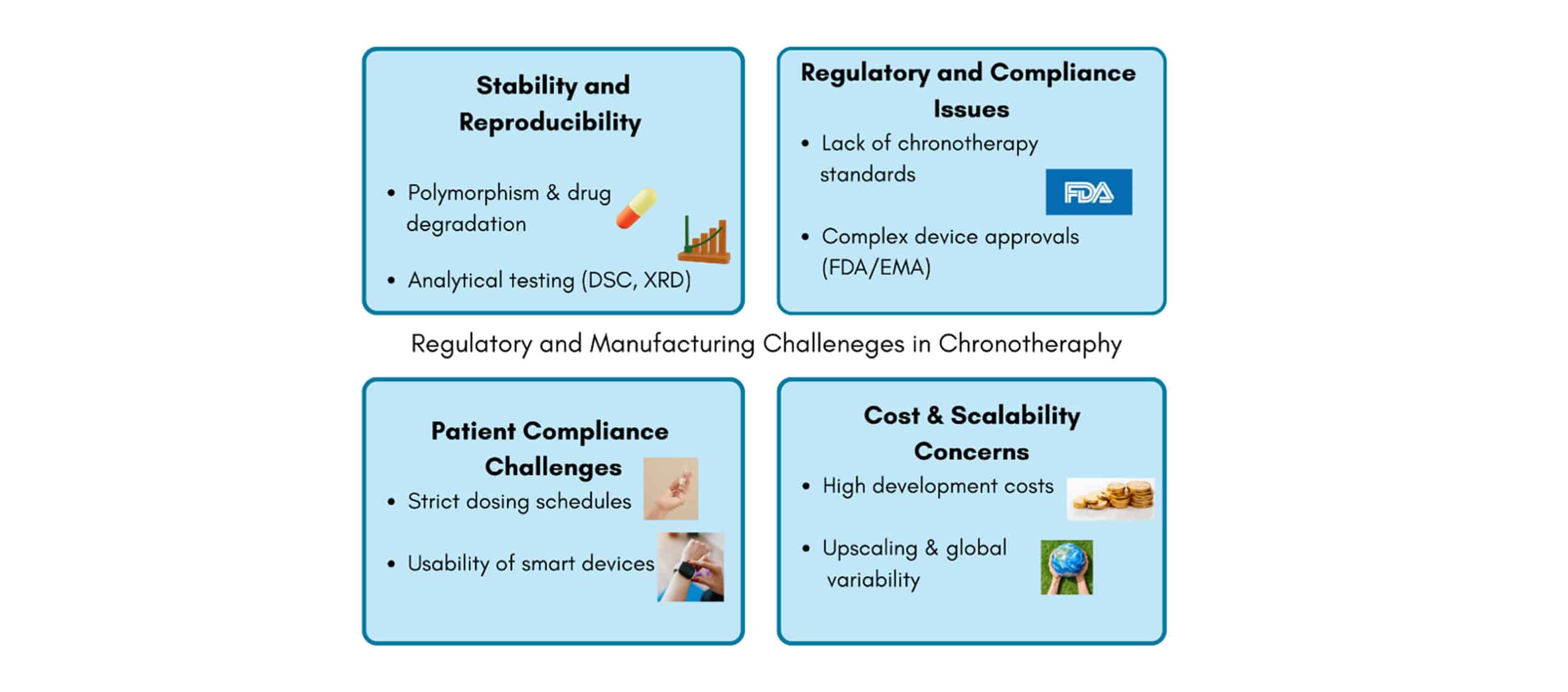
Figure 2: The figure above illustrates the major obstacles for implementing chronotherapy, such as problems with stability and reproducibility (polymorphism, drug decomposition, and testing), regulatory issues (absence of standardization and complicated FDA and EMA
Discussion
The current literature review demonstrates how important chronotherapy is to improve therapeutic results through the optimization of pharmacological treatments according to the body’s natural circadian rhythms. There is considerable evidence to show that the physiological functions, including hormonal regulation, metabolism, and activities of disease processes, have distinct circadian rhythms, which affect drug absorption, distribution, metabolism, and action. In consideration of these rhythms, chronotherapy can help increase the efficiency of treatment while reducing the risk of undesirable side effects. There are multiple research works devoted to the effectiveness of chronotherapy in dealing with diseases that have circadian patterns, for example, asthma, hypertension, rheumatoid arthritis, diabetes, and cancer. Indeed, administering drugs at certain times of the day has proven its positive effect on symptom relief, treatment results, and decreased toxicity. Besides, recent progress in developing new technologies of delivering the medication into the organism can provide additional options for chronotherapy use in practice.
Despite numerous achievements in this field, there are still problems with the implementation of chronotherapy techniques. The issues may include difficulties with patients’ adherence to a treatment schedule, complications connected with formulation, manufacturing costs, and regulatory policies. In conclusion, the reviewed literature provides evidence of chronotherapy as an integral part of modern personalized treatment strategies. Further research in the field of circadian biology, biomarkers, and drug delivery systems will contribute to the optimization of chronotherapy interventions.
Conclusion
Chronotherapy is an innovative approach to the administration of drugs, matching the timing of the administration to the body’s circadian rhythms to maximize the therapeutic effect and minimize side effects. Different formulation approaches, such as time-controlled systems, stimulus-responsive delivery systems, multiarticulate delivery systems, and nanotechnology, enable the precise and targeted effect of the drugs. Programmed infusion pumps, osmotic systems, and stimulus-responsive polymers facilitate the precise and time-specific delivery of the drugs. The clinical applications of chronotherapy in cardiovascular diseases, asthma, cancer, and rheumatoid arthritis underscore the significance and importance of chronotherapy in modern medicine. Though chronotherapy has opened promising avenues in the administration of drugs, there are certain challenges to be faced. The future holds promise for chronotherapy, and the advancements in the field of personalized medicine, wearable technologies, and circadian rhythms will take chronotherapy to the next level. Chronotherapy, thus, is a promising shift towards more effective and patient-oriented drug delivery systems, emphasizing the importance and significance of biological timing in the success of the treatment.
References
- Butler CT, Rodgers AM, Curtis AM, Donnelly RF. Chrono-tailored drug delivery systems: recent advances and future directions. Drug Deliv Transl Res. 2024;14(7):1756-1775. doi:10.1007/s13346-024-01539-4
PubMed | Crossref | Google Scholar - Smolensky MH, Peppas NA. Chronobiology, drug delivery, and chronotherapeutics. Adv Drug Deliv Rev. 2007;59(9-10):828-851. doi:10.1016/j.addr.2007.07.001
PubMed | Crossref | Google Scholar - Ballesta A, Innominato PF, Dallmann R, Rand DA, Lévi FA. Systems Chronotherapeutics. Pharmacol Rev. 2017;69(2):161-199. doi:10.1124/pr.116.013441
PubMed | Crossref | Google Scholar - Fagiani F, Di Marino D, Romagnoli A, et al. Molecular regulations of circadian rhythm and implications for physiology and diseases. Signal Transduct Target Ther. 2022;7(1):41. doi:10.1038/s41392-022-00899-y
PubMed | Crossref | Google Scholar - Rijo-Ferreira F, Takahashi JS. Genomics of circadian rhythms in health and disease. Genome Med. 2019;11(1):82. doi:10.1186/s13073-019-0704-0
PubMed | Crossref | Google Scholar - Bass J, Lazar MA. Circadian time signatures of fitness and disease. Science. 2016;354(6315):994-999. doi:10.1126/science.aah4965
PubMed | Crossref | Google Scholar - Guo JH, Qu WM, Chen SG, et al. Keeping the right time in space: importance of circadian clock and sleep for physiology and performance of astronauts. Mil Med Res. 2014;1:23. doi:10.1186/2054-9369-1-23
PubMed | Crossref | Google Scholar - Panda S. Circadian physiology of metabolism. Science. 2016;354(6315):1008-1015. doi:10.1126/science.aah4967
PubMed | Crossref | Google Scholar - Ashton A, Foster RG, Jagannath A. Photic Entrainment of the Circadian System. Int J Mol Sci. 2022;23(2):729. doi:10.3390/ijms23020729
PubMed | Crossref | Google Scholar - Luo Y, Abidian MR, Ahn JH, et al. Technology Roadmap for Flexible Sensors. ACS Nano. 2023;17(6):5211-5295. doi:10.1021/acsnano.2c12606
PubMed | Crossref | Google Scholar - Pett JP, Korenčič A, Wesener F, Kramer A, Herzel H. Feedback Loops of the Mammalian Circadian Clock Constitute Repressilator. PLoS Comput Biol. 2016;12(12):e1005266. doi:10.1371/journal.pcbi.1005266
PubMed | Crossref | Google Scholar - Yi JS, Díaz NM, D’Souza S, Buhr ED. The molecular clockwork of mammalian cells. Semin Cell Dev Biol. 2022;126:87-96. doi:10.1016/j.semcdb.2021.03.012
PubMed | Crossref | Google Scholar - Ko CH, Takahashi JS. Molecular components of the mammalian circadian clock. Hum Mol Genet. 2006;15:R271-277. doi:10.1093/hmg/ddl207
PubMed | Crossref | Google Scholar - Ruan W, Yuan X, Eltzschig HK. Circadian rhythm as a therapeutic target. Nat Rev Drug Discov. 2021;20(4):287-307. doi:10.1038/s41573-020-00109-w
PubMed | Crossref | Google Scholar - Guillaumond F, Dardente H, Giguère V, Cermakian N. Differential control of Bmal1 circadian transcription by REV-ERB and ROR nuclear receptors. J Biol Rhythms. 2005;20(5):391-403. doi:10.1177/0748730405277232
PubMed | Crossref | Google Scholar - Samoilova EM, Belopasov VV, Ekusheva EV, Zhang C, Troitskiy AV, Baklaushev VP. Epigenetic Clock and Circadian Rhythms in Stem Cell Aging and Rejuvenation. J Pers Med. 2021;11(11):1050. doi:10.3390/jpm11111050
PubMed | Crossref | Google Scholar - de Assis LVM, Kramer A. Circadian de(regulation) in physiology: implications for disease and treatment. Genes Dev. 2024;38(21-24):933-951. doi:10.1101/gad.352180.124
PubMed | Crossref | Google Scholar - Osum M, Kalkan R. Circadian rhythm, epigenetics and disease interaction. Glob Med Genet. 2024;12(1):100006. doi:10.1016/j.gmg.2024.100006
Crossref | Google Scholar - Crnko S, Du Pré BC, Sluijter JPG, Van Laake LW. Circadian rhythms and the molecular clock in cardiovascular biology and disease. Nat Rev Cardiol. 2019;16(7):437-447. doi:10.1038/s41569-019-0167-4
PubMed | Crossref | Google Scholar - Scheer FAJL, Hilton MF, Evoniuk HL, et al. The endogenous circadian system worsens asthma at night independent of sleep and other daily behavioral or environmental cycles. Proc Natl Acad Sci U S A. 2021;118(37):e2018486118. doi:10.1073/pnas.2018486118
PubMed | Crossref | Google Scholar - Gnocchi D, Bruscalupi G. Circadian Rhythms and Hormonal Homeostasis: Pathophysiological Implications. Biology (Basel). 2017;6(1):10. doi:10.3390/biology6010010
PubMed | Crossref | Google Scholar - Dong D, Yang D, Lin L, Wang S, Wu B. Circadian rhythm in pharmacokinetics and its relevance to chronotherapy. Biochem Pharmacol. 2020;178:114045. doi:10.1016/j.bcp.2020.114045
PubMed | Crossref | Google Scholar - Baxter M, Ray DW. Circadian rhythms in innate immunity and stress responses. Immunology. 2020;161(4):261-267. doi:10.1111/imm.13166
PubMed | Crossref | Google Scholar - Kiranmai M, Raajitha M. A comprehensive review on chronotherapeutics. Int J Pharm Sci Med. 2023;8:82-108. doi:10.47760/ijpsm.2023.v08i03.007
Crossref | Google Scholar - Jennings CL, Perry EK, Dziubla TD, Puleo DA. Sequential Release of Multiple Drugs from Flexible Drug Delivery Films. Int J Polym Mater. 2017;66(11):569-576. doi:10.1080/00914037.2016.1252352
PubMed | Crossref | Google Scholar - Kalosakas G, Panagopoulou E. Lag Time in Diffusion-Controlled Release Formulations Containing a Drug-Free Outer Layer. Processes. 2022;10(12):2592. doi:10.3390/pr10122592
Crossref | Google Scholar - Sreeharsha N, Naveen NR, Anitha P, et al. Development of Nanocrystal Compressed Minitablets for Chronotherapeutic Drug Delivery. Pharmaceuticals (Basel). 2022;15(3):311. doi:10.3390/ph15030311
PubMed | Crossref | Google Scholar - Ursini F, De Giorgi A, D’Onghia M, De Giorgio R, Fabbian F, Manfredini R. Chronobiology and Chronotherapy in Inflammatory Joint Diseases. Pharmaceutics. 2021;13(11):1832. doi:10.3390/pharmaceutics13111832
PubMed | Crossref | Google Scholar - Siddiqui SA, Sharma K, Handa V, Grover P. Chronotherapeutic drug delivery systems: an approach to synchronize drug concentrations to circadian rhythms in disease state. J Emerg Technol Innov Res. 2019;6(6).
Chronotherapeutic Drug Delivery Systems: An approach to synchronize drug concentrations to circadia… - Ohdo S. Chrono-drug discovery and development based on circadian rhythm of molecular, cellular and organ level. Biological and Pharmaceutical Bulletin. 2021;44(6):747-761. doi:10.1248/bpb.b21-00277
Crossref | Google Scholar - Sirisha VNL, Namrata M, Sruthi B, et al. Pulsatile drug delivery system: a review. Int J Pharm Res Allied Sci. 2012;1(3):13-23.
Pulsatile drug delivery system: a review - Agale KA, Shinde SP. A Review on Floating Tablet. J. Drug Delivery Ther. 2025;15(2):204-209. doi:10.22270/jddt.v15i2.7015
Crossref | Google Scholar - Bhairy SR, Habade BM, Gupta SK, Ghodke VR, Girkar YK, Kuchekar SK. Pellets and pelletization as multiparticulate drug delivery systems (MPDDS): a conventional and novel approach. Int J Inst Pharm Life Sci. 2015;5(4):79-126.
Pellets and Pelletization as Multiparticulate Drug Delivery Systems (MPDDS): A Conventional and Nov… - Klausner EA, Lavy E, Friedman M, Hoffman A. Expandable gastroretentive dosage forms. J Control Release. 2003;90(2):143-162. doi:10.1016/S0168-3659(03)00203-7
Crossref | Google Scholar - Youan BB. Chronopharmaceutics: gimmick or clinically relevant approach to drug delivery? J Control Release. 2004;98(3):337-353. doi:10.1016/j.jconrel.2004.05.015
Crossref | Google Scholar - Bodke V, Badekar R, Tekade B. Pulsatile drug delivery systems: the novel approach. Int J Pharm Pharm Sci. 2024;16(2). doi:10.22159/ijpps.2024v16i2.49960
Crossref | Google Scholar - Butler C, Rodgers A, Curtis A, Donnelly RF. Chrono-tailored drug delivery systems: recent advances and future directions. Drug Deliv Transl Res. 2024;14. doi:10.1007/s13346-024-01539-4
Crossref | Google Scholar - Bowles NP, Thosar SS, Herzig MX, et al. Chronotherapy for hypertension. Curr Hypertens Rep. 2018;20(12):97. doi:10.1007/s11906-018-0897-4
Crossref | Google Scholar - Hermida RC, Ayala DE, Mojón A, Fernández JR. Chronotherapy with nifedipine GITS in hypertensive patients: improved efficacy and safety with bedtime dosing. Am J Hypertens. 2008;21(8):948-954. doi:10.1038/ajh.2008.216
PubMed | Crossref | Google Scholar - Witte K, Weisser K, Neubeck M, et al. Cardiovascular effects, pharmacokinetics, and converting enzyme inhibition of enalapril after morning versus evening administration. Clin Pharmacol Ther. 1993;54(2):177-186. doi:10.1038/clpt.1993.129
PubMed | Crossref | Google Scholar - Burioka N, Fukuoka Y, Koyanagi S, et al. Asthma: Chronopharmacotherapy and the molecular clock. Adv Drug Deliv Rev. 2010;62(9-10):946-955. doi:10.1016/j.addr.2010.03.012
PubMed | Crossref | Google Scholar - Burioka N, Sako T, Tomita K, et al. Theophylline chronotherapy of nocturnal asthma using bathyphase of circadian rhythm in peak expiratory flow rate. Biomed Pharmacother. 2001;55 Suppl 1:142s-146. doi:10.1016/s0753-3322(01)90020-4
PubMed | Crossref | Google Scholar - Giacchetti S, Perpoint B, Zidani R, et al. Phase III multicenter randomized trial of oxaliplatin added to chronomodulated fluorouracil-leucovorin as first-line treatment of metastatic colorectal cancer. J Clin Oncol. 2000;18(1):136-147. doi:10.1200/JCO.2000.18.1.136
PubMed | Crossref | Google Scholar - Amiama-Roig A, Verdugo-Sivianes EM, Carnero A, Blanco JR. Chronotherapy: Circadian Rhythms and Their Influence in Cancer Therapy. Cancers (Basel). 2022;14(20):5071. doi:10.3390/cancers14205071
PubMed | Crossref | Google Scholar - Paolino S, Cutolo M, Pizzorni C. Glucocorticoid management in rheumatoid arthritis: morning or night low dose?. Reumatologia. 2017;55(4):189-197. doi:10.5114/reum.2017.69779
PubMed | Crossref | Google Scholar - Nishikage S, Hirota Y, Nakagawa Y, et al. Impact of isCGM on quality of life in overweight individuals with impaired glucose tolerance or mild diabetes: secondary analysis of a pilot randomized controlled study. Diabetol Int. 2025;16(4):707-716. doi:10.1007/s13340-025-00838-6
PubMed | Crossref | Google Scholar - Wu Z. Drug stability testing and formulation strategies. Pharm Dev Technol. 2018;23(10):941. doi:10.1080/10837450.2018.1548742
PubMed | Crossref | Google Scholar - Lévi F, Okyar A, Dulong S, Innominato PF, Clairambault J. Circadian timing in cancer treatments. Annu Rev Pharmacol Toxicol. 2010;50:377-421. doi:10.1146/annurev.pharmtox.48.113006.094626
PubMed | Crossref | Google Scholar - Mirza MA, Shakeel F, Iqbal Z. An overview of the regulatory and developmental strategies of chronotherapeutics. Ther Innov Regul Sci. 2016;50. doi:10.1177/2168479016634147
Crossref | Google Scholar - Smolensky MH, Peppas NA. Chronobiology, drug delivery, and chronotherapeutics. Adv Drug Deliv Rev. 2007;59(9-10):828-851. doi:10.1016/j.addr.2007.07.001
PubMed | Crossref | Google Scholar - Durrington HJ, Farrow SN, Ray DW. Recent advances in chronotherapy for the management of asthma. ChronoPhysiol Ther. 2014;4:125-135. doi:10.2147/CPT.S70845
Crossref | Google Scholar - Pincus DJ, Szefler SJ, Ackerson LM, Martin RJ. Chronotherapy of asthma with inhaled steroids: the effect of dosage timing on drug efficacy. J Allergy Clin Immunol. 1995;95(6):1172-1178. doi:10.1016/s0091-6749(95)70073-0
PubMed| Crossref | Google Scholar - Ingersoll KS, Cohen J. The impact of medication regimen factors on adherence to chronic treatment: a review of literature. J Behav Med. 2008;31(3):213-224. doi:10.1007/s10865-007-9147-y
PubMed | Crossref | Google Scholar
Acknowledgments
No external assistance was received.
Funding
This literature review was self-funded. No external funding was received.
Author Information
Corresponding Author:
Smavia Jamshed
Department of Pharmacy
Quaid-I-Azam University, Islamabad, Pakistan.
Email: [email protected]
Co-Authors:
Maida Noor
Department of Pharmacy and Pharmaceutical Sciences
University of Sunderland, Sunderland, UK
Ali Danish Alvi
Department of Pharmaceutical Sciences
Nanjing Tech University, Nanjing, China
Bashir Ahmad, Aswad Khan, Aleem Munir
Department of Biological Sciences
International Islamic University, Islamabad, Pakistan
Uswa Mansoor
Department of Pharmacy
Quaid-I-Azam University, Islamabad, Pakistan
Natasha Noor
Department of Biotechnology
Kinnaird College for Women University, Lahore, Pakistan
Boluwatife Dorcas Morakinyo
School of Pharmacy and Pharmaceutical Sciences, University of Sunderland, Sunderland, UK
Alina Shehzadi
Department of Biochemistry
University of Agriculture, Faisalabad, Pakistan
Author Contribution
Maida Noor contributed to conceptualization, investigation, visualization, and writing of the original draft. Smavia Jamshed, Ali Danish Alvi, Uswa Mansoor, and Natasha Noor contributed to investigation and writing of the original draft. Aswad Khan contributed to investigation, data curation, and writing of the original draft. Bashir Ahmad provided supervision throughout the study. Boluwatife Dorcas Morakinyo contributed to data curation and supervision. Aleem Munir and Alina Shehzadi contributed to the review and editing of the manuscript. All authors read and approved the final version of the manuscript.
Conflict of Interest Statement
The authors declare no conflict of interest regarding this study.
Ethical Approval
Not Applicable
Guarantor
None
DOI
Cite this Article
Noor M, Jamshed S, Alvi AD, et al. Recent Advances in Chronotherapeutic Drug Delivery Systems: A Review. medtigo J Pharmacol. 2026;3(2):e3061324. doi:10.63096/medtigo3061324 Crossref