








 Author Affiliations
Abstract
Background: Parents satisfaction with nursing care is a key indicator of healthcare quality in pediatric settings. It is influenced by communication, professionalism, responsiveness, emotional support, and overall care quality. Understanding these factors is essential for improving delivery and ensuring better outcomes.
Aim: To assess parents’ satisfaction with nursing care and identify factors influencing their perceptions in a children’s hospital in Lahore.
Methodology: This descriptive cross-sectional study was conducted at the children’s hospital Lahore, Pakistan, involving 306 parents of children hospitalized for at least 24 hours. The data were collected in April and May 2024. A structured questionnaire validated (Content validity index (CVI) = 0.94) and reliable (Cronbach’s alpha (CA) 0.82) using a Likert scale was employed to measure satisfaction across dimensions such as communication, emotional support, responsiveness, and professionalism. Data was analyzed using descriptive and inferential statistics, with statistical package for the social sciences (SPSS) version 27.
Results: Most participants were aged 31-40 years (39.2%) and female (55.9%). Higher satisfaction was reported for professionalism (88%) and communication (85%), while emotional support (80%) and responsiveness (82%) received slightly lower scores. Significant associations were observed between satisfaction and factors such as age, education, and socioeconomic status. Parents in the pediatric intensive care unit (ICU) reported the highest satisfaction (86%).
Conclusion: Parents expressed high satisfaction with nursing care, particularly in communication and professionalism, although improvements in emotional support and responsiveness are needed. Addressing socioeconomic disparities and fostering strong relationships in longer hospital stays can further enhance satisfaction levels.
Keywords
Parents satisfaction, Nursing care, Pediatric care, Communication, Emotional support.
Introduction
The level of contentment parents demonstrate about child healthcare services at healthcare facilities defines parents’ satisfaction with nursing care.[1] The satisfaction parents feel regarding hospital care depends on nursing service quality, alongside healthcare provider relational expertise and parent-nurse dialogue quality, as well as the general hospital atmosphere.[2] Used research terms include “satisfaction” to show parental feelings about healthcare delivery, “nursing care” to define comprehensive patient-serving nursing actions, and “parents” describing primary child caretakers who make healthcare decisions. Measuring parents’ satisfaction with healthcare services matters because it allows us to improve both healthcare and protect children’s health during medical care.[3]
As frontline healthcare providers, nurses serve as key professionals who meet parents first when they bring their children into care.[4] When hospital staff pursue different approaches to patient care, parents develop varying understandings about their child’s healing process and the degree of comfort within the facility.[5] Among nursing competencies that strongly influence parent satisfaction are effective communication methods, empathetic care provision, and emotional support. When parents understand their child’s condition and maintain involvement with their treatment team, they report higher satisfaction with nursing care.[6]
Research findings document how well parents are satisfied with health care, which directly shapes the standard of pediatric medical service delivery.[7] Satisfaction rates at high levels lead to better medical results for both children and parents because of improved wellness results.[8] When parents experience inadequate nursing care satisfaction, this often creates distrust in their healthcare providers while driving some parents to search for alternative medical care. The successful measurement and enhancement of nursing service quality remains essential for the achievement of parental expectations regarding care.[9]
Receiving nursing care satisfaction scores from parents remains influenced by multiple elements, including disease severity, length of hospitalization, and particular care methods that nurses provide.[10] Student and socioeconomic status, along with cultural background, shape parental expectations about medical care. Thus, healthcare providers must take these distinctions into account while assessing satisfaction. Health professionals’ knowledge of different patient viewpoints enables them to design patient-specific care that better addresses diverse backgrounds while enhancing clinical outcomes.[11]
The importance of parent satisfaction in healthcare elicits limited systematic research regarding the dimensions of nursing care satisfaction in children’s hospitals. More research must be conducted to identify how nursing care practices need improvement because existing knowledge about parent experience enhancement is lacking.[12] Healthcare facilities will enhance patient and family care by filling these knowledge voids, which lead to a more welcoming and supportive medical setting.[13]
Methodology
The researchers used a descriptive cross-sectional research approach to measure parent satisfaction with nursing care delivered to pediatric patients. The research studies both factors that contribute to parental satisfaction alongside their perceptions of the quality of nursing care. Researchers conducted the study at the children’s hospital Lahore, Pakistan, through direct invitations to parents who had children under hospital care. At a specific moment, the research delivered insights regarding parental satisfaction levels.
Parents of patients staying at least 24 hours in children’s hospital Lahore’s selected departments like general pediatric ward, pediatric ICU and pediatric high dependency unit (HDU) make up our research population. The researchers performed participant selection through convenience sampling for subjects who met the requirements. The research excluded parents who had children stay in the hospital for less than 24 hours or require critical care. The researchers collected data from 306 parents to achieve adequate statistical findings.
Data collection procedure: The research instrument consisted of a structured questionnaire that measured several aspects of parent satisfaction. The survey instruments contained scaled questions that assessed parent satisfaction concerning their healthcare interactions with nurses as well as the quality of care service delivery. The research questions used indicators from established tools that researchers adjusted to match pediatric clinical settings. The research collected demographic data, including age, education level, and socioeconomic status, which served to evaluate how these factors might impact satisfaction ratings. Researchers tested the questionnaire’s clarity along with its reliability by conducting initial assessments with 10 to 15 participants from parent groups. The research team made changes to the instrument after collecting feedback during the pilot test phase.
Data analysis: A descriptive statistical approach summarizes information from questionnaires through standard data summarization methods. The analysis comprised categorical data frequency along with percentage outcomes, while satisfaction dimensions required mean scoring methods. Inferential statistics examined how demographic variables relate to levels of parent satisfaction through their application. The Chi-square (χ2 test) method tested associations among categorical variables while researchers executed their studies through SPSS version 27 software.
Ethical considerations: Ethical approval was obtained from the children’s hospital Lahore, Pakistan. Participants were informed about the purpose of the study, and their confidentiality and anonymity were assured. Written informed consent was obtained from all participants.
Results
Demographic characteristics of participants: Most parents in the study were aged between 31-40 years (39.2%) and were female (55.9%). A large proportion of parents (75.5%) had higher education, and most parents (60.1%) belonged to the middle socioeconomic status. The low socioeconomic group represented 17%, while 22.9% of parents were from a high socioeconomic background.
| Demographic variable | Frequency (n) | Percentage (%) |
| Age of parents | ||
| 18-30 years | 85 | 27.8% |
| 31-40 years | 120 | 39.2% |
| 41-50 years | 75 | 24.5% |
| 51+ years | 26 | 8.5% |
| Gender of parents | ||
| Male | 135 | 44.1% |
| Female | 171 | 55.9% |
| Education level of parents | ||
| No formal education | 15 | 4.9% |
| Primary/secondary | 60 | 19.6% |
| Higher education | 231 | 75.5% |
| Socioeconomic status | ||
| Low | 52 | 17.0% |
| Middle | 184 | 60.1% |
| High | 70 | 22.9% |
Table 1: Demographic characteristics of participants (n=306)
Parents expressed high satisfaction with nursing care, particularly with the professionalism of nurses (88%) and communication (85%). The overall quality of care was also rated positively (84%), while emotional support (80%) and responsiveness (82%) received slightly lower satisfaction scores, highlighting areas for improvement.
| Satisfaction dimension | Mean score | Standard deviation (SD) | Level of satisfaction (%) |
| Communication with nurses | 4.2 | 0.65 | 85% |
| Emotional support provided | 3.9 | 0.72 | 80% |
| Responsiveness of nurses | 4.0 | 0.68 | 82% |
| Professionalism of nurses | 4.4 | 0.56 | 88% |
| Overall quality of care | 4.1 | 0.61 | 84% |
Table 2: Parent satisfaction with nursing care (n=306)
Satisfaction levels were higher among older parents, those with higher education, and those from higher socioeconomic backgrounds, while younger parents and those with lower education or from lower socioeconomic groups reported lower satisfaction. Gender did not significantly influence satisfaction.
| Demographic variable | Satisfaction level (Mean score) | p-value (χ2 test)) |
| Age of parents | ||
| 18-30 years | 3.9 | 0.05 |
| 31-40 years | 4.2 | |
| 41-50 years | 4.1 | |
| 51+ years | 3.7 | |
| Gender of parents | ||
| Male | 4.0 | 0.21 |
| Female | 4.2 | |
| Education level of parents | ||
| No formal education | 3.5 | 0.02 |
| Primary/secondary | 3.8 | |
| Higher education | 4.3 | |
| Socioeconomic status | ||
| Low | 3.7 | 0.04 |
| Middle | 4.2 | |
| High | 4.4 | |
Table 3: Association between parent satisfaction and demographic variables
Parents in the pediatric ICU reported the highest satisfaction with a mean score of 4.2, followed by the Pediatric HDU at 4.1, and the general pediatric ward at 4.0. The satisfaction levels across all areas were high, with percentages ranging from 83% to 86%.
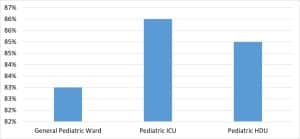
Figure 1: Parent satisfaction by type of ward
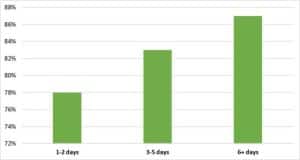
Figure 2: Parent satisfaction by length of hospital stay
Discussion
The investigation yielded significant data that reveals vital details about parental satisfaction with pediatric nursing care. The results demonstrate that nursing care met parental satisfaction standards in all areas, although professional conduct, patient communication, and prompt response received the highest positive evaluations. Multiple studies demonstrate that effective communication combined with professionalism leads to higher satisfaction for patients and their families in healthcare facilities.[14]
Communication with nurses: The research indicated that 85% of participants showed satisfaction with nurse-stakeholder interaction while maintaining a mean score of 4.2. Strong communication between medical staff is ranked by experts as essential to achieving better patient satisfaction in pediatric healthcare. When parents keep up with health information and participate in child healthcare discussions, their perception of medical care becomes positive.[15] Litaka university college research shows that productive yet sensitive dialogue between nurses and parents helps construct trust relationships while soothing parental stress at pediatric health facilities.[16]
Emotional support: The research confirmed positive outcomes related to emotional support, since parents scored 3.9 on average and 80% were satisfied. Pediatric care requires emotional support because parents typically experience serious emotional stress during their child’s hospitalization.[17] By providing reassurance and empathy, nurses ensure that parents have a positive medical experience. Healthcare providers who combine physical care delivery with direct attention to emotional needs achieve increased parent satisfaction, which helps build stronger holistic care settings.[18]
Responsiveness of nurses: Research participants scored the responsiveness of nurses at 4.0 on average, which shows parents generally approve of nurses’ prompt care delivery. Quick response time is essential in pediatric care, since parents need urgent childcare assistance along with immediate inquiries about their child’s situation.[19] A quick, responsive attitude among nursing professionals helps patients both receive needed care speedily and maintain positive feelings about receiving support. The study demonstrates that nurses need complete responsibility for childcare along with proficient assistance to parents.[20]
Professionalism of nurses: Parents expressed the most satisfaction regarding how nurses provide their professional services because their mean score reached 4.4, while 88% reported positive experiences. A hybrid construct of expertise, together with manner and appearance, advanced to the top as per parents’ evaluations.[21] The way nurses conduct themselves professionally enhances patient trust in delivering care, while parents who perceive nursing skills and empathy report higher satisfaction ratings during consultations. Healthcare team trust relationships grow stronger due to professional conduct and lead to an improved overall encounter.[22]
Overall quality of care: Most parents evaluated the received medical care with an 84% satisfaction rate. Most parents expressed contentment about the nursing care they received for their children during a hospital stay. Research results demonstrate that pediatric care quality depends on three core factors: nurses’ competence, staff responsiveness, and emotional family support.[23] Parents who experience quality nursing care create positive hospital experiences, according to research data. As nurses fulfill their parental requirements, satisfaction with services increases.[24]
Length of hospital stay: Parent satisfaction scores increased with longer hospital stays for their children. Children who spent more time in hospital settings led parents to demonstrate greater satisfaction with treatment services. A longer hospital stay allows nurses and patients to develop relationships because patients spend additional time getting to know their nursing staff.[25] When patients stay longer at the hospital, both parents and families have multiple chances to understand the outstanding level of service, which ultimately results in happier patients. The research implies that when parents spend more time in hospital care, they develop stronger trust and feel more satisfied.[26]
Ward type and satisfaction: Patients expressed the most satisfaction in the Pediatric ICU, while other ward types received differing results. Toxic environments that come with the ICU bring stress and anxiety to staff, but specialized care teams in these units typically result in improved satisfaction for patients and their families.[27] When children receive care in ICUs, parents often experience relief due to the excellent expertise, along with prioritization of healthcare for their sick child. The results demonstrate that specialized healthcare services under intense pressure lead parents to express positive care experiences when the service levels match their expectation,s while offering them adequate support.[28]
Recommendations: Hospital improvements in pediatric nursing care can be achieved by three main recommendations for better communication between staff and parents: ongoing staff training programs, strengthening emotional support systems, and better staffing and technical tools that support care delivery. Higher parent satisfaction rates in pediatric hospitals can be achieved by supporting nursing professionals through continuing education programs, thesis help programs, and language support while simultaneously working to build positive relationships throughout hospital stays. The staff in critical care areas need to provide enhanced emotional and psychological support to parents. By maintaining routine evaluations with parents, healthcare providers can always sustain and enhance the quality and degree of care relationships.
Conclusion
Research evidence shows that parent satisfaction in pediatric nursing depends strongly on the quality of communication alongside professionalism, as well as emotional support and responsive care. The research results confirm previous study outcomes by demonstrating the need for healthcare professionals to provide complete physical and emotional support to parents during their care journeys. The high satisfaction scores from this research reflect normative nursing care quality in pediatric settings, although specific attention needs to be focused on serving children from lower socioeconomic backgrounds. Further research is needed to develop specific interventions for enhancing satisfaction levels, which can be measured for extended durations regarding both parental and child performance.
References
- Kanda K, Blythe S, Grace R, Kemp L. Parent satisfaction with sustained home visiting care for mothers and children: an integrative review. BMC Health Serv Res. 2022;22(1):295. doi:10.1186/s12913-022-07661-0
PubMed | Crossref | Google Scholar - Çamur Z, Sarıkaya Karabudak S. The effect of parental participation in the care of hospitalized children on parent satisfaction and parent and child anxiety: randomized controlled trial. Int J Nurs Pract. 2021;27(5):e12910. doi:10.1111/ijn.12910 PubMed | Crossref | Google Scholar
- Ali MS, Mekonen EG, Workneh BS. Parental satisfaction and associated factors towards neonatal intensive care unit services at the University of Gondar Comprehensive Specialized Hospital, Northwest Ethiopia. Int J Afr Nurs Sci. 2021;15:100364. doi:10.1016/j.ijans.2021.100364 Crossref | Google Scholar
- Moyes A, Abbott T, Baker S, et al. A parent first: exploring the support needs of parents caring for a child with medical complexity in Australia. J Pediatr Nurs. 2022;67:e48-57. doi:10.1016/j.pedn.2022.07.012 PubMed
- Tekin S, Glover N, Greene T, et al. Experiences and views of frontline healthcare workers’ family members in the UK during the COVID-19 pandemic: a qualitative study. Eur J Psychotraumatol. 2022;13(1):2057166. doi:10.1080/20008198.2022.2057166 PubMed | Crossref | Google Scholar
- Liang JS, Lin HY, Chen YJ, et al. Nurses’ perspectives on child-friendly care needs in emergency departments: a qualitative study. Int Emerg Nurs. 2024;73:101402. doi:10.1016/j.ienj.2024.101402 Crossref | Google Scholar
- Wu QL, Tang L. What satisfies parents of pediatric patients in China: a grounded theory building analysis of online physician reviews. Health Commun. 2022;37(10):1329-1336. doi:10.1080/10410236.2021.1882664
PubMed | Crossref | Google Scholar - Strong J, Lattof SR, Maliqi B, Yaqub N. Experiences of private sector quality care amongst mothers, newborns, and children in low- and middle-income countries: a systematic review. BMC Health Serv Res. 2021;21:1-5. doi:10.1186/s12913-021-06961-8 PubMed | Crossref | Google Scholar
- Xenodoxidou E, Theodorou P, Karagianni R, Intas G, Platis C. Factors that determine parents’ satisfaction with the care given to their children in two Greek public hospitals. Health Res J. 2022;8(2):97-110. doi:10.12681/hrj.29074 Crossref | Google Scholar
- Kruszecka-Krówka A, Cepuch G, Gniadek A, Smoleń E, Piskorz-Ogórek K, Micek A. Selected predictors of parental satisfaction with child nursing care in pediatric wards in Poland: cross-sectional study. PLoS One. 2021;16(11):e0260504. doi:10.1371/journal.pone.0260504 PubMed | Crossref | Google Scholar
- Jin I, Cho HH. Factors influencing the quality of nursing care as perceived by mothers of hospitalized children in South Korea. Child Health Nurs Res. 2021;27(3):266-274. doi:10.4094/chnr.2021.27.3.266
PubMed | Crossref | Google Scholar - Ndwiga C, Warren CE, Okondo C, Abuya T, Sripad P. Experience of care of hospitalized newborns and young children and their parents: a scoping review. PLoS One. 2022;17(8):e0272912. doi:10.1371/journal.pone.0272912
Crossref | Google Scholar - Riquelme I, Sabater-Gárriz Á, Montoya P. Pain and communication in children with cerebral palsy: influence on parents’ perception of family impact and healthcare satisfaction. Children (Basel). 2021;8(2):87. doi:10.3390/children8020087 PubMed | Crossref | Google Scholar
- Sheehan J, Laver K, Bhopti A, et al. Methods and effectiveness of communication between hospital allied health and primary care practitioners: a systematic narrative review. J Multidiscip Healthc. 2021;14:493-511. doi:10.2147/JMDH.S290631 PubMed | Crossref | Google Scholar
- Drossman DA, Chang L, Deutsch JK, et al. A review of the evidence and recommendations on communication skills and the patient-provider relationship: a Rome foundation working team report. 2021;161(5):1670-1688. doi:10.1053/j.gastro.2021.07.037 PubMed | Crossref | Google Scholar
- Gram P, Thomsen LL, Andersen CG, Overgaard C. Trusting parent-professional relationships in interprofessional interventions for expectant and new parents in vulnerable positions: a realist evaluation. J Interprof Care. 2023;37(2):282-292. doi:10.1080/13561820.2023.2184123 PubMed | Crossref | Google Scholar
- Feng Y, Zhou X, Liu Q, et al. Symptom severity and posttraumatic growth in parents of children with autism spectrum disorder: the moderating role of social support. Autism Res. 2022;15(4):602-613. doi:10.1002/aur.2674
PubMed | Google Scholar - Ayoub M, Udo C, Årestedt K, Kreicbergs U, Lövgren M. The family talk intervention in pediatric oncology: potential effects reported by parents. Children (Basel). 2024;11(1):95. doi:10.3390/children11010095
PubMed | Crossref | Google Scholar - Broadhurst K, Mason C, Ward H. Urgent care proceedings for newborn babies in England and Wales–time for a fundamental review. Int J Law Policy Fam. 2022;36(1):ebac008. doi:10.1093/lawfam/ebac008
Crossref | Google Scholar - Gren C, Egerod I, Linderoth G, et al. “We can’t do without it”: parent and call-handler experiences of video triage of children at a medical helpline. PLoS One. 2022;17(4):e0266007. doi:10.1371/journal.pone.0266007
Crossref | Google Scholar - Bader AS. The perceived stress level of students in hybrid classes: the influence of Job Characteristics by Hackman & Oldham. Master’s thesis. Reykjavík University; 2022. The perceived stress level of students in hybrid classes : the influence of Job Characteristics by Hackman & Oldham
- Rosič J, Janicke-Bowles SH, Carbone L, Lobe B, Vandenbosch L. Positive digital communication among youth: the development and validation of the Digital Flourishing Scale for adolescents. Front Digit Health. 2022;4:975557. doi:10.3389/fdgth.2022.975557 Crossref | Google Scholar
- Janhunen K. Pediatric care quality in emergency departments: a view of children, parents, nursing staff, and administrative data. Master’s dissertation. University of Eastern Finland; 2011. Pediatric care quality in emergency departments: a view of children, parents, nursing staff, and administrative data
- Eklund AL, Jangsten E, Gunnarsdóttir H. Assessing and promoting responsive interaction between parents and children: a qualitative study of the experiences of child health care nurses in Sweden. J Pediatr Nurs. 2022;63:e95-101. doi:10.1016/j.pedn.2021.11.021 PubMed
- Pratt H, Moroney T, Middleton R. The influence of engaging authentically on nurse-patient relationships: a scoping review. Nurs Inq. 2021;28(2):e12388. doi:10.1111/nin.12388 PubMed | Crossref | Google Scholar
- Michel O, Garcia Manjon AJ, Pasquier J, Ortoleva Bucher C. How do nurses spend their time? A time and motion analysis of nursing activities in an internal medicine unit. J Adv Nurs. 2021;77(11):4459-4470. doi:10.1111/jan.14997 PubMed
- Ewens B, Collyer D, Kemp V, Arabiat D. The enablers and barriers to children visiting their ill parent/carer in intensive care units: a scoping review. Aust Crit Care. 2021;34(6):604-619. doi:10.1016/j.aucc.2020.10.006 PubMed
- Knutsson S, Golsäter M, Enskär K. The meaning of being a visiting child of a seriously ill parent receiving care at the ICU. Int J Qual Stud Health Well-being. 2021;16(1):1999884. doi:10.1080/17482631.2021.1999884
PubMed | Crossref | Google Scholar
Acknowledgments
Not reported
Funding
The work had no special funding.
Author Information
Correspondence Author:
Hina Munir
Department of Nursing
Children Hospital Lahore, Pakistan
Email: [email protected]
Co-Authors:
Zaib UN Nisa
Department of Nursing
Children Hospital Lahore, Pakistan
Authors Contributions
All authors contributed to the conceptualization, investigation, and data curation by acquiring and critically reviewing the selected articles. They were collectively involved in the writing – original draft preparation, and writing – review & editing to refine the manuscript. Additionally, all authors participated in the supervision of the work, ensuring accuracy and completeness. The final manuscript was approved by all named authors for submission to the journal.
Ethical Approval
Ethical approval was obtained from the Children’s Hospital Lahore, Pakistan. Participants were informed about the purpose of the study, and their confidentiality and anonymity were assured.
Conflict of Interest Statement
The author declares no conflict of interest.
Guarantor
None
DOI
Cite this Article
Hina M, Zaib UN, Shah H. Parents Satisfaction with Nursing Care at Children Hospital Lahore, Pakistan.
medtigo J Med. 2025;3(1):e30623121. doi:10.63096/medtigo30623121 Crossref