Author Affiliations
Abstract
Background: Secondary school teachers are primarily responsible for keeping the welfare of their students, and they are the first responsible person when students face injuries. This study aimed to assess the knowledge, attitude, and related factors toward first aid among secondary school teachers working in Harari regional state, eastern Ethiopia.
Methodology: An institutional-based, quantitative, cross-sectional study was conducted among 417 randomly selected teachers who have been teaching in secondary schools for at least 6 months. Data were collected by self-administered and standardized questionnaires. Variables with a p-value of less than 0.05 at a 95% confidence interval (CI) in the multivariable regression were significantly associated with knowledge and attitude toward first aid.
Results: Among the study participants, 41.2% had good knowledge, whereas 54.5% had a favorable attitude. Teachers who worked for 6-10 years (adjusted odds ratio (AOR): 5.24; 95% CI: 2.043, 13.467), taking training on first aid (AOR: 3.563; 95% CI: 2.169, 5.851), and the presence of first aid kits in the schools (AOR: 1.799; 95% CI: 1.112, 2.910) were significantly associated with good knowledge whereas teachers older than 41 years (AOR: 1.932; 95% CI: 1.134, 3.291) and the presence of first aid kits in the school (AOR: 2.136; 95% CI: 1.360, 3.353) were significantly associated with a favorable attitudes.
Conclusion: The level of first aid knowledge among secondary school teachers was inadequate. Initiating a first aid training program at the beginning of their career and providing first aid kits to schools will improve their knowledge.
Keywords
Attitude, First aid, Harar, Knowledge, Teacher.
Introduction
First aid is the immediate initial assistance given to a person who is injured or has become ill. It can make the difference between life and death if it is given by first aid providers who have the skill and knowledge, and knowledgeable first aiders can maintain the person’s physical and mental health in the greatest possible condition until emergency medical help arrives.[1,2] September 12, 2020, was world first aid day, an annual campaign to promote the importance of first aid training in preventing injuries and saving lives. It provides knowledge, skills, and confidence to act when needed.[3,4]
Pre-hospital first aid is a type of emergency care that is provided outside of a hospital setting.[5] Often, prehospital death occurs due to a lack of understanding about first aid treatment or a delay in getting the victim to proper medical care. Therefore, first aid providers must have a good attitude, adequate knowledge, and readiness to contribute to the casualty.[5,6]
Providing first aid kits in the school can act as a prompt and motivator for instructors and students to continually refresh their knowledge and abilities through education and practice (Anon n.d.). A first aid kit is a collection of materials and equipment that may contain bandages for stopping bleeding, gloves to protect the caregiver from contamination, a breathing barrier for rescue breathing, and sometimes instructions on how to perform first aid.[7]
The primary goal of first aid is to save a person’s life and to keep them from further injury or deteriorating to unhealthy conditions.[7] Many incidents occur in a variety of settings, including college, when traveling, and while going about our daily lives, and around 2,500 people die as a result of a closed airway, and 29,000 people die of heart attacks in situations where first aid may have saved their lives.[8,9]
A crucial part of children’s life is school, where they spend at least one-third of their time, and both their mental and physical health are adversely impacted.[10] School students are particularly vulnerable to a range of risks because of their developing physical and mental capacities. The bulk of student injuries occurred during school hours and were directly related to their physical activity.[11] Studies have also revealed the possibility of allergic responses to certain foods, drugs, and insect bites occurring on school grounds, indicating that students with allergies and episodes of disorders may experience them while in class.[12]
Since they are more likely to be involved in accidents and sustain injuries, students require first aid more frequently. Injuries, accidents, and emergency situations that occur in the school setting require rapid and proper life-saving care before the injured individual is treated by a health professional. Teachers are in charge of keeping an eye on these children while they are enrolled in school, so they should be knowledgeable about first aid.[12,13]
Basic health education should include life-saving first-aid skills, and everyone starting at the age of ten should learn these, including Basic Life-Support and cardiopulmonary resuscitation. Because they regularly encounter life-threatening situations in their everyday work, health care professionals and trainees are expected to be aware of it.[12,14]
In Ethiopia, the annual mortality caused by injuries is projected to increase from 10,697 in 2015 to 11,989 by 2030 among children less than 5 years and the number of deaths among 0–14-year olds will be 30,364.[15] School teachers are primarily responsible for keeping the welfare of the students and overseeing their activities. They are the first contact and responsible person when children face injuries, However, studies showed that the level of knowledge and basic practice of first aid among school teachers were found to be poor.[1]
In Ethiopia, few studies have been conducted on knowledge and attitudes toward first aid among schoolteachers. Therefore, this study aims to assess the knowledge, attitude, and related factors among secondary school teachers working in governmental schools of Harari regional state, eastern Ethiopia. Furthermore, the findings from this study will provide important information for the teachers on how to give first aid in the school setting, and other concerned bodies and researchers to work further on related issues.
Methodology
Study area and period: The study was conducted among governmental secondary school teachers in Harari regional state, eastern Ethiopia. Harari regional state is one of the ten regional states found in Ethiopia. The region is located 526 km east of Addis Ababa, the capital city of Ethiopia; it is totally surrounded by the Oromia regional state. The region is divided into nine woredas, three rural and six urban. The urban districts are subdivided into 19 kebeles (the lowest administrative division in the country), and the rural districts are subdivided into 17 peasant associations (which are equivalent to kebeles in the urban case). The total population (2021 projection based on the 2007 Census, CSA) of the region is 270,000, of which 136,000 are males and 134,000 are females. There are a total of nine governmental secondary schools.[16]
Study design: An institutional-based cross-sectional study was conducted.
Study populations and eligibility criteria: The study population included all secondary school teachers working in Harari region governmental schools and had at least six months of teaching experience prior to the data collection period. Teachers who were on sick leave, annual leave, or maternal leave at the time of data collection were excluded from this study.
Ethical consideration: The research was conducted according to the recommendations of the declarations of Helsinki.[22] Ethical clearance was obtained from the institutional health research ethics review committee (IHRERC) of Haramaya University college of health and medical sciences on 02/02/2022 (Ref No. IHRERC/010/2022). A formal permission letter was obtained from the Harari region educational bureau before data collection for all 9 governmental secondary schools in which the study was conducted. Informed verbal and written consent was obtained from study participants. To ensure the safety of data collectors and participants from the coronavirus disease of 2019 (COVID-19) pandemic, training was given to data collectors on the proper use of coronavirus prevention measures and to protect the participants from the pandemic.
Sample size determination: The sample size for this study was determined by using a single population proportion formula considering the following assumptions: Zα/2=1.96, P=0.44 from a previous study, and d (margin of error) = 5%.[17] Thus, the final sample size becomes 417 after adding a 10% nonresponse rate.
Sampling techniques and procedures: All 9 governmental secondary schools in the study area were included in this study. The total calculated sample size was proportionally allocated to each school based on the number of teachers. Harari secondary school (100), Abubeker secondary school (86), Dire teyara secondary school (29), Jegnoch secondary school (27), Harewi bereser secondary school (25), Hamaresa secondary school (47), Shakib abdulahi secondary school (39), Yerer secondary school (27), and Abadiir secondary school (49). The sampling frame of teachers was prepared after a list of all teachers was taken from each school’s director, and the teachers were selected using a simple random sampling technique.
Data collection tools and procedures: The data were collected by using a standardized, valid, and reliable tool using a self-administered method. The questionnaire was adapted after reviewing previous literature.[15,17,18] It has three sections; section one is about the socio-demographic characteristics of teachers, which contains ten items; section two, knowledge about secondary school teachers towards first aid, which contains fourteen items, and section three is about attitudes of teachers towards first aid, which contains six items.
Variables: The dependent variables of this study were knowledge and attitudes towards first aid, whereas Socio-demographic factors (Sex, age, marital status, educational status, working experience, training on first aid, and presence of a committee or group for first aid, availability of first aid kit at school and attended a first aid course) were independent variables.
Operational definitions:
Good knowledge: – Participant who has scored above the mean for knowledge questions.
Poor knowledge: – Participant who has scored below the mean for knowledge questions.
Favorable attitude: – Teachers responded correctly to mean and above mean for attitude questions.
Unfavorable attitude: – Teachers responded below the mean for attitude questions.
Data quality control: First, the questionnaire was prepared in English, and a brief orientation was given to the study participants. To identify potential problem areas and unanticipated interpretations, the interview questionnaires were pretested before data collection with 5% of the final sample size at high tech academy, which is found in Harar city. The principal investigator monitored the whole data collection process and checked for the completeness of the data. Intensive supervision was provided by the supervisors and the principal investigator. A double entry of data was done to make a comparison between two clerks and determine if there was any difference.
Data processing and analysis: The data were visually checked for completeness and cleaned before entering the computer software for analysis, and then the questionnaire was coded and entered into Epi Data Version 4.2.0 and exported to the statistical package for the social sciences (SPSS) version 26.0 for statistical analysis. The missing values, outliers, and consistencies were checked by running frequency distributions. All covariates were considered for bivariate logistic regression analysis. Hosmer-Lemeshow goodness-of-fit model was tested for multivariate fitness, and the result was 0.446. A covariate that has a P-value less than 0.25 was further analyzed in multivariable logistic regression analysis. Crude odds ratio and adjusted odds ratio were calculated with a 95% confidence interval to measure the strength of the association between the outcome and independent variables, and the variable with a P-value less than 0.05 in multivariable analysis was considered significantly associated with the outcome variable.
Results
Socio-demographic characteristics of respondents: Out of 417 total sample size calculated, the data of 393 high school teachers were included in this study, yielding a response rate of 94%. Of this included study participants, 215 (54.7%) were males, and the mean age was 34.63 (SD±7.960) years. Regarding marital status, most of them were married, 289 (73.5%), and 282 (71.8%) had the educational level of BSc holders. Of the total number of respondents, 177 (45%) have > 10 years of working experience.
| Variable | Category | Frequency | Percentage |
| Sex
|
Male
Female |
215
178 |
54.7
45.3 |
| Age | 22-31
32-41 >41 |
144
142 107 |
36.6
36.1 27.2 |
| Marital status | Single
Married Divorced Widowed |
90
289 13 1 |
22.9
73.5 3.3 0.3 |
| Level of education | Diploma
BSc MSc and above |
84
282 27 |
21.4
71.7 6.9 |
| Service year | <5
6-10 >10 |
38
178 177 |
9.7
45.3 45 |
Table 1: Socio-demographic characteristics of secondary school teachers working in governmental schools of Harari regional state, eastern Ethiopia, 2022 (n=393)
Of the total participants, 252 (64.1%) had never attended a first aid course, and 224 (57%) had not attended first aid training. Out of the total participants, 214 (54.5%) said there was no first aid group or committee in their school, and 201 (51.1%) teachers reported that there were first aid kits in their school.
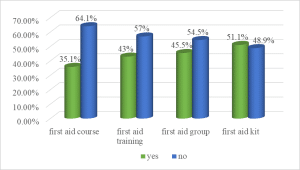
Figure 1: Training status of secondary school teachers on first aid and availability of first aid group or committee and kit working in governmental schools of Hararie regional state, eastern Ethiopia, 2022
Knowledge of secondary school teachers about first aid: Out of the total participants, about 49.6% were aware that first aid is the immediate care given to the victim. Among the study subjects, about 80.4% did not know that tap water should be applied in case of a minor burn. In case of choking, only 8.4% were aware of applying the Heimlich maneuver to dislodge the foreign body. Only 19.8% knew the correct ratio of chest compression to rescue breath for adult casualties. Concerning seizure management, 45.3% were aware that the victim should be kept in a safe place. In the case of epistaxis, only 26.5% were aware that the victim should pinch his nose and lean forward, whereas most of the study participants answered that the victim should lean backward. Regarding knowledge of first aid management for a person who lost consciousness and can’t breathe, 31.6% knew they must call an ambulance first. In the case of an unconscious victim with accidental injury, only 17.8% were aware that the victim should be positioned on the lateral side. Among the study participants, 46.1% were aware of immobilization and supported causality with a bone fracture. Regarding victims with snake bites, 39.7% knew that they needed to immobilize and lower the affected part below heart level. In case of bleeding due to a cut, 29% were aware that direct pressure was applied to the wound. Only 25.7% knew the object should not be removed for a victim with a penetrating eye injury. Regarding first aid for the victim of a fire, 47.8% said that they told him to fall to the ground and roll. In the case of the avulsed tooth, 39.9% were aware to put the avulsed tooth under the victim’s trough and send him to the hospital.
| No | Question asked | Correct answer | Incorrect answer | ||
| Frequency | Percentage | frequency | Percentage | ||
| 1 | What do you mean by first aid? | 195 | 49.6 | 198 | 50.4 |
| 2 | What should you put on a minor burn? | 77 | 19.6 | 316 | 80.4 |
| 3 | You are having lunch with a friend, and he begins to choke on some food. He can’t speak, breathe, or cough it up How can you help him? | 33 | 8.4 | 360 | 91.6 |
| 4 | Which is the correct ratio of chest compression to rescue breath for use in cardiopulmonary resuscitation (CPR) for adult casualties? | 78 | 19.8 | 315 | 80.2 |
| 5 | How can you help someone who is having a seizure? | 178 | 45.3 | 215 | 54.7 |
| 6 | A child comes to you with a bleeding nose. What is the first aid measure given? | 104 | 26.5 | 289 | 73.5 |
| 7 | What position is preferable if you get an unconscious patient during an accidental injury? | 124 | 31.6 | 269 | 68.4 |
| 8 | You are walking home, and you see a man lying on the ground. You ask him if he is alright, but he doesn’t respond and can’t breathe. How can you help him? | 70 | 17.8 | 323 | 82.2 |
| 9 | Your friend has a broken bone in the leg. What do you do? | 181 | 46.1 | 212 | 53.9 |
| 10 | How can you help a person who has a snake bite? | 156 | 39.7 | 237 | 60.3 |
| 11 | One of your friends has a cut on his arm and is bleeding severely. How can you help him? | 114 | 29 | 279 | 71 |
| 12 | If you get a person with a penetrating eye injury, how can you help him? | 101 | 25.7 | 292 | 74.3 |
| 13 | How can you help if the victim is on fire? | 188 | 47.8 | 205 | 52.2 |
| 14 | How should you help someone with an avulsed tooth? | 157 | 39.9 | 236 | 60.1 |
Table 2: Knowledge regarding first aid among secondary school teachers working in governmental schools of Harare regional states, eastern Ethiopia, 2022 (n=393)
The mean score of knowledge questions answered correctly by study participants was 4.47 (SD±2.23). Of the total study participants, 251 (58.8%) scored below the mean and had poor knowledge, while the remaining 162 (41.2%) scored above the mean and had good knowledge of first aid.
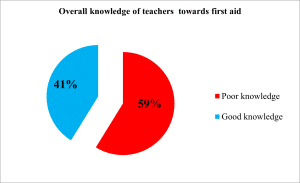
Figure 2: Overall knowledge regarding first aid among secondary school teachers working in governmental schools of Harare regional states, eastern Ethiopia, 2022
Attitude of secondary school teachers towards first aid: One hundred seventy-three (44%) of the respondents strongly agreed with giving first aid to needy people is fair. Concerning the training, 206 (52.4%) strongly agreed that it would be useful if the federal minister of health gave first aid training to all. Of the study participants, 197 (50.1%) strongly agreed that it is important to learn first aid courses for secondary school teachers.
| Item | Response | |||
| Strongly disagree | Disagree | Agree | Strongly agree | |
| Frequency (%) | Frequency (%) | Frequency (%) | Frequency (%) | |
| Giving first aid to a needy person is fair | 11(2.8) | 43(10.9) | 166(42.2) | 173(44) |
| Giving first aid to a needy person is unpleasant | 132(33.6) | 151(38.4) | 79(20.1) | 31(7.9) |
| Giving first aid to you is very good | 6(1.5) | 46(11.7) | 164(41.7) | 177(45) |
| It is good for you to give first aid | 9(2.3) | 53(135) | 150(38.2) | 181(46.1) |
| You need to learn first aid | 12(3.1) | 42(10.7) | 142(36.1) | 197(50.1) |
| If the ministry of health give first aid training to all, it is useful | 8(2) | 37(9.4) | 142(36.1) | 206(52.4) |
Table 3: Attitude towards first aid among secondary school teachers working in governmental schools of Harare regional states, eastern Ethiopia, 2022 (n=393)
Among the 393 respondents, 214 (54.5%) had a favorable attitude, whereas 179 (45.5%) participants had an unfavorable attitude toward first aid.
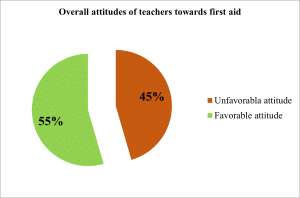
Figure 3: Overall attitude towards first aid among secondary school teachers working in governmental schools of Harare regional states, astern Ethiopia, 2022
Factors associated with knowledge of secondary school teachers toward first aid: It was found that during binary logistic regression analysis, variables including attending a first aid course, level of education, working experience, training on first aid, the presence of a first aid committee or group, and a first aid kit in the school were significantly associated with knowledge about first aid. In multivariable logistic regression, three variables, service year, first aid training, and the presence of first aid kits in the school, showed a significant association with first aid knowledge. Teachers who worked for 6–10 years were five times more likely to be knowledgeable compared with those who worked for less than 5 years (AOR: 5.24; 95% CI: 2.043, 13.467). Those teachers who had received first aid training were nearly four times more likely to be knowledgeable than those respondents who did not take first aid training (AOR: 3.563; 95% CI: 2.169, 5.851).
Those individuals who had first aid kits in their schools were approximately two times more likely to be knowledgeable than those individuals who did not have first aid kits (AOR: 1.799; 95% CI: 1.112, 2.910).
| Variables | Knowledge | OR with 95% CI | P-value | |||
| Good | Poor | Crude | Adjusted | |||
| Level of education | Diploma
BSc MSc and above |
39
108 15 |
45
174 12 |
1
0.716(0.438,1.171) 1.442(0.603,3.449) |
1
0.871(0.487,1.559) 1.163(0.434,3.115) |
0.642 0.764 |
| Service year | ≤5
6-10 >10 |
7
88 67 |
31
90 110 |
1
4.330(1.812,10.35) 2.697(1.125,6.468) |
1
5.245(2.043,13.467) 4.160(1.583,10.934) |
0.001* 0.004* |
| Training on FA | Yes
No |
102
60 |
67
164 |
4.161(2.715,6.379)
1 |
3.563(2.169,5.851)
1 |
<0.001* |
| School committee
Or group |
Yes
No |
90
72 |
89
142 |
1.994(1.327,2.998)
1 |
1.336(0.825,2.163)
1 |
0.239 |
| FA kit | Yes
No |
108
54 |
93
138 |
2.968(1.951,4.514)
1 |
1.799(1.112,2.910)
1 |
0.017* |
| FA course | Yes
No |
67
95 |
74
157 |
1.496(0.986,2.271)
1 |
0.840(0.511,1.382)
1 |
0.493 |
Note: * significant at p < 0.05, FA = First aid
Table 4: Summary of logistic regression analysis of factors affecting knowledge of secondary school teachers towards first aid working in the governmental school of Harari regional state, eastern Ethiopia, 2022
Factors associated with the attitude of secondary school teachers toward first aid: In the bivariate logistic regression analysis, age, training on first aid, the presence of a first aid kit, and the first aid committee were significantly associated with the attitude of teachers toward first aid. After controlling for confounding factors in multivariate logistic regression analysis, the respondents’ age and the presence of first aid kits in their school were significantly associated with their attitudes about first aid. Teachers in the age group above 41 years were two times more likely to have favorable attitudes than those individuals who were within the age range of 22–31 years (AOR: 1.932; 95% CI: 1.134, 3.291) and teachers with first aid kits in their school were twice as likely to have positive attitudes as those who did not have first aid kits (AOR: 2.136; CI: 1.360, 3.35).
| Variables | Attitudes | OR with 95% CI | P value | |||
| Favorable | Unfavorable | Crude OR | Adjusted OR | |||
| Age | 22-31
32-41 >41 |
76
66 72 |
68
76 35 |
1
0.777(0.488,1.236) 1.841(1.095,3.095) |
1
0.804(0.500,1.292) 1.932(1.134,3.291) |
0.367 0.015* |
| Training on FA | Yes
No |
100
114 |
69
110 |
1.398(0.934,2.093)
1 |
1.053(0.672,1.650)
1 |
0.822 |
| FA kit | Yes
No |
128
86 |
73
106 |
2.161(1.442,3.238)
1 |
2.136(1.360,3.353)
1 |
0.001* |
| School committee (group) | Yes
No |
105
109 |
74
105 |
1.367(0.916,2.040)
1 |
1.047(0.675,1,624)
1 |
0.837 |
Note: * significant at p < 0.05
Table 5: Summary of logistic regression analysis of factors affecting attitude of secondary school teachers towards first aid working in the governmental school of Harari regional state, eastern Ethiopia, 2022
Discussion
This study aims to examine the current level of knowledge, attitudes, and affecting factors towards FA among secondary school teachers working in governmental schools of Harari regional state, eastern Ethiopia. It is an important topic that guides organizations or teachers in managing emergency health-related problems and factors related to them at the school level.
The results of this study showed that only 41.2% of the total participants had good knowledge of first aid. This study is in line with previous studies that were conducted in different parts of Ethiopia, including Addis Ababa (40.0%)[19], Gondar (41.1%)[15], and Jimma (44.4%).[17] However, our study finding was higher than that of another study that was conducted in Khamis Mushayt city, Saudi Arabia (19.6%).[20] This discrepancy might be due to variation in sample size and socio-demographic characteristics of the study participants, or it might be due to the variation in the number of trained schoolteachers in first aid, which is only 27.2%, unlike this study, 43%. On the other hand, the result of this study was lower than the studies conducted in Iraq, 95%.[21] This discrepancy may be due to differences in school setup and availability of information related to first aid.
This study revealed that 55.5% of secondary school teachers had a favourable attitude towards first aid. This finding was lower than studies conducted in Debre tabor, Ethiopia (75%)[18], Addis Ababa, Ethiopia (75%)[19], and Saudi Arabia (67%)[20]. These variations might be due to the scope of teachers’ academic performance and school settings. The previous studies were conducted only in urban areas; on the other hand, our study included schoolteachers who worked in rural areas.
During the service year, training in first aid and the presence of first aid kits in the school showed a significant association with knowledge of first aid. The odds of being knowledgeable were found to be five times higher among teachers who had worked for 6-10 years compared with those who had less than 5 years of experience. This finding was parallel to studies conducted in Debre tabor, Ethiopia, and Khamis Mushayt city, Saudi Arabia.[18,19,20] This means that teachers can learn or gain knowledge from their experience, and the longer they stay in the service, the better their chances of receiving first aid training.
The odds of having good knowledge were nearly four times higher among those teachers who had received first aid training compared with study participants who did not receive training. This is in line with other studies conducted in Addis Ababa, Debre Tabor, and China.[18,19] This suggests that training could provide an additional opportunity for schoolteachers to learn about first aid. Moreover, those individuals who had access to first aid kits in their schools were approximately two times more likely to have good knowledge than those participants who did not have first aid kits. This might be to use first aid kits appropriately; teachers may exchange information with each other, or they can get information from the kit. Additionally, the administrative bodies of the organization may provide an opportunity for teachers to receive training on how to use first aid kits effectively.
Age and the presence of first aid kits in the school were significantly associated with a favorable attitude toward first aid. Those teachers within the age group above 41 years were two times more likely to have favorable attitudes than those individuals who were between the ages of 22 and 31 years. This might be due to increased awareness of first aid measures as they advance in age, and in old age, teachers mostly care for and give attention to their students. The odds of having favorable attitudes were two times higher among those teachers who had first aid kits in their schools than among those who did not have them. This might be due to the availability of kits or materials in the school, indicating that the school may give more attention to first aid, which could help teachers develop a positive attitude towards first aid.
Conclusion
More than half of the secondary school teachers had poor knowledge about first aid, but they had a favorable attitude toward it. Factors like service years, training, and the presence of first aid kits in the school have a significant association with good knowledge about first aid. Similarly, teachers’ age above 41 years and the presence of first aid kits in school have been significantly associated with favorable attitudes toward first aid. It is important that efforts are made by the Ministry of Education Bureau and the Ministry of Health to initiate a first aid training program at the beginning of their careers to improve their knowledge. The availability of first aid kits and other basic life support guidelines in all schools will also help schoolteachers preserve the life of a victim.
References
- Krishna RA. A study to assess the knowledge on first aid management among play schoolteachers at selected playschools at Nellore District. Narayana Nurs J. 2013;2(2):12-14. A study to assess the knowledge on first aid management among play schoolteachers at selected playschools at Nellore District
- Selvaraj K. Assessment of knowledge regarding first aid measures for common injuries in children among schoolteachers. Indian J Appl Res. 2019;9:1-2. Assessment of knowledge regarding first aid measures for common injuries in children among schoolteachers
- Limerick SR. The International Red Cross and Red Crescent Movement. J R Coll Physicians Lond. 1991;25(3):246. The International Red Cross and Red Crescent Movement
- Teshale AA, Alemu ZA. Knowledge, attitude and practice of first aid and factors associated with practice among taxi drivers in Addis Ababa, Ethiopia. Ethiop J Health Dev. 2017;31(3):200-207. Knowledge, attitude and practice of first aid and factors associated with practice among taxi drivers in Addis Ababa, Ethiopia.
- Deepak M, Nayak S. A study on assessment of knowledge on practice regarding first aid measures among the self-help groups in selected areas of Mangalore with a view to develop information module. J Health Allied Sci NU. 2012;2(3):68-71. doi.10.1055/s-0040-1703598 Crossref
- Zeng L, Fan S, Zhou J, et al. Undergraduate nursing students’ participation in pre-hospital first aid practice with ambulances in China: A qualitative study. Nurse Educ Today. 2020;90:104459. doi.10.1016/j.nedt.2020.104459 PubMed | Crossref | Google Scholar
- Juliana N, Teng NIMF, Kamal NIA, et al. Validation of FAT4CP© first aid module and assessment tool: Evaluating module acceptance and the knowledge, attitude, and confidence (KAC) on first aid response among childcare providers. Int J Res Pharm Sci. 2018;9(SPL2). Validation of FAT4CP© first aid module and assessment tool: Evaluating module acceptance and the knowledge, attitude, and confidence (KAC) on first aid response among childcare providers
- Kaur N, Savitri, Kaur M. A descriptive study to assess the level of knowledge regarding the first aid management among schoolteachers in selected schools of District Mohali, Punjab. J Health Med Inform. 2017;8(4). doi:10.4172/2157-7420.1000288 Crossref
- Mathew S, Salman P, Khurshid S, Luke A. Awareness of first aid among undergraduate students in Ajman, UAE. J Dent Med Sci. 2016;15:30-38. Awareness of first aid among undergraduate students in Ajman, UAE
- Sheps SB, Evans GD. Epidemiology of school injuries: A 2-year experience in a municipal health department. Am J Public Health. 1987;79(1):69-75. Epidemiology of school injuries: A 2-year experience in a municipal health department
- Al Zeedi MA, Al Waaili LH, Al Hakmani FM, Al Busaidi AM. Incidence of school-related injuries among students in A’Dakhiliyah Governorate schools, Oman. Oman Med J. 2020;35(3):127. doi.10.5001/omj.2020.45 PubMed | Crossref | Google Scholar
- Adib-Hajbaghery M, Kamrava Z. Iranian teachers’ knowledge about first aid in the school environment. Chin J Traumatol. 2019;22(4):240-245. doi.10.1016/j.cjtee.2019.02.003 PubMed | Crossref | Google Scholar
- Reveruzzi B, Buckley L, Sheehan M. First aid training in secondary schools: A comparative study and implementation considerations. J Safety Res. 2020;75:32-40. doi.10.1016/j.jsr.2020.07.002 PubMed | Crossref | Google Scholar
- Al Rabiah AA, AlMass AA, Duraihem TB, Alsuhibani F, Ababtain N. Comparison of the level of knowledge of high school students between the general system and credit system towards burns first aid. Biomed J Sci Tech Res. 2019;17(5):1-8. doi.10.26717/BJSTR.2019.17.003068 Crossref
- Workneh BS, Mekonen EG, Ali MS. Determinants of knowledge, attitude, and practice towards first aid among kindergarten and elementary school teachers in Gondar City, Northwest Ethiopia. BMC Emerg Med. 2021;21(1):73. doi.10.1186/s12873-021-00468-6 PubMed | Crossref | Google Scholar
- Population projections for Ethiopia 2007-2037. 2012. Population projections for Ethiopia 2007-2037
- Anmut W, Mesele M, Tekalign T. Knowledge, attitude, and practice towards first aid among kindergarten teachers of Jimma Town, Southwest, Ethiopia, 2017. Knowledge, attitude, and practice towards first aid among kindergarten teachers of Jimma Town, Southwest, Ethiopia
- Taklual W, Mekie M, Yenew C. Determinants of first aid knowledge and basic practice among elementary school teachers in Debre Tabor Town, Northcentral Ethiopia. Open Public Health J. 2020;13(1). doi.10.2174/1874944502013010380 Crossref | Google Scholar
- Ganfure G, Ameya G, Tamirat A, Lencha B, Bikila D. First aid knowledge, attitude, practice, and associated factors among kindergarten teachers of Lideta Sub-City, Addis Ababa, Ethiopia. PLOS ONE. 2018;13(3). doi.10.1371/journal.pone.0194263 PubMed | Crossref | Google Scholar
- Al Gharsan M, Alarfaj I. Knowledge and practice of secondary school teachers about first aid. J Fam Med Prim Care. 2019;8(5):1587-1593. doi.10.4103/jfmpc.jfmpc_76_19 PubMed | Crossref | Google Scholar
- Al-Tameemi HMA, Khudair FW. Knowledge and attitudes of primary school teachers toward first aid in Al-Najaf Al-Ashraf City. Int J Curr Res Acad Rev. 2016;4(12):64-79. doi:10.20546/ijcrar.2016.412.006 Crossref | Google Scholar
- Cantín M. World Medical Association Declaration of Helsinki: Ethical principles for medical research involving human subjects. Reviewing the latest version. Int J Med Surg Sci. 2014;1(4):339-346. doi.10.32457/ijmss.2014.042 Crossref | Google Scholar
Acknowledgments
We thank the Harari regional education bureau management, study supervisors, and study participants (school teachers) for their cooperation and provision of valuable information.
Funding
No funding for this study.
Author Information
Corresponding Author:
Fenta wondimneh
Department Nursing and Midwifery
College of Health and Medical Sciences, Haramaya University, Harar, Ethiopia
Email: fwondimneh@gmail.com
Co-Authors:
Fentahun Meseret, Ayichew Alemu
Department of Nursing and Midwifery
College of Health and Medical Sciences, Haramaya University, Harar, Ethiopia
Authors Contributions
All authors contributed to the conceptualization, investigation, and data curation by acquiring and critically reviewing the selected articles. They were collectively involved in the writing – original draft preparation, and writing – review & editing to refine the manuscript. Additionally, all authors participated in the supervision of the work, ensuring accuracy and completeness. The final manuscript was approved by all named authors for submission to the journal.
Ethical Approval
The research was approved by the research ethics review committee (IHRERC) of Haramaya University college of health and medical sciences on 02/02/2022 (Ref No. IHRERC/010/2022).
Conflict of Interest Statement
The authors declare that they have no competing interests.
Guarantor
None
DOI
Cite this Article
Fenta W, Fentahun M, Ayichew A. Knowledge, Attitudes, and Associated Factors Towards First Aid Among Secondary School Teachers Working in Governmental Schools of Harari Regional State, Eastern Ethiopia. medtigo J Med. 2024;2(4):e30622427. doi:10.63096/medtigo30622427 Crossref