Author Affiliations
Abstract
Background: Smartphones and social media have become deeply embedded in student life, raising concerns about their potential psychological impact. Mental health challenges such as depression and anxiety are increasingly linked to digital overuse, especially in academic settings. However, evidence on topics in low-income countries is still understudied. This research addresses the gap by examining the link between mental health, smartphone usage, and social media dependency among undergraduate allied health sciences students.
Methodology: This cross-sectional analytical study was conducted on 186 students from Allied Health Sciences in Swat, Pakistan. Depression and addiction to social media were evaluated using the Patient Health Questionnaire-9 (PHQ-9) and the Social Media Addiction Scale (SMA). Descriptive statistics and chi-square tests for association were used to examine the data using the Statistical Package for the Social Sciences (SPSS) v. 27.
Results: Among the total study participants, mild depression was found in 31.2%, moderate in 27.4%, moderate in 16.7, and severe in 2.7%. A total of 55.4% of students indicated social media addiction, yet no significant correlation was discovered between mental health and social media addiction (p=0.742). The addiction to social media had a noteworthy correlation with female gender (p=0.041), and females also showed a significant association with poorer mental health (p=0.008).
Conclusion: Even though there was no direct connection between social media addiction and mental health, the female gender, on the other hand, showed a strong significance in mental health and social media addiction among the population of the study. Longitudinal studies in the future should be conducted to find out these factors in larger and diverse populations, and determine the actual impact over a lengthy timeframe.
Keywords
Allied health sciences students, Internet addiction, Mental health, Smartphone, Social media.
Introduction
The World Health Organization (WHO) defines health as not merely an absence of disease or infirmity, but an entire picture of physical, mental, and social wellness.[1] The word health is described as a way of life; a complete and unified mental, emotional, and social well-being, and as the end of bringing out the best in oneself in all spheres of life.[2] This term is given the meaning that means not only the lack of some sickness, but the ability to overcome illness and many other health problems.[3,4] As the term “health” means the overall good of the person, the term itself has various types, such as the types of physical health, mental health, emotional health, and social health.[5] When it comes to addiction, one of these areas is mostly affected adversely. Being involved in the pervasive use of social media on smartphones has been directly connected to dependency and addiction, which consequently negatively influence mental well-being, causing anxiety, depression, loneliness, low self-esteem, body image dissatisfaction, dependence, and addiction.[6] Social networks are virtual resources where people and organizations can interact, share information, and establish relationships. They help users locate people around them, find relatives and friends, and then connect with others with whom they have things in common.[7,8] Overuse or improper use of social media and phones may negatively affect the health of an individual, resulting in what is termed social media addiction.[9] Mental well-being refers to a state of full participation in life, so that all people are enabled to lead a meaningful and satisfying life.[10]
Being regularly exposed to social media content comparisons and the internet, regardless of proper supervision, can negatively affect a person’s mental health.[11] A number of research studies have identified the relationship between social anxiety and discomfort in students and their addiction to overusing mobile phones.[12-15] Research has shown that there are fewer addicted social media users in prosperous countries like Singapore and the Kingdom of Saudi Arabia. The most recent reports reveal that the rates of addiction to social network use in the two countries are 29.5% and 27.2%, respectively. Conversely, the social media use and smartphone dependence rates are much higher in developing countries such as Pakistan and India. Specifically, it was reported that in Delhi, India, 87.1 percent of medical students were addicted to their cellphones, and 74 percent of these students mainly used the device to surf through online applications, and 64 percent used it on social media.[16] However, in Pakistan, the rate of social media usage was relatively higher among medical undergraduates, compared with the rate of the neighboring countries, with an 85 % rate in Karachi, 60 % in Islamabad and Rawalpindi, and 66 % in Abbottabad.[17-19] A survey on Pakistani medical and dental students also found that only 14.5 % of students were using the internet solely for academic purposes, while 64 percent were using social media platforms such as Facebook, Instagram, and WhatsApp primarily for entertainment purposes.[20]
In 2014, a study was undertaken by Roger C. et al. at the University of Hong Kong, and a sample size of 1641 people was used. It has been reported that a remarkable prevalence of social media and smartphone addiction and various psychological conditions, such as 75 % of depressive episodes and 57 % of anxiety, has been observed.[21] Few studies have already highlighted poor mental health with increased smartphone use, such as the one conducted in 2019 by Sohn et al. of King’s College of London, which found that 78% of the people among those who were addicted to social media and smartphone usage were depressed, 80 % anxious, and 65 % indicated to be more stressed.[22] Similarly, Wahid E. et. al. in their study determined that higher social media and smartphone usage was linked with poor mental health, and interestingly, this ratio was significantly associated with female Gender.[23]
In such a scenario, where digital addiction is on the rise, it is pivotal to explore the prospect of associated mental health, especially among students in higher educational institutions like medical students, because the stress levels prompted by the academic lockdown are immense. The proposed study evaluates the correlation between smartphone use, social media addiction, and mental health among Allied Health Sciences students in Swat. This study aims to help fill in the gap of expanding discussions on digital health and care by examining the ways in which it may affect people differently based on their gender and how the latter may impact the former psychologically.
Methodology
This analytical cross-sectional study was carried out along with 186 students enrolled at Allied Health Sciences in several medical institutes of Swat, KP, during a period of six months (August 2024 – March 2025) through non-probability convenience sampling. The data collection was carried out from the Swat-based institutes, i.e., Swat Institute of Rehabilitation and Medical Sciences (SIRMS) and Khyber Medical University (KMU) Swat Campus. The study included currently enrolled students in any of the Allied Health Sciences Programs, with the age category between 18 and 25 years, and who spent more than three hours per day using smartphones. The exclusion criteria were set to students who were unwilling to participate, had severe comorbidities, and pre-existing psychotic disorders, such as major depression, bipolar disorder, and schizophrenia. Participants were instructed regarding the ongoing study and measuring tools and signed consent forms were obtained from all participants. Before that, ethical approval was obtained from the parent institute (SIRMS), and Data collection approval was obtained from every mentioned institute. Valid and reliable PHQ-9 depression scale and SMA scale were used to gather data. The data was analyzed through SPSS v.27, using the chi-square test to determine the correlation between the variables.
Results
One hundred and eighty-six (186) students took part in the study. As shown in Table 1, the mean age was 21.08 +/- 1.51 years, with females having higher participation, with the percentage of 72.04%, compared to males’ participation, which was only around 28 % (Figure 1). For a detailed description of the demographic distribution of the study participants, refer to Table 1 and Figure 2.
| Variable | Category | Frequency (n) | Percentage (%) |
| Mean ± SD | 21.08 ± 1.51 years | ———- | |
| Gender | Male | 52 | 28% |
| Female | 134 | 72% | |
| Institute | KMU (IHS) | 83 | 44.57% |
| SIRMS | 103 | 55.38% | |
|
Semester |
10th | 26 | 13.98% |
| 8th | 13 | 6.99% | |
| 6th | 38 | 20.43% | |
| 4th | 37 | 19.89% | |
| 2nd | 72 | 38.71% | |
| Total participants (n) | 186 | 100% | |
Table 1: Demographic details of the study participants
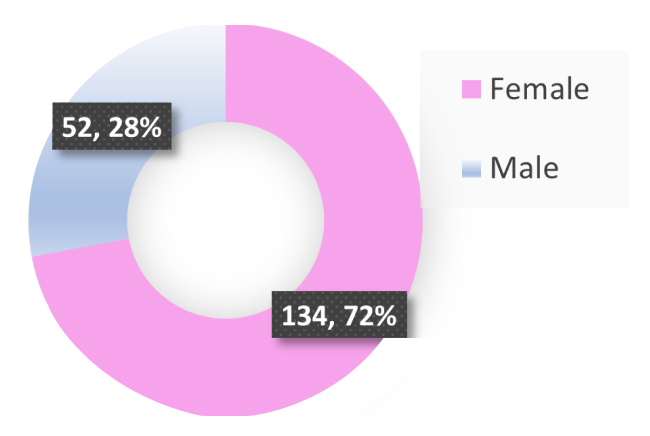
Figure 1: Gender distribution of the study participants
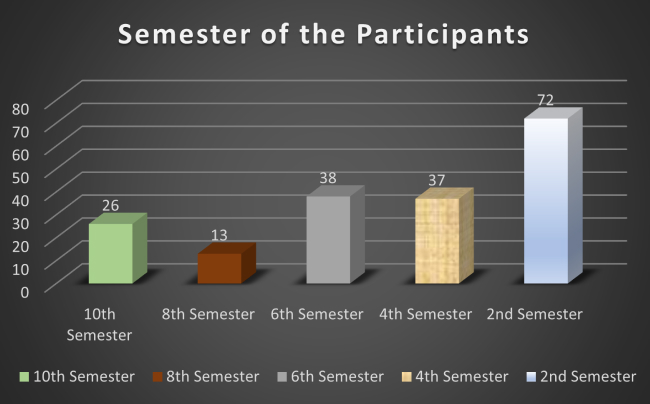
Figure 2: Semester-wise distribution of the participants
The PHQ-9 results found 31.2 % of our total study population being mildly depressed, moderate in 27.4 %, moderately severe in 16.7 %, and only 2.7 % in severe depression. Social media addiction analysis revealed that 55.4 % of the respondents had the highest addictiveness, and 44.6 % had negligible results, not addicted or had mild addiction. The correlation between mental health and addiction to social media was insignificant, with p=0.742 (Table 2).
|
Categories of PHQ |
Categories of SMA | Total | P-Value | |
| No/Minimal addiction | High/Severe addiction | |||
| None/Minimal | 20 | 21 | 41 |
0.742 |
| Mild | 24 | 34 | 58 | |
| Moderate | 23 | 28 | 51 | |
| Moderately severe | 15 | 16 | 31 | |
| Severe | 1 | 4 | 5 | |
| Total | 83 | 103 | 186 | |
Table 2: Association between mental health and social media
A significant association was observed between gender and social media addiction (p=0.041), showing the majority (n=35; 67.3%) reported high to severe levels of SMA, while only 17 (32.7%) fell into the no/mild addiction group. Among females, 68 (50.7%) experienced high/severe SMA and 66 (49.3%) reported no/mild addiction (Table 3).
|
Gender |
Categories of SMA |
Total |
P-value |
|
| No/Mild addiction | High/Severe addiction | |||
| Male | 17 | 35 | 52 |
0.041 |
| Female | 66 | 68 | 134 | |
| Total | 83 | 103 | 186 | |
Table 3: Association between social media addiction and gender
Gender was also significantly related to mental health outcomes (p=0.008), as females exhibited higher levels of moderate to severe depression (51.5%) compared to males (34.6%), with severe depression reported exclusively among females (Table 4).
|
Categories of PHQ |
Gender of the participants | Total | P-value | |
| Male | Female | |||
| None/Minimal | 8 | 33 | 41 |
0.008 |
| Mild | 26 | 32 | 58 | |
| Moderate | 13 | 38 | 51 | |
| Moderately severe | 5 | 26 | 31 | |
| Severe | 0 | 5 | 5 | |
| Total | 52 | 134 | 186 | |
Table 4: Association between gender and mental health gender
Discussion
The results of the study emphasize that the prevalence of social media addiction is rather high, and it can be related to mental health disorders. More than 55 % of students had a high or severe social media addiction, whereas 31.2 % had mild depression and 27.4 % moderate depression. It is worth noting that females have a higher rate of depression, and males demonstrate a stronger addiction to social media. This is consistent with prior studies suggesting that there is a gender disparity concerning digital behaviors and their psychological implications.[24] Our results are in direct contrast to research that implies a direct relationship between social media addiction and mental health.[25] According to our results, there was no significant relationship between the two variables (p=0.742). This mismatch can be attributed to the individual ways in which students choose to cope with the environment, in which social media is utilized both as a source of stress and a source of relief. A study by psychologists of Staffordshire University among 106 cellphone users identified that 16 percent had mild to severe mental health problems. In their study, mental illnesses, followed by addictions to the use of social media, create stress, and this shows a relationship between social media addiction, stress, and mental illnesses.[26]
These findings are, however, in contravention of our study, which has not evidently related social media addiction to mental health. Furthermore, another study proposed an inverse correlation between mental health and social media addiction, whereby the lower the social media consumption, the better the mental health.[27] This contrasts with what we found, too. Students who are less mentally well-balanced can have the coping behavior of becoming addicted to using smartphones to exchange conversations with others to overcome stress. On the other hand, students with good mental health also revealed certain phone addictions, but it may be explained by the fact that they habitually used the phone to communicate with relatives residing far away. Jealousy, personality, financial capabilities, and self-management skills are some of the other factors that were identified in the literature already, which may justify an increase in excessive usage of smartphones.[28,29]
A strong relationship concerning female gender and social media addiction has also been established by the study, supporting the results of a previous study determining female gender as a risk factor.[23] Also, smartphone usage patterns were, however, associated with affiliation to a university and marriage status but not with mental health, gender, place of residence, and/or field of study. To some extent, these results can be compared to the findings of other researchers, who found a connection between social media addiction and demographic factors, but not with mental health alone.[30] Gender-based associations were, however, substantive, indicating that females are more addicted to digital and mental issues, yet such a finding may be possibly due to a larger proportion of female responders in our study sample. There is a need to engage objective measures like screen-time tracking in future studies that would help increase the accuracy of data. To determine the understanding of the long-term impacts of smartphones on mental health, it is advisable to conduct longitudinal studies that may help in determining the cause-and-effect relationship between these variables.
Limitations: The study depends on self-report measures, which may present a memory bias of the examined participants (recall bias). As the study employed a cross-sectional design, it limits the causal inference between social media addiction and mental health across genders. Additionally, a Small sample, focus on one town, and restrictions to the Allied Health Sciences profession only limit the generalizability of the findings to the broader population of students in the region/state.
Conclusion
This study highlights the significant prevalence of social media addiction and its potential impact on mental health among Allied Health Sciences students. While no direct association was found between social media addiction and mental health status, significant associations were observed between addiction levels, gender, and institutional affiliation. The results point to the idea that overuse of social media can be one of the sources of stress and anxiety, especially in female students. A key takeaway from this study is that educational establishments should introduce programs that raise awareness about digital well-being. Monitoring screen time, psychological counseling, and fostering offline, physical, motivated activities are strategies that can be used to reduce the adverse effects of excessive smartphone usage.
References
- World Health Organization. Responding to community spread of COVID-19. 2020.
Responding to community spread of COVID-19 - Felman A. Neuroses and neuroticism: What’s the difference. Medical News Today. 2018.
Neuroses and neuroticism: What’s the difference - Luiselli JK. Health and wellness. In: Matson JL, ed. Handbook of Evidence-Based Practices in Intellectual and Developmental Disabilities. Cham: Springer International Publishing; 2016:907-922.
Health and wellness - Danowitz A, Beddoes K. A snapshot of mental health and wellness of engineering students across the western United States. In: 2020 IEEE Frontiers in Education Conference (FIE); 2020 Oct; Uppsala, Sweden. p. 1-5. doi:10.1109/FIE44824.2020.9273885
Crosserf | Google Scholar - Centers for Disease Control and Prevention (CDC). Health, United States, 2016: With Chartbook on Long-term Trends in Health. 2017.
Health, United States, 2016: With Chartbook on Long-term Trends in Health - Bashir H, Bhat SA. Effects of social media on mental health: a review. Int J Indian Psychol. 2017;4(3): 125-31. doi:10.25215/0403.134
Crossref | Google Scholar - Conway M, O’Connor D. Social Media, Big Data, and Mental Health: Current Advances and Ethical Implications. Curr Opin Psychol. 2016;9:77-82. doi:10.1016/j.copsyc.2016.01.004
PubMed | Crossref | Google Scholar - Wongkoblap A, Vadillo MA, Curcin V. Researching Mental Health Disorders in the Era of Social Media: Systematic Review. J Med Internet Res. 2017;19(6):e228. doi:10.2196/jmir.7215
PubMed | Crossref | Google Scholar - O’Reilly M. Social media and adolescent mental health: the good, the bad and the ugly. J Ment Health. 2020;29(2):200-206. doi:10.1080/09638237.2020.1714007
PubMed | Crossref | Google Scholar - Fusar-Poli P, Salazar de Pablo G, De Micheli A, et al. What is good mental health? A scoping review. Eur Neuropsychopharmacol. 2020;31:33-46. doi:10.1016/j.euroneuro.2019.12.105
PubMed | Crossref | Google Scholar - Gowen K, Deschaine M, Gruttadara D, Markey D. Young adults with mental health conditions and social networking websites: seeking tools to build community. Psychiatr Rehabil J. 2012;35(3):245-250. doi:10.2975/35.3.2012.245.250
PubMed | Crossref - Li X, Li W, Liu M, Xiao W, Zhou H. How Does Shyness Affect Chinese College Students’ Tendency to Mobile Phone Addiction? Testing the Mediating Roles of Social Anxiety and Self-Control. Front Public Health. 2022;10:902425. doi:10.3389/fpubh.2022.902425
Crossref | Google Scholar - Zhang P, Wang M, Ding L, et al. The Effect of Self-Esteem on Mobile Phone Addiction Among College Students: Sequential Mediating Effects of Online Upward Social Comparison and Social Anxiety. Psychol Res Behav Manag. 2025;18:657-669. doi:10.2147/PRBM.S508668
Crossref | Google Scholar - Xiao Z, Huang J. The Relation Between College Students’ Social Anxiety and Mobile Phone Addiction: The Mediating Role of Regulatory Emotional Self-Efficacy and Subjective Well-Being. Front Psychol. 2022;13:861527. doi:10.3389/fpsyg.2022.861527
PubMed | Crossref | Google Scholar - Xu J. Research on the relationship among phone addiction, social anxiety and loneliness in high school students. Open J of Social Sci. 2017;5(6):18-24. doi:10.4236/jss.2017.56003
Crossref | Google Scholar - Basu S, Garg S, Singh MM, Kohli C. Addiction-like Behavior Associated with Mobile Phone Usage among Medical Students in Delhi. Indian J Psychol Med. 2018;40(5):446-451. doi:10.4103/IJPSYM.IJPSYM_59_18
PubMed | Crossref | Google Scholar - Ahmer Z, Tanzil S. Internet addiction among social networking sites users: Emerging mental health concern among medical undergraduates of Karachi. Pak J Med Sci. 2018;34(6):1473-1477. doi:10.12669/pjms.346.15809
PubMed | Crossref | Google Scholar - Khalily MT, Loona MI, Bhatti MM, Ahmad I, Saleem T. Smartphone addiction and its associated factors among students in twin cities of Pakistan. J Pak Med Assoc. 2020;70(8):1357-1362. doi:10.5455/JPMA.23054
PubMed | Google Scholar - Chaudhari B, Menon P, Saldanha D, Tewari A, Bhattacharya L. Internet addiction and its determinants among medical students. Ind Psychiatry J. 2015;24(2):158-162. doi:10.4103/0972-6748.181729
PubMed | Crossref | Google Scholar - Kamal S, Kamal S, Mubeen SM, et al. Smartphone addiction and its associated behaviors among medical and dental students in Pakistan: A cross-sectional survey. J Educ Health Promot. 2022;11:220. doi:10.4103/jehp.jehp_494_21
PubMed | Google Scholar - Ho RC, Zhang MW, Tsang TY, et al. The association between internet addiction and psychiatric co-morbidity: a meta-analysis. BMC Psychiatry. 2014;14:183. doi:10.1186/1471-244X-14-183
PubMed | Crossref | Google Scholar - Sohn SY, Rees P, Wildridge B, Kalk NJ, Carter B. Prevalence of problematic smartphone usage and associated mental health outcomes amongst children and young people: a systematic review, meta-analysis and GRADE of the evidence. BMC Psychiatry. 2019;19(1):356. doi:10.1186/s12888-019-2350-x
PubMed | Crossref | Google Scholar - Wahid E, Khalil S, Ali A, Khan MS. Association of general health, quality of sleep, overuse of cell phone, social networks and internet addiction among medical sciences students. Healer J Physiother Rehabil Sci. 2025;5(2):125-131. doi:10.55735/dm377112
Crossref | Google Scholar - Demirci K, Akgönül M, Akpinar A. Relationship of smartphone use severity with sleep quality, depression, and anxiety in university students. J Behav Addict. 2015;4(2):85-92. doi:10.1556/2006.4.2015.010
PubMed | Crossref | Google Scholar - Shakya HB, Christakis NA. Association of Facebook Use With Compromised Well-Being: A Longitudinal Study. Am J Epidemiol. 2017;185(3):203-211. doi:10.1093/aje/kww189
PubMed | Crossref | Google Scholar - Hooper V, Zhou Y. Addictive, dependent, compulsive? A study of mobile phone usage. BLED 2007 Proceedings. 2007:38:272-285.
Addictive, dependent, compulsive? A study of mobile phone usage - Billieux J, van der Linden M, D’Acremont M, Ceschi G, Zermatten A. Does impulsivity relate to perceived dependence on and actual use of the mobile phone? Appl Cogn Psychol. 2007;21(4):527-537. doi:10.1002/acp.1289
Crossref | Google Scholar - 2Zamani BE, Babri H, Mosavi S. The factors affecting students’ attitudes toward learning via cellular phone: a study on students of Isfahan University of Medical Sciences using technology acceptance model. Strides Dev Med Educ. 2013;9(2):110-117.
The factors affecting students’ attitudes toward learning via cellular phone: a study on students o… - Daniyal M, Javaid SF, Hassan A, Khan MAB. The Relationship between Cellphone Usage on the Physical and Mental Wellbeing of University Students: A Cross-Sectional Study. Int J Environ Res Public Health. 2022;19(15):9352. doi:10.3390/ijerph19159352
PubMed | Crossref | Google Scholar - Chou HTG, Edge N. They are happier and having better lives than I am: The impact of using Facebook on perceptions of others’ lives. Cyberpsychol Behav Soc Netw. 2012;15(2):117-121. doi:10.1089/cyber.2011.0324
PubMed | Crossref | Google Scholar
Acknowledgments
We extend our sincere gratitude to our supervisor, Dr. Allauddin, PT, for his constant support, valuable guidance, and encouragement throughout the course of this study. His mentorship has been really helpful in shaping both the direction of this work and our growth as researchers. We are grateful to the students who participated in this study and the faculty and staff of the physiotherapy institutes in Swat Valley for their cooperation during data collection.
Funding
No funding from any organization/institution was received for the study.
Author Information
Corresponding Author:
Etisam Wahid
Department of Physical Therapy
University of Veterinary and Animal Sciences (UVAS), Swat, KP, Pakistan
Email: etisamwahid35@gmail.com
Co-Authors:
Muhammad Sanan Khan
Department of Physical Therapy
Anatomy Health Club, Gulberg Green, Islamabad, Pakistan
Shahzad Ahmad
Department of Physical Therapy
University of Veterinary and Animal Sciences (UVAS), Swat, KP, Pakistan
Nimrah Humayoon
Department of Physical Therapy
Gomal University, Dera Ismail Khan, KP, Pakistan
Hashaam Khan
Department of Physical Therapy
Al-Shifa General Hospital, Peshawar, KP, Pakistan
Mehran Khan
Department of Physical Therapy
Hope Rehabilitation Hospital, Saidu Sharif, Swat, KP, Pakistan
Zunaira Waqar
Department of Physical Therapy
Institute of Health Sciences, Peshawar, KP, Pakistan
Ayesha Nisar
Department of Physical Therapy
Mahaban Hospital, Topi, Swabi, KP, Pakistan
Muneeb Anwar
Department of Veterinary Medicine
University of Agriculture, Peshawar, Pakistan
Authors Contributions
All authors contributed to the conceptualization, investigation, and data curation by acquiring and critically reviewing the selected articles. They were collectively involved in the writing process, encompassing original draft preparation, review & editing to refine the manuscript. Additionally, all authors participated in the supervision of the work, ensuring accuracy and completeness. The final manuscript was approved by all named authors for submission to the journal.
Ethical Approval
Ethical approval was obtained from the parent institute, SIRMS, Swat, Khyber Pakhtunkhwa, Pakistan, under reference number “SIRMS/REC/Letter14th/000014B”.
Conflict of Interest Statement
Authors declare no conflict of interest.
Guarantor
Etisam Wahid serves as the guarantor for this study and takes full responsibility for the integrity of the work, including the accuracy of the data and analysis.
DOI
Cite this Article
Khan MS, Wahid E, Ahmad S, et al. From Scrolls to Strain: Understanding the Association Between Smartphone Overuse, Social Media Addiction, and Mental Health Among Allied Health Sciences Students: An Analytical Cross-Sectional Study. medtigo J Neurol Psychiatr. 2025;2(3):e3084236. doi:10.63096/medtigo3084236 Crossref