Author Affiliations
Abstract
Researchers have identified microRNA-122 (miR-122) as a key regulator in hepatitis C virus (HCV) infection, playing a crucial role in the viral life cycle. In this study, we aimed to analyze the expression of miR-122 in HCV patients and explore potential correlations with patient demographics. We included 200 HCV patients, of whom 55% were female and 45% were male. Our results indicate that overall, HCV patients exhibited higher miR-122 expression compared to the control group, with female patients showing higher expression levels than males. Additionally, patients aged between 40 and 60 years exhibited significantly elevated miR-122 expression.
Keywords
MicroRNA-122, Hepatitis C virus, Gene expression, Gender differences, Age-specific expression, Personalized medicine
Introduction
Infection caused by the HCV affects millions of people globally and is an international health issue. Researchers now recognize microRNAs, or miRNAs, as key players in the regulation of viral infections, specifically linking miR-122 to HCV. MiR-122 plays a critical role in the HCV life cycle, influencing viral replication and pathogenesis [1]. To make miRNAs, RNA polymerase II and III must copy primary miRNAs (pri-miRNAs), Drosha and DGCR8 must process pre-miRNAs (pre-miRNAs), and Dicer has to cut them further in the cytoplasm. The mature miRNA subsequently directs the RNA-induced silencing complex (RISC) to target mRNAs, thereby controlling gene expression [2].
Binding to specific regions within the 5-untranslated regions (UTR) of the HCV genome is one of the primary ways that miR-122 affects HCV replication. Viral RNA is stabilized by interaction, which promotes hepatocyte translation and replication. Research has shown that, particularly during the early stages of infection, miR-122 promotes the establishment of a stable RNA complex with the HCV genome, which increases viral RNA accumulation and viral protein synthesis [1,3].
Moreover, it has been discovered that miR-122 alters the host cellular environment to promote HCV replication. It controls lipid metabolism, encouraging hepatocytes to produce lipid droplets that act as platforms for the assembly and maturation of viruses. MiR-122 also affects the expression of host components that are involved in viral entry, replication, and assembly, which facilitates the spread of HCV [4,5].
Several investigations using in vitro cell culture models, animal studies, and clinical findings in HCV-infected individuals have emphasized the role of miR-122 in HCV replication. It has been demonstrated that inhibiting miR-122 using antagomirs or antisense oligonucleotides substantially suppresses HCV replication in both in vivo models and cell culture systems [6]. This emphasizes how targeting miR-122 may have therapeutic benefits in the management of HCV infection.
Furthermore, the relationship between miR-122 and HCV replication encompasses both the longevity of the virus and its responsiveness to antiviral treatments. Individuals who express miR-122 at high levels typically have higher HCV RNA levels and are often associated with reduced responsiveness to interferon-based therapies [7]. The objective of this study was to examine the expression of miR-122 in patients with HCV and investigate any possible associations with patient demographics.
Methodology
A cohort of 200 HCV patients, comprising 55% females and 45% males, was recruited for this study. Peripheral blood samples were collected, and total RNA was extracted using standard protocols. A quantitative real-time polymerase chain reaction (qRT-PCR) was performed to measure the expression levels of miR-122. The Delta-Delta-Ct (DDCt) method was employed for data analysis, with normalization to internal controls. Patient demographic data, including age and gender, were recorded and analyzed for correlations with miR-122 expression levels.
Results
Our analysis revealed that HCV patients exhibited significantly higher miR-122 expression levels compared to the control group (p < 0.05). Furthermore, female patients demonstrated elevated miR-122 expression levels compared to male patients (p < 0.01). Stratification by age revealed that patients in the 20-45 age group had the highest miR-122 expression levels, with a statistically significant difference compared to other age groups (p < 0.001).
| Gender | Frequency | Percent | Valid Percent |
| Male | 91 | 45 | 45 |
| Female | 109 | 55 | 55 |
| Total | 200 | 100 | 100 |
Table 1: Frequency of HCV Patients
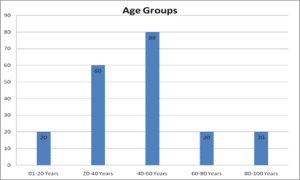
Figure 1: Graph showing the age-wise distribution of patients

Figure 2: Shows a remarkable increase in fold change in infected individuals as compared to control group
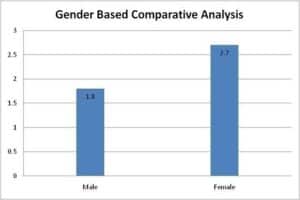
Figure 3: Gender Based Comparative Analysis shows a higher expression in females than males. This difference was hypothesized to be related to the influence of sex hormones or other gender-related factors on miRNA regulation.
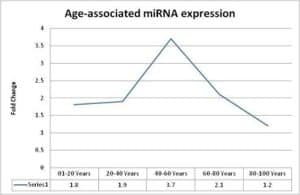
Figure 4: Cumulative Exposure to HCV: Patients in the age range of 40-60 years may have had a longer duration of HCV infection compared to younger patients. Chronic exposure to HCV can lead to changes in gene expression patterns, including the upregulation of miRNA-122 as part of the host response to the virus.
These results show that there was a noticeable elevation of the miR-122 in the HCV patients than in the control group. The result of gender comparison indicated that female has higher expression than males, and it was suggested that the regulation of miRNA might be affected by sex hormones or other gender factors. Distribution with respect to age shows that there might be a higher percentage of patients in the 40–60-year bracket who have been chronically infected with the HCV and hence experienced alterations at the molecular level, mostly up-regulation of miR-122 as part of the host inflammatory response to the virus.
Discussion
Results of the present research indicate that miR-122 plays a crucial role within the HCV infection cycle, which has a different level of expression depending on the gender and age of the patient. As anticipated, the studies showed that expression levels of miR-122 were considerably higher in HCV patients than those found in a healthy control group, consistent with current research that has identified miR-122 as a key factor in the HCV life cycle. Most female patients over male patients with higher levels of miR-122 indicates that hormonal or genetic factors could also influence miRNAs expression. The reason for the higher expression of miR-122 in females can be associated with the increased sensitivity of this gender to HCV-induced liver pathology, which can help to develop gender-directed therapy methods.
When dividing the patients into groups based on their age, it was found that the patients aged between 20-45 years had the highest level of miR-122. One might also suggest that this age group could include those with a higher prevalence of actively replicating viruses and host immune activity. Since the levels of miRNAs were observed to vary with different ages, age differences could be the primary source of physiological and pathological fluctuations in the levels of miRNA by an organism. From these results, it has become evident that the aspect of age is important in the generation of miRNA-based diagnostic and therapeutic tools.
The increased expression of miR-122 in HCV patients highlights its potential as a biomarker for infection and a target for therapeutic intervention. The use of antagomirs or antisense oligonucleotides to inhibit miR-122 has shown promising results in reducing HCV replication in both in-vivo and in-vitro models [6]. Our results reinforce the therapeutic potential of targeting miR-122, particularly in female patients and specific age groups, to enhance treatment efficacy and outcomes.
The changes in the level of miR-122 in HCV patients along the gender and age also help to establisha Comprehensive detail of the interaction between the host and the virus. These patterns can aid in the development of personalized medicine approaches, tailoring treatments to individual patient profiles based on their miRNA expression levels. Moreover, miR-122 could be helpful in diagnosing and assessing the HCV infection, which makes the appropriate treatment intervention possible at the right time.
Therefore, the current research contributes to the understanding of the expression in HCV patients of several intermediates, particularly miR-122, focusing on the aspects of gender and age through cross-sectional studies. The results could have implications for the practical application of prescribing drugs based on an individual’s genotype and other factors as well as towards the creation of miRNA-based therapeutic strategies for HCV infection.
Conclusion
In conclusion, our study provides valuable insights into the expression patterns of miR-122 in HCV patients, emphasizing the importance of gender and age considerations in miRNA research. The elevated miR-122 expression levels observed in female patients and those within the 20-45 age group underscore potential avenues for targeted therapeutic interventions and personalized medicine approaches in the management of HCV infection.
References
- Jopling CL, Yi M, Lancaster AM, Lemon SM, Sarnow P. Modulation of hepatitis C virus RNA abundance by a liver-specific microRNA. Science. 2005;309(5740):1577-1581. doi:10.1126/science.1113329 PubMed | Crossref | Google Scholar
- Lee RC, Feinbaum RL, Ambros V. The C. elegans heterochronic gene lin-4 encodes small RNAs with antisense complementarity to lin-14. Cell. 2004;116(2):843-854. doi:10.1016/0092-8674(93)90529-Y
PubMed | Crossref | Google Scholar - Vallelunga A, Iannitti T, Somma G, et al. Gender differences in microRNA expression in levodopa-naive PD patients.
J Neurol. 2023;270(7):3574-3582. doi:10.1007/s00415-023-11707-0 PubMed | Crossref | Google Scholar - Burgess KS, Philips S, Benson EA, et al. Age-Related Changes in MicroRNA Expression and Pharmacogenes in Human Liver. Clin Pharmacol Ther. 2015;98(2):205-215. doi:10.1002/cpt.145 PubMed | Crossref | Google Scholar
- Bhanja Chowdhury J, Shrivastava S, Steele R, Di Bisceglie AM, Ray R, Ray RB. Hepatitis C virus infection modulates expression of interferon stimulatory gene IFITM1 by upregulating miR-130A. J Virol. 2012;86(18):10221-10225. doi:10.1128/JVI.00882-12 PubMed | Crossref | Google Scholar
- Janssen HL, Reesink HW, Lawitz EJ, et al. Treatment of HCV infection by targeting microRNA. N Engl J Med. 2013;368(18):1685-1694. doi:10.1056/NEJMoa1209026 PubMed | Crossref | Google Scholar
- Sarasin-Filipowicz M, Krol J, Markiewicz I, Heim MH, Filipowicz W. Decreased levels of microRNA miR-122 in individuals with hepatitis C responding poorly to interferon therapy. Nat Med. 2009;15(1):31-33. doi:10.1038/nm.1902 PubMed | Crossref | Google Scholar
Acknowledgments
Expresses gratitude to the Biotech Molecular and Clinical Laboratory for assistance in collecting specimens.
Funding
Supported by the Doctoral Research Fund, COMSATS University Islamabad.
Author Information
Corresponding Author:
Muhammad Asif
Department of Biosciences
COMSATS University Islamabad-45550, Pakistan
Email: asifleo96@gmail.com
Co-Author:
Sajida Batool
Department of Biosciences
COMSATS University Islamabad-45550, Pakistan
Authors Contributions
All authors contributed to the conceptualization, investigation, and data curation by acquiring and critically reviewing the selected articles. They were collectively involved in the writing – original draft preparation, and writing – review & editing to refine the manuscript. Additionally, all authors participated in the supervision of the work, ensuring accuracy and completeness. The final manuscript was approved by all named authors for submission to the journal.
Informed Consent
Not applicable
Conflict of Interest Statement
Not reported
Guarantor
None
DOI
Cite this Article
Asif M, Sajida B. Expression Analysis of MicroRNA-122 in HCV Patients. medtigo J Med. 2024;2(3):e3062234. doi:10.63096/medtigo3062234 Crossref