








 Author Affiliations
Abstract
Background: Acute respiratory distress patients require mechanical ventilation as a critical treatment approach in intensive care units. Critical care nurses (CCNs) lack sufficient understanding of mechanical ventilation management, which could result in unfavorable clinical consequences.
Aim: To assess the impact of a self-study module (SSM) on improving the knowledge of CCNs about mechanical ventilation at Allied Hospital Faisalabad.
Methodology: The investigators performed a pretest-posttest quasi-experimental study using quantitative methods. Thirty CCNs served as participants, enrolled through non-probability universal sampling. A 25-item knowledge-based questionnaire was given to CCNs before and after the educational intervention phase. The SSM material was studied by participants during a three-week period. Statistical data analysis took place on a statistical package for social sciences (SPSS), where paired t-tests measured the significant differences in acquired knowledge between measurements.
Results: Research data showed that 57% of participants performed poorly on the pretest, and their average score was 52.03. Excellent knowledge levels of 47% were recorded after the intervention, while the mean score rose significantly to 70.13 (p < 0.004). Primary education in mechanical ventilation was low among nurses, as less than one-fifth of the participants received formal training.
Conclusion: The self-study module produced substantial improvements in critical care nurses’ understanding of mechanical ventilation operations through its structure as a self-learning tool for critical care environments. To enhance patient care quality in resource-limited settings, standard training programs and continuous nursing education constitute essential elements.
Keywords
Mechanical ventilation, Critical care nurses, Self-study module, Nursing education, Training programs.
Introduction
Hospital personnel administer mechanical ventilation as an essential treatment protocol to provide or take over the breathing function for severely ill patients.[1] The cornerstone technique of intensive care operates specifically to support the respiratory needs of patients with Acute respiratory failure(ARF), along with Acute respiratory distress syndrome(ARDS) and other deadly conditions.[2] Specialized knowledge and skills are essential for managing mechanical ventilation, even though it is critical in inpatient care, because CCNs actively care for ventilated patients.[3] Research demonstrates that many critical care nurses hold insufficient levels of knowledge along with insufficient competencies in ventilator patient management, thus creating healthcare risks which include ventilator-associated pneumonia (VAP), barotrauma, and elevated mortality rates.[4]
Mechanical ventilation stands as a critical necessity for critical care applications.[5] The Centers for Disease Control and Prevention (CDC) reports that mechanical ventilation affects eight out of ten patients who occupy intensive care units (ICUs).[6] The inadequate ventilation setting management persists as an essential clinical problem because healthcare professionals, mainly including nurses, lack appropriate knowledge regarding ventilator operation. Inadequate knowledge creates worse medical results for patients, together with longer hospital stays, alongside more expensive healthcare expenses.[7]
A scarcity of research efforts exists in Pakistan to investigate the extent of mechanical ventilation knowledge possessed by clinical care nurses.[8] The research investigates the effectiveness of Self-Study Modules for CCN education at Allied Hospital Faisalabad through knowledge assessment.[9] The SSM functions as an established educational instrument that targets nurse-specific knowledge development related to mechanical ventilation devices, together with their configurations, along with adverse effects and proper care execution.[10] This research evaluates the SSM to demonstrate why continuous nursing education (CNE) remains vital, along with showing why Pakistan needs standard training programs for CCNs.
Methodology
The research implemented a pretest-post-test quasi-experimental method with quantitative methods to measure the SSM program’s success in advancing CCN understanding of mechanical ventilation. The research took place inside Allied Hospital Faisalabad because this medical facility provides intensive care to numerous critically ill patients who need mechanical ventilator support.
Study population and sampling: The research targeted all critical care nurses who provided service in the critical units at Allied Hospital Faisalabad. A non-probability universal sampling (census approach) served as the method because the hospital had a restricted number of CCNs. Research included registered nurses at critical care areas who met both requirements of experience and willingness to participate in the study. Administrative nurses, along with those who spent less than a year in practice, were excluded from participation.
Data collection tools: The data collection method utilizes a structured questionnaire, which nurses complete by themselves through self-administration. Two sections divided the questionnaire content. The initial section obtained demographic data, which included age, gender, academic status, work duration, occupational title, and working department from the participants. Thirty questions in the second section of the instrument evaluated nurses’ understanding of mechanical ventilation through multiple-choice responses. Three experienced critical care nurses validated the questionnaire before researchers measured its reliability through Cronbach’s alpha, which came out to be 0.75.
Intervention: All participants received SSM through the intervention. The self-study module dedicated space to explaining mechanical ventilation by exploring its fundamental principles, operational modes, medical uses, warning systems, and adverse effects, as well as nursing care practices. After module study time amounted to three weeks, each participant completed the posttest.
Data collection procedure: The study was conducted in three phases:
- Pre-test phase: The questionnaire was distributed to all participants to assess their baseline knowledge of mechanical ventilation.
- Intervention phase: The SSM was provided to participants for self-study.
- Post-test phase: The same questionnaire was administered three weeks after the intervention to evaluate the impact of the SSM on participants’ knowledge.
Data analysis: Data were analyzed using SPSS version 27. Descriptive statistics, including frequencies, percentages, mean, and standard deviation, were used to summarize the demographic data and knowledge scores. A paired t-test was used to compare the mean scores of the pretest and posttest, with a p-value of <0.05 considered statistically significant.
Ethical consideration: Ethical clearance to conduct the study was sought from the institutional review board (IRB) Allied Hospital Faisalabad and the medical superintendent of the hospital (Ref No: 396-97-IRB, dated: 27 11 2024). All participants provided written informed consent. Thus, they volunteered themselves, and anonymity was also ensured.
Results
Demographic characteristics: Thirty qualified critical care nurses took part in this research. Female nurses composed 80% of the total participants and the mean participant age reached 30 years. The nursing workforce consists primarily of individuals who consist of a diploma (54%), followed by bachelor-degreed professionals (33%) and postgraduate professionals making up the smallest group (3%). Almost four out of every ten participants (40%) maintained one to three years of critical care experience whereas 33% worked in critical care for four to six years, and 20% had seven to ten years of experience and 6.6% exceeded ten years. Staff nurses comprising all participants delivered direct patient care in hospitals while 40% worked in medical ICU and 34% cared for patients in neurosurgical ICU and 26% staffed surgical ICU units. The study showed that 20% of nurses enrolled in the research had any specific training or diploma in mechanical ventilation.
| Variable | Frequency | Percentage |
| 1. Gender
Male Female |
08 22 |
26 74 |
| 2. Qualification
Diploma in nursing B.Sc nursing Post RN nursing M.Sc nursing |
16 10 03 01 |
54 33 10 03 |
| 3. Experience
1-3years 4-6years 7-10year ˃10years |
12 10 06 02 |
40 33 20 07 |
| 4. Designation
Staff nurse Head nurse Supervisor Manager |
30 00 00 00 |
100 00 00 00 |
| 5. Working Area
Medical intensive care unit (MICU) Neonatal intensive care unit (NICU) Surgical intensive care unit (SICU) Emergency |
12 10 08 00 |
40 34 26 00 |
| Training or diploma in mechanical ventilation
Yes No |
08 22 |
26 74 |
Table 1: Demographic characteristics of participants
Pre-test knowledge: The initial survey showed that 57% of respondents possessed weak mechanical ventilation understanding because their questionnaire answers were below 50%. The participants’ test scores showed excellent knowledge among 13% and good knowledge among 20% of the group and average knowledge among 10% of them.
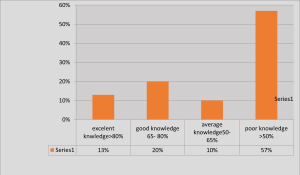
Figure 1: Pre-test knowledge score of participants
Post-test knowledge: The educational session led to substantial growth in participant understanding regarding mechanical ventilation principles. After the intervention, 47% of participants scored excellent on the posttest, and yet another 23% demonstrated good knowledge, while average knowledge was shown by 20% of participants, and 10% received poor grades. Most participants improved their knowledge scores from 52.03 in the pretest to 70.13 in the posttest, where statistical significance (p < 0.004) was found between the scores.
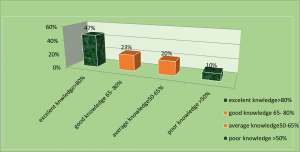
Figure 2: Post-test knowledge score of participants
Comparison of pre-test and post-test knowledge: The research showed that participants developed a more profound understanding of mechanical ventilation after the study period. The students showed a statistically significant gain in knowledge scores, which increased by 18.10 points according to the t-test value of 7.68.
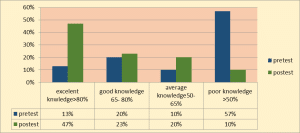
Figure 3: Comparison of pre-test and post-test
Discussion
Research findings demonstrate that the SSM successfully enhances CCNs’ understanding of mechanical ventilation. The results show that structured nursing education proves effective in teaching critical care practices to nurses because complementary training programs are limited in resource-constrained environments.
Research participants followed the worldwide trend that nursing is predominantly a female profession, since most respondents identified as female.[11] The participating nurses showed qualifications and work experience that demonstrated the issues that critical care nurses in Pakistan experience because of their limited education in critical care and advanced clinical practice.[12] The absence of formal training, together with incomplete education, creates conditions that could explain the inadequacies in pre-test understanding.[13]
Most participants demonstrated inadequate knowledge about mechanical ventilation according to pretest results, which confirmed data found in similar studies across different nations. Multiple research papers from South Africa and New Zealand have established comparable deficits in ICU nurse competence regarding ventilated patient care, so continuous training initiatives must be developed to enhance the abilities of CCNs in this area.[14, 15]
A remarkable growth of knowledge was observed through posttest evaluations, where almost half of the participants gained excellent scores. The investigation aligns with previous studies showing that structured training initiatives lead nurses to improve their mechanical ventilation knowledge capability.[16]
The findings from this research demonstrate how self-directed learning contributes to nursing practitioners developing better knowledge and skills. The structured and accessible resources of the SSM enable participants to learn about mechanical ventilation effectively, thereby benefiting staff who lack formal training opportunities.[17] After participating in self-study sessions, this evidence shows that educational modules provide an effective method for critical care nurses to enhance their knowledge base and practical competency.[18]
Recommendations
A set of recommendations arises from the study findings, which include:
- Medical facilities should develop Continuous Nursing Education (CNE) as regular programs for nurses to maintain their expertise and competence in critical care practices with emphasis on mechanical ventilation management. The training programs must provide scheduled sessions in addition to independent study materials, which serve the different educational requirements of nursing personnel.
- Healthcare institutions should create standardized training curricula that provide complete mechanical ventilation training for all Critical Care Nurses. Standard training programs must address fundamental information about ventilator modes with their appropriate settings, as well as complications and nursing administrative techniques.
- Nursing leaders in hospitals should create conditions for nurses to develop their independent learning skills through educational resources such as self-study modules, online courses, and reference materials. The system enables nurses to maintain their current knowledge of critical care innovations, which leads to an enhanced ability to treat ventilator patients effectively.
- The healthcare facilities must build partnerships with nursing schools and educational organizations to create tailored programs for CCN education. The training programs must respond to critical care unit requirements through practical and theoretical education.
- The hospital staff must undergo routine knowledge and competency evaluations in critical care practices and essential skills to detect knowledge deficits that need improvement. Hospital assessments should guide the planning process for specific training that guides educational care interventions.
Conclusion
The research confirms that the SSM provides a practical approach for CCNs to enhance their knowledge about mechanical ventilation. Posttest scores indicate why ongoing nursing education remains vital, because this shows the requirement for structured training programs for constructing CCN competency in ventilator management. The study findings establish important academic and clinical applications for nursing at sites that lack formal learning opportunities.
References
- Winkelstein W Jr. Florence Nightingale: founder of modern nursing and hospital epidemiology. Epidemiology. 2009;20(2):311. doi:10.1097/EDE.0b013e3181935ad6 PubMed | Crossref | Google Scholar
- Nicholls JG. Achievement motivation: conceptions of ability, subjective experience, task choice, and performance. Psychol Rev. 1984;91(3):328-346. doi:10.1037/0033-295X.91.3.328 Crossref | Google Scholar
- Hamel MB, Phillips RS, Davis RB, et al. Outcomes and cost-effectiveness of ventilator support and aggressive care for patients with acute respiratory failure due to pneumonia or acute respiratory distress syndrome. Am J Med. 2000;109(8):614-620. doi:10.1016/s0002-9343(00)00591-x PubMed | Crossref | Google Scholar
- Stefan MS, Shieh MS, Pekow PS, et al. Epidemiology and outcomes of acute respiratory failure in the United States, 2001 to 2009: a national survey. J Hosp Med. 2013;8(2):76-82. doi:10.1002/jhm.2004
PubMed | Crossref | Google Scholar - Wunsch H, Linde-Zwirble WT, Angus DC, Hartman ME, Milbrandt EB, Kahn JM. The epidemiology of mechanical ventilation use in the United States. Crit Care Med. 2010;38(10):1947-1953. doi:10.1097/CCM.0b013e3181ef4460
PubMed | Crossref | Google Scholar - Esteban A, Anzueto A, Frutos F, et al. Characteristics and outcomes in adult patients receiving mechanical ventilation: a 28-day international study. JAMA. 2002;287(3):345-355. doi:10.1001/jama.287.3.345
PubMed | Crossref | Google Scholar - Meherali SM, Parpio Y, Ali TS, Javed F. Nurses’ knowledge of evidence-based guidelines for prevention of ventilator-associated pneumonia in critical care areas: a pre and post-test design. J Ayub Med Coll Abbottabad. 2011;23(1):146-149. Nurses’ knowledge of evidence-based guidelines for prevention of ventilator-associated pneumonia in critical care areas: a pre and post-test design
- Wunsch H, Angus DC, Harrison DA, et al. Variation in critical care services across North America and Western Europe. Crit Care Med. 2008;36(10):2787-93, e1-9. doi:10.1097/CCM.0b013e318186aec8 PubMed | Crossref | Google Scholar
- Barnhill D, McKillop A, Aspinall C. The impact of postgraduate education on registered nurses working in acute care. Nurs Prax N Z. 2012;28(2):27-36. The impact of postgraduate education on registered nurses working in acute care
- Mireles-Cabodevila E, Hatipoğlu U, Chatburn RL. A rational framework for selecting modes of ventilation. Respir Care. 2013;58(2):348-366. doi:10.4187/respcare.01839 PubMed | Crossref | Google Scholar
- Padma K, Priya A, Subhashini N, Indira S. A study to assess the knowledge regarding ABG analysis and interpretation of ABG results among staff nurses in NMCH, Nellore. Int J Appl Res. 2017;3(1):68. A study to assess the knowledge regarding ABG analysis and interpretation of ABG results among staff nurses in NMCH, Nellore
- Bevan R, Corke C, Raper R, et al. The College of Intensive Care Medicine of Australia and New Zealand supports global collaboration and respect. Crit Care Resusc. 2017;19(2):115-116. The College of Intensive Care Medicine of Australia and New Zealand supports global collaboration and respect
- Ball C, Cox CL. Part two: The core components of legitimate influence and the conditions that constrain or facilitate advanced nursing practice in adult critical care. Int J Nurs Pract. 2004;10(1):10-20. doi:10.1111/j.1440-172x.2003.00454.x PubMed | Crossref | Google Scholar
- Toth JC. Comparing basic knowledge in critical care nursing between nurses from the United States and nurses from other countries. Am J Crit Care. 2003;12(1):41-46. Comparing basic knowledge in critical care nursing between nurses from the United States and nurses from other countries
- Kaur A, Charan G. A study to assess the effectiveness of STP on knowledge and practice regarding ABGs among ICU nurses in selected hospitals at Jalandhar, Punjab. Int J Health Sci Res. 2018;8:182188. A study to assess the effectiveness of STP on knowledge and practice regarding ABGs among ICU nurses in selected hospitals at Jalandhar, Punjab
- Binnekade JM, Vroom MB, de Mol BA, de Haan RJ. The quality of Intensive Care nursing before, during, and after the introduction of nurses without ICU-training. Heart Lung. 2003;32(3):190-196. doi:10.1016/s0147-9563(03)00032-3
PubMed | Crossref | Google Scholar - Sakhardande V. Effect of planned teaching programme on knowledge regarding care of patients on mechanical ventilator among staff nurses. Int J Appl Res. 2017;3:586588. Effect of planned teaching programme on knowledge regarding care of patients on mechanical ventilator among staff nurses
- Rolim LR, Melo EM, Frota NM, Almeida NG, Barbosa IV, Caetano JA. Knowledge of intensive care unit nursing professionals about arterial blood gas analysis. Rev Esc Enferm USP. 2013;7(3):713-21. Knowledge of intensive care unit nursing professionals about arterial blood gas analysis
Acknowledgments
Not reported
Funding
Not reported
Author Information
Corresponding Author:
Shabana Asghar
Department of Nursing
Allied Hospital Faisalabad, Pakistan
Email: [email protected]
Co-Authors:
Adeela Noreen, Ayesha Parveen, Noreen Fatima, Nuzhat Islam, Ayesha Abdulwahid
Department of Nursing
Allied Hospital Faisalabad, Pakistan
Authors Contributions
All authors contributed to the conceptualization, investigation, and data curation by acquiring and critically reviewing the selected articles. They were collectively involved in the writing – original draft preparation, and writing – review & editing to refine the manuscript. Additionally, all authors participated in the supervision of the work, ensuring accuracy and completeness. The final manuscript was approved by all named authors for submission to the journal.
Informed Consent
Not applicable
Conflict of Interest Statement
Not applicable
Ethical Approval
Ethical clearance to conduct the study was sought from the IRB Allied Hospital Faisalabad and the medical superintendent of the hospital (Ref No: 396-97-IRB, dated: 27- 11- 2024). All participants provided written informed consent. Thus, they volunteered themselves, and anonymity was also ensured.
Guarantor
Not applicable
DOI
Cite this Article
Shabana A, Adeela N, Nighat N, et al. Effect of Self-Study Module on Mechanical Ventilator Knowledge Among Critical Care Nurses at Allied Hospital Faisalabad. medtigo J Emerg Med. 2025;2(1):e3092213. doi:10.63096/medtigo3092213 Crossref