








 Author Affiliations
Abstract
Background: Infertility is a significant public health concern in Nigeria, affecting millions of people and having profound emotional, social, and economic implications. This cross-sectional study aimed to investigate the determinants of infertility and treatment experiences among women cared for at the Irrua Specialist Teaching Hospital.
Methodology: A convenience sampling technique was used to select 50 women seeking infertility treatment at the hospital. Structured questionnaires were used to collect data on socio-demographic characteristics, reproductive health history, infertility treatment experiences, and determinants of infertility.
Results: The majority of women (84%) were between 25 and 44 years, and most (92%) had been previously pregnant. The study found that lack of knowledge on timing of ovulation (48%), galactorrhea (40%), abnormal vaginal discharge (32%), exposure to stress (30%), and lack of adequate coital exposure (30%) were common determinants of female infertility—male factors, including physical absence for over a month (42%).
Conclusion: The study highlights the complex interplay of factors that contribute to infertility among women in Nigeria. The findings emphasize the need for comprehensive reproductive health services, reproductive health education, and male involvement in infertility treatment to improve treatment outcomes and patient satisfaction. The study’s results have implications for healthcare policy and practice and can inform the development of targeted interventions to address infertility in Nigeria.
Keywords
Infertility, Determinants, Treatment experiences, Reproductive health, Structured questionnaires.
Introduction
Infertility is defined as a disease of the reproductive system characterised by the failure to achieve a clinical pregnancy after 12 months or more of regular unprotected sexual intercourse.[1] It is a significant public health concern worldwide, affecting millions of people, particularly in developing countries like Nigeria. The World Health Organization (WHO) revealed that one out of six people will experience infertility in their lifetime globally.[2] In Nigeria, infertility prevalence approximates 30% which can have profound emotional, social, and economic implications on individuals and families.[3] The Irrua Specialist Teaching Hospital, located in Edo State, Nigeria, is a major healthcare facility that provides specialized medical services, including infertility treatment. Despite the availability of infertility treatment options, many women in Nigeria face significant challenges in accessing and utilizing these services.[4] The findings of this study contribute to the existing body of knowledge on infertility in Nigeria, highlighting the complexities and challenges faced by women seeking infertility treatment. The results have the potential to inform healthcare policy and practice, ultimately improving the quality of care and treatment outcomes for women experiencing infertility in Nigeria. This cross-sectional study aimed to investigate the determinants of infertility and treatment experiences among women cared for at the Irrua Specialist Teaching Hospital. The study also sought to identify the socio-demographic, medical, and healthcare-related factors that influence infertility and treatment outcomes among women in this setting.
Methodology
The study employed a cross-sectional design to investigate the determinants of infertility and treatment experiences among women cared for at the Irrua Specialist Teaching Hospital. The study population consisted of women seeking infertility treatment at the Irrua Specialist Teaching Hospital. The hospital is a major healthcare facility located in Edo State, Nigeria, and provides specialized medical services, including infertility treatment. A convenience sampling technique was used to select 50 women who were seeking infertility treatment at the hospital. The sample size was determined based on the availability of participants and the feasibility of data collection.
Inclusion criteria: The inclusion criteria for the study were
- Women seeking infertility treatment at the Irrua Specialist Teaching Hospital.
- Aged 18-45 years.
- Married.
- Able to provide informed consent.
Exclusion criteria: The exclusion criteria for the study were
- Women with a history of previous infertility treatment.
- Women with a known medical condition that could affect fertility.
- Women who were not willing to participate in the study.
Data collection: The study used structured questionnaires to collect data from the participants. The questionnaires were designed to collect information on:
- Socio-demographic characteristics (age, marital status, education, occupation, etc.)
- Reproductive health history (previous pregnancies, miscarriages, etc.)
- Infertility treatment experiences (type of treatment, duration of treatment, etc.)
- Determinants of infertility (knowledge about ovulation, galactorrhea, etc.)
The questionnaires were administered by a trained research assistant who was fluent in the local language. The participants were interviewed in a private room to ensure confidentiality and privacy. The interviews were conducted in a non-judgmental and empathetic manner to put the participants at ease.
Data analysis: The data were analyzed using descriptive statistics (frequencies, means, standard deviations) and inferential statistics (chi-square test). The data were entered into a computer spreadsheet and analyzed using IBM Statistical Package for the Social Sciences (SPSS) version 24.
Ethical consideration: The study was approved by the hospital’s ethics committee before data collection began. The participants were informed about the purpose and risks of the study and provided written informed consent before participating in the study. The participants were assured of confidentiality and anonymity and were free to withdraw from the study at any time.
Results
The study examined the determinants of infertility and treatment experiences among women cared for at the Irrua Specialist Teaching Hospital. The key findings are summarized below:
Biodata distribution of respondents
- Age: The Majority of women were between 25-44 years (84%) with a mean age of 34.14±6.31.
- Marital status: All women were married, with only 4% in a monogamous setting.
- Ethnicity: Mostly from the Esan ethnicity (52%).
- Religion: Mostly Christians (94%).
- Occupation: Mostly traders (72%).
- Education: Mostly tertiary level of education (58%).
Biodata distribution of male partners
- Age: Predominant age group was between 35-55 years (76%) with a mean age of 40.10±8.09.
Reproductive status of women
- Previous pregnancy: Most respondents had been previously pregnant (92%).
- Primary infertility: Only 8% of women had primary infertility.
- Secondary infertility: The Majority of women with secondary infertility were nulliparous (43.5%).
- Miscarriages: Most women with secondary infertility had one or more miscarriages (54.3%).
Determinants of infertility
- Women: Most women did not know when they ovulate (48%), had galactorrhea (40%), abnormal vaginal discharge (32%), exposure to stress (30%), and lack of adequate coital exposure (30%).
- Male partners: The Majority of male partners were physically absent for over a month for job-related reasons (42%), had a history of previous penile trauma (22%), scrotal or testicular infection (14%), and penile discharge (10%).
| Reproductive status | Frequency (N=50) | Percentage(%) | Mean±SD |
| Previous pregnancy (N=50) | |||
| Secondary infertility | 46 | 92.0 | |
| Primary infertility | 4 | 8.0 | |
| Parity (N=46) | 0.76±0.82 | ||
| 0 | 20 | 43.5 | |
| 1 | 19 | 41.3 | |
| 2 | 5 | 10.9 | |
| 3 | 2 | 4.3 | |
| Previous miscarriages (N=46) | 1.46±1.78 | ||
| 0 | 21 | 45.7 | |
| 1 | 4 | 8.7 | |
| 2 | 13 | 28.3 | |
| 3 | 3 | 6.5 | |
| 5 | 2 | 4.3 | |
| 6 | 3 | 6.5 | |
Table 1: Reproductive status of respondents
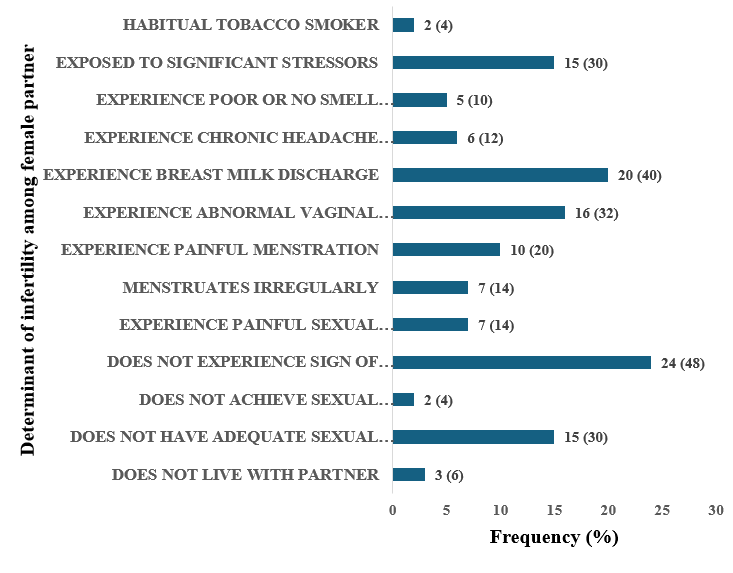
Figure 1: Determinants of infertility among respondents
| Determinant of infertility (Multiple response) |
Primary infertility N (%) |
Secondary infertility N (%) |
P-value |
| Does not live with partner(n=3) | 0 | 3(100) | 1.000 |
| Does not have adequate sexual intercourse(n=15) | 0 | 15(100) | 0.426 |
| Does not achieve sexual satisfaction(n=2) | 0 | 2(100) | 1.000 |
| Does not experience signs of ovulation(n=24) | 0 | 24(100) | 0.138 |
| Experience painful sexual intercourse(n=7) | 0 | 7 (100) | 0.928 |
| Menstruates irregularly(n=7) | 0 | 7(100) | 0.928 |
| Experience painful menstration(n=10) | 1(10) | 9(90) | 1.000 |
| Experience abnormal vaginal discharge(n=16) | 1(6.2) | 15(93.8) | 1.000 |
| Experience breast milk discharge(n=20) | 1(5) | 19(95) | 0.915 |
| Experience chronic headache and visual blurring(n=6) | 4(66.7) | 2(33.3) | 0.000* |
| Experience poor or no smell sensation(n=5) | 3(60) | 2(40) | 0.000* |
| Exposed to significant stressors(n=15) | 3(20) | 12(80) | 0.139 |
| Habitual tobacco smoker(n=2) | 0 | 2(100) | 1.000 |
Table 2: Relationship between determinants of infertility and the type of infertility (statistically significant at p value < 0.05)
Relationship between determinants and type of infertility:
- Chronic headache with visual blurring: Statistically significant relationship with primary infertility (p=0.000).
- Poor or no smell sensation: Statistically significant relationship with primary infertility (p=0.000).
- Not living with male partner: No statistical relationship with type of infertility (N=50).
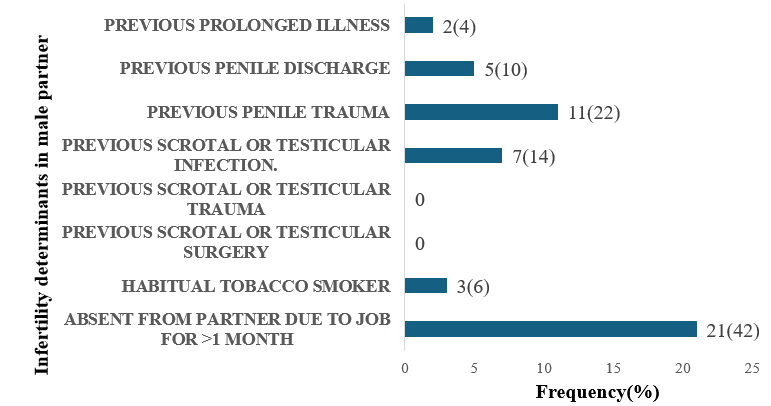
Figure 2: Determinants of infertility among male partners (N=17)
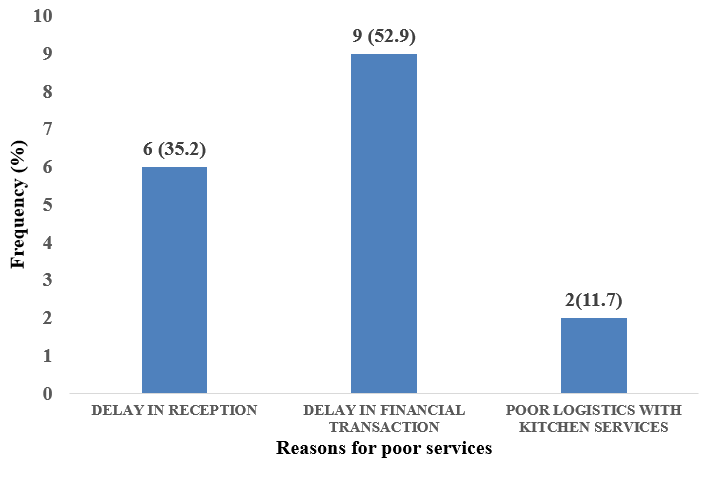
Figure 3: Reasons for poor services to respondents
Treatment experiences
- Perception of services: Mostly excellent or good, with gynecologist services perceived as excellent (60%) and good (40%).
- Poor services: Mostly due to delays (88.1%) and logistic challenges (11.7%), experienced by receptionists (35.2%) and finance points (52.9%).
Discussion
Infertility has significant biomedical implications and can affect physical, emotional, and social well-being.1 The study findings provided valuable insights into the determinants of infertility and treatment experiences among women cared for at the Gynaecology department of Irrua Specialist Teaching Hospital. In this study, the majority of women (84%) were between 25 and 44 years, which is consistent with the peak reproductive years. However, the mean age of 34.14±6.31 suggests that many women are seeking infertility treatment at an older age, which may be related to delayed childbearing. This finding is consistent with a similar study in India, which showed that advanced maternal age is a significant risk factor for infertility.5 This is also consistent with findings of Umbali et al., who further elucidated the challenges of infertility in advancing maternal age.[6]
The fact that all women were married, with only 4% in a monogamous setting, suggests that polygyny may be a common practice among the study population. This finding is consistent with previous studies that have shown that polygyny is associated with increased risk of infertility due to factors such as coital frequency and sexually transmitted infections.[7] This requires further studies. Furthermore, the study also found that most women (92%) had been previously pregnant, with only 8% having primary infertility. This suggests that secondary infertility is a significant problem among the study population. The finding that most women with secondary infertility were nulliparous (43.5%)8 or had a history of miscarriages (54.3%) highlights the need for effective family planning and reproductive health services to prevent unintended pregnancies, abortions, and their complications and reduce the risk of infertility. The study further identified several determinants of infertility among women, including lack of knowledge about ovulation (48%), galactorrhea (40%), abnormal vaginal discharge (32%), exposure to stress (30%), and lack of adequate coital exposure (30%). These findings suggest that reproductive health education and counselling are essential components of infertility treatment.[8-10]
Male infertility is a growing concern in reproductive health, affecting millions worldwide. Despite its significant impact on couples’ ability to conceive, it remains under-explored compared to female infertility.[11,12] This study found that male partners played a significant role in infertility, with physical absence for over a month (42%) and history of previous penile trauma (22%) being common factors. These findings highlight the need for male involvement in infertility treatment and reproductive health education for men. For treatment experiences, most women perceived the fertility services of the hospital provided by the gynaecologist as excellent (60%) or good (40%). However, delays (88.1%) and logistic challenges (11.7%) were common problems experienced by women at the reception and finance points. Additional stress can occur during the treatment of infertility and contribute to the interruption of care and further delay the solution of infertility.[1] The findings in this study suggest that improving the quality of care and reducing waiting times are essential for improving treatment outcomes and patient satisfaction.
Limitations: The study had some limitations, including:
- Small sample size: The sample size was small, which may limit the generalizability of the findings.
- Convenience sampling technique: The sampling technique used may have introduced bias into the study.
- Lack of control group: The study did not have a control group, which may limit the ability to compare the findings with a non-infertile population.
Conclusion
Overall, the study findings highlight the complex interplay of factors that contribute to infertility among women in Nigeria. The results emphasize the need for comprehensive reproductive health services, reproductive health education, and male involvement in infertility treatment to improve treatment outcomes and patient satisfaction.
References
- Benbella A, Mburu G, Zaidouni A, et al. Experiences of infertility among couples in Morocco. Front Reprod Health. 2025;6:1513243. doi:10.3389/frph.2024.1513243 PubMed | Crossref | Google Scholar
- World Health Organization. Infertility prevalence estimates, 1990–2021. 2023. Infertility Prevalence Estimates, 1990–2021
- Kpe-Nobana CL. Knowledge and experiences of infertility among couples in Obio/Akpor Local Government Area, Rivers State, Nigeria. Natl J Innov Healthc Res. 2024;12(1):106-117. Knowledge and experiences of infertility among couples in Obio/Akpor Local Government Area, Rivers State, Nigeria
- Esan DT, Nnamani KQ, Olajide AO, et al. Women at the receiving end: Exploring Couples’ experiences of infertility challenges in Nigeria. bioRxiv. 2025. doi:10.1101/2025.01.08.632060Crossref | Google Scholar
- Vannya MS, Singh B, Usha C, Joice SY, Gladston JV. Prevalence and Associated Factors of Infertility among Married Couples of Kunnathukal Panchayath in Trivandrum District. Indian J Community Med. 2025;50(2):282-288. doi:10.4103/ijcm.ijcm_216_23 PubMed | Crossref | Google Scholar
- Ubaldi FM, Cimadomo D, Vaiarelli A, et al. Advanced Maternal Age in IVF: Still a Challenge? The Present and the Future of Its Treatment. Front Endocrinol (Lausanne). 2019;10:94. doi:10.3389/fendo.2019.00094 PubMed | Crossref | Google Scholar
- Sanghvi K, Shandilya S, Brown A, et al. Reproductive output of old males is limited by seminal fluid, not sperm number. Evol Lett. 2025;9(2):282-291. doi:10.1093/evlett/qrae071 PubMed | Crossref | Google Scholar
- Ojah P, Pradhan MR. Can a lack of knowledge of the ovulatory cycle result in primary infertility? Evidence from selected South Asian countries. Hum Fertil (Camb). 2025;28(1):2441832. doi:10.1080/14647273.2024.2441832 PubMed | Crossref | Google Scholar
- Muhdi S, Lindo M, Firdaus MT. Male infertility : Where is the research heading? A bibliometric perspective. International Journal of Medicine and Health. 2025;4(1):24-35. doi:10.55606/ijmh.v4i1.5480 Crossref | Google Scholar
- Almujaydil MS. The Role of Dietary Nutrients in Male Infertility: A Review. Life (Basel). 2023;13(2):519. doi:10.3390/life13020519 PubMed | Crossref | Google Scholar
- Uadia P, Emokpae MA. Male infertility in Nigeria: A neglected reproductive health issue requiring attention. Journal of Basic and Clinical Reproductive Sciences. 2015;4(2):45-53. doi:10.4103/2278-960X.161042 Crossref | Google Scholar
- Sauer MV. Reproduction at an advanced maternal age and maternal health. Fertil Steril. 2015;103(5):1136-1143. doi:10.1016/j.fertnstert.2015.03.004 PubMed | Crossref | Google Scholar
Acknowledgments
We would like to thank all the members of the obstetrics and gynaecology department at Irrua Specialist Teaching Hospital for the support and resources to commence and successfully complete this project.
Funding
The study was self-sponsored by the researchers.
Author Information
Corresponding Author:
Joseph Okoeguale
Department of Obstetrics and Gynaecology
Ambrose Alli University, Ekpoma, Nigeria
Institute of Viral and Emergent Pathogens, Irrua Specialist Teaching Hospital, Nigeria
Email: [email protected]
Co-Authors:
Ikheloa Joseph (Lead Author), Afolabi Happy
Department of Obstetrics and Gynaecology
College of Medicine, Ambrose Alli University, Ekpoma, Nigeria
Aituma Lewis, Anthonia I Njoku
Department of Obstetrics and Gynaecology
Ambrose Alli University, Ekpoma, Nigeria
Authors Contributions
Joseph Ikheloa and Joseph Okoeguale conceptualized the study. Lewis Aituma, Anthonia Njoku, Happy Afolabi, Joseph Ikheloa, and Joseph Okoeguale contributed to data curation, methodology, and resources. Project administration was handled by Joseph Okoeguale. Lewis Aituma and Happy Afolabi managed the software component. Supervision was provided by Joseph Ikheloa and Joseph Okoeguale. All authors participated in the review and editing of the manuscript.
Ethical Approval
The study was approved by the hospital’s ethics committee before data collection began. The participants were informed about the purpose and risks of the study and provided written informed consent before participating in the study. The participants were assured of confidentiality and anonymity and were free to withdraw from the study at any time.
Conflict of Interest Statement
The authors declare no conflicts of interest.
Guarantor
None
DOI
Cite this Article
Joseph I, Okoeguale J, Lewis A, Happy A, Njoku AI. Determinants of Infertility and Treatment Experiences Among Women Cared for at Irrua Specialist Teaching Hospital: A Cross-Sectional Study. medtigo J Med. 2025;3(3):e3062332. doi:10.63096/medtigo3062332 Crossref