



medtigo Journal of Neurology and Psychiatry

| Volume 2, Issue 1

Determinants and Consequences of Burnout Among Undergraduate Nursing Students: A Systematic Literature Review


Author Affiliations

medtigo J Neurol Psychiatry. |
Date - Received: Dec 08, 2024,
Accepted: Dec 11, 2024,
Published: Jan 21, 2025.

https://doi.org/10.63096/medtigo3084214

Abstract

Introduction: Nursing Profession is a blend of clinical and theoretical courses, which are challenging and difficult. Therefore, nursing students experience higher levels of burnout in their academic and clinical environments. The purpose of this review is to elaborate associated factors and consequences of burnout and recommend a few suggestions to decrease the burnout levels.
Methodology: Narrative review was conducted to assess the associated factors and consequences of burnout. The review included 17 studies and search strategies, and reporting was followed by using the preferred reporting items for systematic reviews and meta-analyses (PRISMA) guidelines.
Results: Learning environment, lack of interest, lack of knowledge about the profession, lack of support and facilitation, clinical environment, long hours of study and work in the clinical area are the main factors that promote burnout. Burnout affects the motivation, engagement, focus on their skills and studies, and self-efficacy of nursing students.
Conclusion : Burnout increases frustration, agitation, and poor inter-personal and inter-professional relationships. Therefore, there is a need to explore the perceptions of nursing students regarding burnout and the implementation of interventions to reduce burnout.

Keywords

Nursing students, Burnout, Consequences, Associated factors, Clinical education.

Introduction

The term burnout was first described by Herbert Freudenberger and by Sigmund Ginsburg in 1974. Nonetheless, the recognition goes to Herbert Freudenberger for further illustrating and working on burnout.[1] Freudenberger, who was a psychologist and psychotherapist, found a loss of motivation and lessened ability to work among workers at the mental health clinic.[2] According to Freudenberger, burnout has the symptoms of weariness, fatigue, recurring headaches and gastrointestinal disorders, insomnia, shortness of breath, inimical alterations in behaviors, depression, stress, disappointment, and loss of faith.[1,3] Burnout is a worldwide mental issue that affects professional life, quality of work, role conflicts, and professional overload.[4]

Dimensions of burnout: It has been reported that burnout is a syndrome that is associated with protracted stress. Three main dimensions of burnout are presented in table 1.[5-9]

Dimension Aspect Explanation
Emotional exhaustion Emotional Emotional draining due to workover load and due to lack of resources
Depersonalization (Cynicism) Cognitive Showing less enthusiasm towards studying. It is characterized as negative relations with performance and prosocial behaviors among the students
Personal accomplishment

(Inefficacy)

Cognitive Feelings of inadequacy and inability to complete the tasks

Table 1: Dimensions of burnout in academics

Burnout model
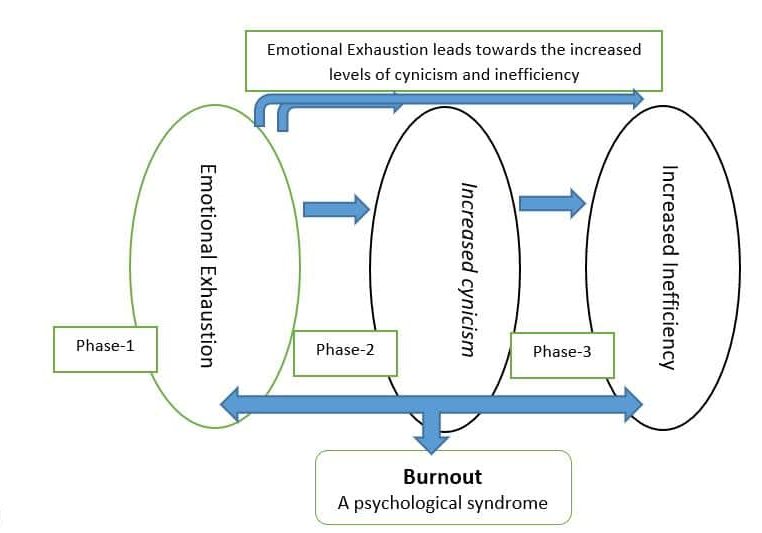
When the coping techniques are counterproductive, and a person is incapable of overcoming the stress, then burnout happens. It is a chronic condition of physical and psychological disability.[7] Burnout begins with the development of emotional exhaustion (considered the first phase or stage), which then leads to cynicism and inefficiency.[5,8,9] Emotional exhaustion is due to a higher load that promotes energy loss and enthusiasm. This loss of energy leads to poor or diminished engagement of the students towards their studies, thus creating a physical and psychological distance from studies and lower productivity.[6]

Model of burnout in academics

Figure 1: Model of burnout in academics

Burnout among students: Burnout in academia is when students cannot work efficiently, relinquish interest in their studies, and ask questions about their abilities to finish university.[2] Burnout is a crucial concern in work life and studies. Higher education systems worldwide are associated with eclectic types of stress for students, leading to burnout.[10,11] Therefore, university students encounter numerous challenges and stressful situations, including preparing for exams, assignments, and a load of classroom and other academic activities during their study time.[12] Burnout among students is shown by somnolence, lack of interest, ineptitude to complete their daily academic tasks, and declined efficiency.[13]

The concept of burnout was applied to workers, professionals, and stress linked to the occupation heretofore. Nevertheless, in the recent epoch, the concept applies to students.[14] Though all workers and professionals experience burnout, healthcare workers and medical and nursing students are primarily at risk of burnout.[11] Mental health issues, including depression, stress, and loss of hope, lead to unhealthy demeanors and burnout among healthcare professionals.[15] Likewise, the Poor environment, stress, and complex situations are impacting the performance of nurses and midwives. That is evident due to higher attrition rates in the workforce.[16] Burnout is a syndrome that includes higher degrees of emotional exhaustion, depersonalization (distancing from the study or work), and inefficiency. It results from study-related or work-related stressors.[12,17-19] The strenuous educational life of the medical students is the leading cause of burnout among them. The grueling academic life of medical students is affected by difficulty transitioning from various phases of clinical work and their interaction with critically ill patients.[11,18] Besides, medical students with these conditions feel further burnout due to exhaustion and maladroitness.[11]
 
Burnout among nursing students: It has been found that a few stress experiences are common among nursing students and general students. The sources of academic stress include the timing of examinations and elements of curricula.[20] Nursing education is an onerous process that is challenging and full of difficulties. Nurse students are at higher risk for experiencing psychological issues (burnout) due to acquiring skills and knowledge.[21] Nursing profession is a blend of theoretical and clinical courses that are noteworthy for supporting the profession. The theory part is conducted in classrooms (lectures, discussions, case studies), and this part is complemented by clinical training. The training part is conducted in labs and on simulators to develop skills and attitudes.[22]

Nursing students are predominantly prone to higher levels of stress during their education, and stressors include concerns related to academic performance, clinical workload, lack of support during clinical placements, and the death of patients.[14,20] Additionally, feelings of dismay, petulance, or perturbation lead to learning deficiencies and a decline in the quality of nursing care in the clinical setting, which are associated with burnout.[2] The data from different searches shows that there is an unbridled level of burnout, depression, and suicide among healthcare workers.[23] In the United States, the suicide rate for male nurses is higher at 33/100,000 compared with the general population at 27/100,000; on the other hand, the suicide rate for female nurses is higher at 10/100,000 compared to the general population at 7/100,000. There is a concern that this rate could rise in the future.[15] Among nursing students, burnout is a critical issue leading to decreased academic performance, lessened academic success, heightened attrition rates, and poor clinical performance. Furthermore, it has been shown that stress reduction is associated with decreased levels of burnout.[24]
 
Aim: Numerous studies have evaluated burnout levels among undergraduate nursing students and their associated factors. This review aims to provide an overview of the determinants linked to burnout in academia and clinical areas and their consequences on undergraduate nursing students. Furthermore, this review will shed light on the strategies to reduce burnout among undergraduate nursing students.

Methodology

A non-systematic narrative review was conducted for this review. Narrative reviews are considered critical as educational articles because they combine information in a readable format and present a problem and its management.[25] Narrative reviews are helpful in the identification and summary of previously published studies and in identifying new study areas that need to be addressed.[26] A question guided this non-systematic narrative literature review: What are the determinants of burnout among undergraduate nursing students in their academic and clinical areas, and what strategies help reduce burnout? Accordingly, to answer this question, we reviewed the most relevant and significant literature that includes the factors associated with burnout. We also viewed different strategies to reduce burnout and its effects on undergraduate nursing students.

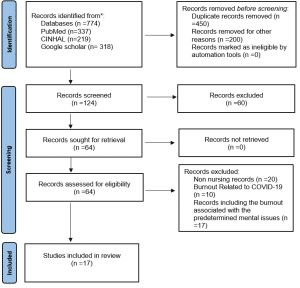
Search strategy: To search the relevant literature, the databases including “CINHAL,” “PubMed,” and “Google Scholar” were used with the Keywords “Undergraduate,” “Nursing or Student Nurses,” “Consequences or Effects,” “Burnout,” “Academic,” “Clinical,” and “Associated Factors” were used. These were combined with the Boolean operators “OR” and “AND.” All the searches were completed using online library access. The search scope was limited to English Language, Full free Text from Jan 2014 to November 2023, Original research, and international articles. The literature was then checked for duplicates, reports, research briefs, reviews, and editor letters, and only abstracts were removed. The full-text articles that were related to the review were then analyzed. Authors ensured that only those studies should be included in the review that fit the preset criteria. Research papers were screened for titles, abstracts, and full-text papers in English. The authors read the papers and were screened according to the inclusion criteria for the review. After the consensus of all the authors, studies and findings from the study were included. Disagreed points were discussed, and after careful consideration, those were removed. Search reporting followed by using the PRISMA 2020 standards. Figure 2 presents the search strategy according to PRISMA guidelines.

flow chart showing identification of studies via databases

Figure 2: PRISMA flow chart showing identification of studies via databases

Eligibility criteria
Inclusion criteria: The inclusion criteria for the literature for this narrative review was (a) the original search conducted in nursing colleges among the undergraduate nursing students assessing the burnout levels (b) The qualitative, quantitative, and mixed-method studies conducted from Jan 2014 to November 2023 (c) The articles in English language.

Exclusion criteria: The exclusion criteria were (a) articles published in a language other than English, (b) reports, briefs, reviews, and commentaries, (c) published before 2014, and (d) Abstracts only.

Description of included studies: This narrative review included 17 studies conducted in different countries. Four of the 17 studies were conducted in Brazil, three in Iran, and two in South Korea. On the other hand, in Spain, Italy, the Kingdom of Saudi Arabia, South Africa, Cameroon, Mexico, India, and Indonesia, one study was conducted in each country. Out of 17, two were mixed methods, two were descriptive correlational, and two were cross-sectional analytical studies. On the other hand, one study was exploratory, and one was an observational-descriptive study. The rest of the nine studies were descriptive cross-sectional surveys. One study used the Oldenburg Burnout inventory; one used the academic burnout questionnaire. One study used the professional quality of life scale (ProQOL) to evaluate burnout levels and their association with other parameters. On the other hand, fourteen studies used the Maslach burnout inventory – student survey (MBI-SS) to assess subdomains’ burnout levels and scores.

Results

Levels of burnout among nursing students: Of nursing students in their undergraduate program, 66.7% had moderate levels of burnout, whereas 22.8% had severe levels of burnout in their academia.[27] In another study, it was found that 61.7% of the students had higher levels of burnout, whereas 62% had a higher degree of emotional exhaustion.[28] All the undergraduate nursing students had burnout. Nevertheless, 28.15% of the students had mild levels of burnout, whereas 74.10% had moderate levels of burnout. Likewise, in the emotional exhaustion dimension, 83.81% of the respondents were in the medium category, 56.83% were in the mild levels in the cynicism dimension, and 70.14% were at medium levels in the professional efficacy dimension.[29] A research study found that students (27.30%) had burnout. On the other hand, 14.77% of the students had higher levels of burnout in the efficacy dimension.[11] A study assessed the burnout dimensions and empathy among nurses and nursing students and found that 18% and 60% were in the emotional exhaustion and personal accomplishment dimension at moderate levels, whereas 69% were at higher levels in the depersonalization dimension of burnout.[7] A study among nursing students found that students had burnout levels with a mean of 45 and a standard deviation of ± 9.[13] Similarly, the burnout score among nursing students was 2.8, which was higher.[30] Among the undergraduate nursing students, 6% achieved lower levels of burnout, while 94% had an average level of burnout.[18] Similarly, the study found that 76.3% of the students had high emotional exhaustion levels, 31.6% had high levels of depersonalization, and 21.1% had low levels of academic efficacy.[31]

It has been found that second-year nursing students have a high level of burnout. About 18.4% of students had academic burnout, and 19.9% had emotional exhaustion.[32] The students in the second year (33.3%) and third year (37.5%) had high levels of burnout, which was associated with different factors, including financial issues, living situations, and non-employment.[33] In their third and fourth years, senior nursing students lack interest and passion because of the long nursing education courses.[30]

On the other hand, a study found that nursing students had higher levels of burnout in their first year (41.1%) and second year (67.5%).[28] The nursing students of the second and fourth semesters showed a higher burnout level than the senior students. The data presented contradicts the findings of the previously mentioned studies.[11] Third-year nursing students showed the highest emotional exhaustion rates and lower efficacy.[34]

Factors associated with academic burnout
Common factors: There are numerous factors that affect nursing students; however, a few common factors that have been extracted from the previous studies are as follows: Health and satisfaction are crucial factors in burnout. Good subjective health is related to lower burnout levels than inadequate health.[10] Regret for the profession choice is also related to burnout among nursing students. Due to this regret, there is a higher level of stress among them.[18] A study found a relationship between the intention to withdraw from the course due to disbelief and professional effectiveness.[34,35] There is a significant relationship between nursing students’ burnout and dropping out of the course. The occurrence of burnout is linked with regret about the choice of profession.[33] The internet’s abusive use is also a crucial factor linked to the students’ burnout and performance (r = 0.305, p < 0.001). The study found a positive relationship between burnout and internet abuse.[13] The junior nursing students felt exhausted at the start of each academic year. The complexity of the tasks and poor adaptation to the nursing environment are the major factors linked to burnout.[11] Other than a healthy life, the sleep quality of nursing students is another factor associated with burnout. It has been found that students who have poor-quality sleep have higher levels of burnout.[36]

Clinical skills and training: Nursing studies include practices along with theoretical knowledge; therefore, the students feel burned out. A few of the factors that are related to the clinical area are given below. The nature of the nursing profession is dual, including theory and clinical practice. The clinical environment is stressful for nursing students due to the unfamiliar environment, which can lead to burnout.[27] The results of the study state that the students need to be more motivated for clinical practice, as patients ignore them. Nursing students feel pressure due to clinical placement, leading to increased burnout and lower interest levels.[11] In the clinical area, nursing students care for patients and their families. Dealing with the suffering of patients, deaths, and complications put pressure on nursing students, and they had higher levels of burnout.[28] Nursing students show moderate levels of burnout in their clinical areas.[30] Nursing students with less clinical experience have higher burnout levels than those with sound clinical experience.[10] Students manage their academic activities along with their clinical placement. The workload and pressure of clinical placement increase clinical burnout symptoms and levels.[35] Time management in the clinical area is also linked to burnout levels. Nursing students are more likely to experience burnout due to their workload, the longer they spend in the clinical setting with patients.[37]

Demographics: Of female nursing students, about 95% (19) have burnout, whereas only one male student has burnout.[33] Another study found that 48 (39%) female students have moderate burnout levels compared to male students. Of male students, 34 (27.6%) have moderate burnout levels. The severity of burnout was higher among male students (13%) compared to females, who had fewer numbers (9.8%).[27] In another study, it was found that there are significant differences between burnout and gender.[29,31] Another study showed that there is a relationship between stress, burnout, and gender. Females have higher levels of burnout.[2] Other than gender, age is also an associated factor with burnout. The younger nursing students have higher burnout levels (21.8%).[33] The results of a study showed that most of the female (50.4%) students had high levels of burnout compared to male students.[32] Another study agreeing with this argument found a significant association between age and burnout. Other personal factors, which include workload, marital status, low socioeconomic status, and having no children, are factors linked with burnout, particularly among female students.[31,32]

Consequences of burnout: The main consequence of burnout among nursing students is reduced performance and professional efficacy. The student’s poor performance leads to poor results and diminishes clinical abilities.[18] With lower professional efficacy, nursing students feel they are wasting their time and energy, and show inadequacy in patient care.[11] Another study found that students failed to fulfill their self-achievement and lacked interest in the lectures and clinical activities.[11,29] Due to burnout, most students could not control their behaviors and showed poor efficacy. They are vulnerable to others, show adequate psychological adaptation, and cope poorly with challenging situations.[27] In another study, nursing students with burnout lacked commitment and planning for their academic progress, which led to poor grades and inefficiency.[11]

Nursing students spend much time on the internet, which leads to severe burnout. The high levels of burnout prevent them from taking care of academic affairs, thus creating academic and clinical difficulties.[13] Burnout leads to more absenteeism among nursing students. Additionally, they show low motivation in their studies and drop out of nursing programs.[11] Nursing students with burnout use medications and alcohol to reduce the symptoms. They do not seek any medical or psychological care. They have limited physical activities.[33] Burnout leads to inadequate sleep and sleep disturbances. With disturbed sleep, they cannot concentrate on their academics and clinicals.[36] Nursing students with burnout spend less time with their families and cannot focus on the concerns related to their families.[18] Limited or no work experience causes problems for nursing students as they are not able to apply theoretical knowledge to practice. Work experience helps strengthen emotions and self-confidence among students, thus improving their ability to cope with critical and difficult situations.[2]

Discussion

Undergraduate nursing students are one of the disciplines that experience burnout.[29] There are various stressors and causes of burnout among nursing students. Similarly, the prevalence of burnout varies depending on the source. These sources and factors include learning difficulties, inadequate support and facilitation by teachers, and excessive tasking.[38] Different studies have shown different results regarding burnout levels in different semesters and years of nursing education. Stress and burnout were found to be higher among second-year undergraduate nursing students, in the same way that another study result concurred with the results that junior nursing students had higher levels of burnout compared to senior students.[31,32] Nursing students in semesters 2 (first year) and 4 (second year) experience higher levels of burnout compared to other semesters due to the transition period between their expectations and the actual situation in their studies and the clinical area.[11] Agreeing with these arguments, other study results showed that third- and fourth-year nursing students had lower levels of burnout compared to junior students.[31]

Contrary to the above arguments, the results found a higher level of burnout among nursing students at later stages of the nursing degree program.[7] The reason for this may be due to the greatest responsibilities in clinical performance, clinical placement, and direct contact with patients and families. However, the students are not able to handle these situations, and they don’t feel prepared.[38] The higher levels of burnout among third- and fourth-year students may be due to the increased demands of the study program and extensive activities. Furthermore, the courses that are being taught to them in the fourth year include critical thinking and critical skills.[33]

Undergraduate nursing students in their academic and clinical education years face burnout due to academic workload, long hours of clinical practice, coping with emergencies, and taking care of patients and families.[37] The reason for this stress and burnout among nursing students is the experience of stressful situations in clinical and busy academic life. Similarly, performing night shifts and observing patients’ and families’ pain and trauma can lead to severe burnout as compared to students from other disciplines.[36] Professional training, conflicting situations, long hours of study, and clinical situations, either urgent or emergent, are the sources of stress and severe burnout. Additionally, breaking the news of death and facing death situations in the hospital setting is a source of burnout among undergraduate nursing students.[27] Students are inexperienced and, therefore, become tenser while experiencing intense conditions in the classroom and in a clinical practice environment. Additionally, the students have negative feelings about the theoretical and practical activities and higher levels of burnout as they advance in their professional lives.[33] Burnout leads to poor mastery of professional tasks and poor clinical performance, which leads to the intention to leave the profession and studies. [31,35]

With poor clinical performance and results, the students lack empathy, which also increases burnout levels and their intentions to quit the program.[7] Little knowledge about the profession and limited or no interest in the profession act as triggers to give up the course.[18,35] Insomnia, cognitive issues (forgetting things, being unable to focus), and moderate to severe depression are linked with burnout. These issues may be due to personal, family, and professional concerns.[36,39] Burnout among female students is higher due to the fact that they are unable to handle critical situations and take on the burden.[28] However, fewer facts counter the above argument and explain that male nursing students have higher levels of burnout because they have more responsibilities towards their families and are anxious about their future.[27]

The low socioeconomic status of the students is due to the unavailability of resources, including payment, fees, books, and study materials, which leads to poor performance, decreased efficacy, and increased levels of burnout.[28] Internet abuse and burnout levels are associated. Burnout levels are increased as the use is increased, thus hindering self-esteem, self-control, and self-efficacy.[13] Burnout among nursing students is common and distressing, not only for them but also for the people around them, including family, friends, and people at work. Numerous factors are causes of burnout in academia and in the clinical area, and a few of these have been discussed above.

Recommendations to reduce burnout: Nursing is a growing profession that is flourishing day by day in the recent era, and the demand for enrollment in nursing education is increasing day by day. The increased enrollments in the program are also linked to the high rates of burnout in clinical practices and academia. Therefore, there are some recommendations to reduce burnout among undergraduate nursing students. For nurse educators and nursing institutions, it is necessary to create spaces for self-care for nursing students so they can recognize their psychological distress related to distress and burnout in clinical and academic environments.[34] There is a need to continue the programs, including simulation education in classrooms, peer and clinical mentoring, and mindfulness programs in clinical areas, to relieve stress and burnout, particularly at their initial stages.[10] The introduction of “hands-on” as an accommodating learning style helps reduce incompatibility with learning and burnout.[11]

Group cognitive-behavioral therapy, music therapy, and mindfulness must be used to reduce burnout among nursing students. It is also important to implement these interventions in the first and second years of students to enhance their coping strategies and reduce burnout.[38] Counseling and support provision in nursing education programs are useful interventions that help reduce burnout and promote engagement and motivation.[18] Similarly, pathway counseling will also help reduce burnout levels and leave the program. Counseling and correct information about the future will reduce fears and future uncertainty among nursing students.[30] Regular physical activities, good nutritional status, and the promotion of proper sleep among nursing students can reduce burnout levels. Physical activities reduce depression and anxiety, and the quality of sleep improves focus and increases vigilance.[39] The above-mentioned interventions can be implemented in nursing colleges to reduce burnout levels. These can be implemented by the counsellors and even by nursing educators.

Conclusion

This review discussed the factors associated with burnout and its consequences among undergraduate nursing students during their academic and clinical years. Furthermore, the review presented a few recommendations to reduce burnout and improve the nursing students’ engagement, motivation, coping abilities, efficacy, and well-being. Personal factors, clinical environment, workload, quality of education, teaching strategies, incomplete information about the nursing program, and intentions to leave nursing education are common concerns increasing burnout among students. There is a need to reduce burnout through the promotion of health and psychological well-being and the improvement of the clinical and academic environment. The included studies in this review assessed grit and its association with burnout and sleep quality and its association with burnout. There is a need to explore the nursing students’ perceptions about the factors of burnout in their academic and clinical settings so that more can be explored about burnout, its associated factors, and its consequences separately.

Assessment of burnout, its prevalence, and associated factors in the clinical environment is of great concern for nursing students and organizations trying to manage burnout in clinical practice. This assessment will provide an opportunity for organizations, policymakers, nurse educators, and nursing leaders. Longitudinal studies are necessary to assess the burnout prevalence and its impacts in the early years of nursing education and practice. As the literature review included cross-sectional surveys, it is necessary to conduct longitudinal studies to assess the difference in burnout levels among undergraduate nursing students. On the other hand, experimental studies are crucial to assessing the effectiveness of interventions to reduce burnout in the future.

References

  1. Heinemann LV, Heinemann T. Burnout research. SAGE Open. 2017;7(1):1-12. doi:10.1177/2158244017697154
    Crossref | Google Scholar
  2. Valero-Chillerón MJ, González-Chordá VM, López-Peña N, Cervera-Gasch Á, Suárez-Alcázar MP, Mena-Tudela D. Burnout syndrome in nursing students: An observational study. Nurse Educ Today. 2019;76:38-43. doi:10.1016/j.nedt.2019.01.014 PubMed | Crossref | Google Scholar
  3. Dall’Ora C, Ball J, Reinius M, Griffiths P. Burnout in nursing: A theoretical review. Hum Resour Health. 2020;18(1):1-17. doi:10.1186/s12960-020-00469-9 PubMed | Crossref | Google Scholar
  4. Baudewyns V, Bruyneel A, Smith P, Servotte J, Dancot J. Prevalence and factors associated with academic burnout risk among nursing and midwifery students during the COVID-19 pandemic: A cross-sectional study. Nurs Open. 2022;10:3232-3242. doi:10.1002/nop2.1575 PubMed | Crossref | Google Scholar
  5. Maslach C, Leiter MP. Understanding the burnout experience: Recent research and its implications for psychiatry. World Psychiatry. 2016;15(2):103-111. doi:10.1002/wps.20311 PubMed | Crossref | Google Scholar
  6. Bang H, Reio TG. Examining the role of cynicism in the relationships between burnout and employee behavior. Rev Psicol Trab Organ. 2017;33(3):217-227. doi:10.1016/j.rpto.2017.07.002 Crossref | Google Scholar
  7. Ferri P, Guerra E, Marcheselli L, Cunico L, Di Lorenzo R. Empathy and burnout: An analytic cross-sectional study among nurses and nursing students. Acta Bio Medica. 2015;86(2):104-115. Empathy and burnout: An analytic cross-sectional study among nurses and nursing students
  8. Manzano-García G, Ayala JC. Insufficiently studied factors related to burnout in nursing: Results from an e-Delphi study. PLoS One. 2017;12(4):e0175352. doi:10.1371/journal.pone.0175352 PubMed | Crossref | Google Scholar
  9. Lee M, Lee KJ, Lee SM, Cho S. From emotional exhaustion to cynicism in academic burnout among Korean high school students: Focusing on the mediation effects of hatred of academic work. Stress Health. 2020;36(3):376-383. doi:10.1002/smi.2936 PubMed | Crossref | Google Scholar
  10. Hwang E, Kim J. Factors affecting academic burnout of nursing students according to clinical practice experience. BMC Med Educ. 2022;22:346. doi:10.1186/s12909-022-03422-7 PubMed | Crossref | Google Scholar
  11. Ghods AA, Ebadi A, Sharif Nia H, Allen K, Ali-Abadi T. Academic burnout in nursing students: An explanatory sequential design. Nurs Open. 2022;10(2):535-543. doi:10.1002/nop2.1319 PubMed | Crossref | Google Scholar
  12. Rahmatpour P, Chehrzad M, Ghanbari A, Sadat-Ebrahimi S-R. Academic burnout as an educational complication and promotion barrier among undergraduate students: A cross-sectional study. J Educ Health Promot. 2019;8(8):201. doi:10.4103/jehp.jehp_165_19 PubMed | Crossref | Google Scholar
  13. Jafari F, Janatolmakan M, Khubdast S, Azizi SM, Khatony A. The relationship of internet abusive use with academic burnout and academic performance in nursing students. Biomed Res Int. 2022:1-6. doi:10.1155/2022/2765763
    PubMed | Crossref | Google Scholar
  14. McVeigh C, Ace L, Ski CF, et al. Mindfulness-based interventions for undergraduate nursing students in a university setting: A narrative review. Healthcare. 2021;9(11):1-10. doi:10.3390/healthcare9111493
    PubMed | Crossref | Google Scholar
  15. Heath J, Walmsley LA, Braido C, Brouwer K, Wiggins AT, Butler KM. Cultivating practices for resilience with baccalaureate nursing students: A pilot study. Perspect Psychiatr Care. 2022;58(4):1529-1536. doi:10.1111/ppc.12960
    PubMed | Crossref | Google Scholar
  16. Eaves JL, Payne N. Resilience, stress and burnout in student midwives. Nurse Educ Today. 2019;79:188-193. doi:10.1016/j.nedt.2019.05.012 PubMed | Crossref | Google Scholar
  17. Haile YG, Senkute AL, Alemu BT, Bedane DM, Kebede KB. Prevalence and associated factors of burnout among Debre Berhan University medical students: A cross-sectional study. BMC Med Educ. 2019;19(1):1-11. doi:10.1186/s12909-019-1864-8 PubMed | Crossref | Google Scholar
  18. Njim T, Mbanga C, Mouemba D, et al. Determinants of burnout syndrome among nursing students in Cameroon: A cross-sectional study. BMC Res Notes. 2018;11:450. doi:10.1186/s13104-018-3567-3 PubMed | Crossref | Google Scholar
  19. Chunming WM, Harrison R, MacIntyre R, Travaglia J, Balasooriya C. Burnout in medical students: A systematic review of experiences in Chinese medical schools. BMC Med Educ. 2017;17(1):1-11. doi:10.1186/s12909-017-1064-3
    PubMed | Crossref | Google Scholar
  20. Arian M, Jamshidbeigi A, Kamali A, Dalir Z, Ali-Abadi T. The prevalence of burnout syndrome in nursing students: A systematic review and meta-analysis. Teach Learn Nurs. 2023;18(4):512-520. doi:10.1016/j.teln.2023.04.015
    Crossref | Google Scholar
  21. Kong LN, Yao Y, Chen SZ, Zhu JL. Prevalence and associated factors of burnout among nursing students: A systematic review and meta-analysis. Nurse Educ Today. 2023;121:105706. doi:10.1016/j.nedt.2022.105706
    PubMed | Crossref | Google Scholar
  22. Ahmed WAM, Mohammed BMA. Nursing students’ stress and coping strategies during clinical training in KSA. J Taibah Univ Med Sci. 2019;14(2):116-122. doi:10.1016/j.jtumed.2019.02.002 PubMed | Crossref | Google Scholar
  23. Wei H, Dorn A, Hutto H, et al. Impacts of nursing student burnout on psychological well-being and academic achievement. J Nurs Educ. 2021;60(7):369-376. doi:10.3928/01484834-20210616-02
    PubMed | Crossref | Google Scholar
  24. Burleson S, Thomas L, DeBoor S. Effective interventions for nursing student burnout. Nurse Educ. 2022;48(3):85-89. doi:10.1097/NNE.0000000000001348 PubMed | Crossref | Google Scholar
  25. Green BN, Johnson CD, Adams A. Writing narrative literature reviews for peer-reviewed journals: Secrets of the trade. J Chiropr Med. 2006;5(3):101-117. doi:10.1016/S0899-3467(07)60142-6 PubMed | Crossref | Google Scholar
  26. Ferrari R. Writing narrative style literature reviews. Med Writ. 2015;24(4):230-235. doi:10.1179/2047480615Z.000000000329 Crossref | Google Scholar
  27. Aghajari Z, Loghmani L, Ilkhani M, et al. The relationship between quality of learning experiences and academic burnout among nursing students of Shahid Beheshti University of Medical Sciences in 2015. Electron J Gen Med. 2018;15(6):em90. doi:10.29333/ejgm/93470 Crossref | Google Scholar
  28. Consuelos-Sánchez KS, Cano-Estrada A, Castañeda-Márquez AC, Hernández-Mariano JÁ. Nursing training and its association with burnout syndrome among Mexican undergraduate students. Salud Ment. 2023;46(2):97-104. doi:10.17711/sm.0185-3325.2023.013 Crossref | Google Scholar
  29. Sumarni T, Mediawati AS, Yulianita H. Academic burnout among undergraduate nursing students. J Nurs Care. 2022;4(3):255-264. doi:10.24198/jnc.v4i3.34400 Crossref | Google Scholar
  30. Kang S, Choi E. Influence of grit on academic burnout, clinical practice burnout, and job-seeking stress among nursing students. Perspect Psychiatr Care. 2021;58(4):1959-1966. doi:10.1111/ppc.13015 PubMed | Crossref | Google Scholar
  31. Quina Galdino MJ, Brando Matos de Almeida LP, Ferreira Rigonatti da Silva L, et al. Burnout among nursing students: A mixed method study. Invest Educ Enferm. 2020;38(1):e07. doi:10.17533/udea.iee.v38n1e07
    PubMed | Crossref | Google Scholar
  32. Prakash P, Sheilini M, Nayak SG. Academic burnout among undergraduate nursing students: A quantitative survey approach. J Educ Health Promot. 2023;12:141. doi:10.4103/jehp.jehp_1120_22 PubMed | Crossref | Google Scholar
  33. Vasconcelos EM, Trindade CO, Barbosa LR, Martino MMF. Predictive factors of burnout syndrome in nursing students at a public university. Rev Esc Enferm USP. 2020;54:e03564. doi:10.1590/S1980-220X2018044003564
    PubMed | Crossref | Google Scholar
  34. Albuquerque RB, Barbosa AF, Pacheco GBF. Burnout syndrome in nursing students. Care Fundam Online Res J. 2021;13:1596-1602. doi:10.9789/2175-5361.rpcfo.v13.10547 Crossref | Google Scholar
  35. Tomaschewski-Barlem JG, Lunardi VL, Lunardi GL, et al. Burnout syndrome among undergraduate nursing students at a public university. Rev Latino-Am Enfermagem. 2014;22(6):934-941. doi:10.1590/0104-1169.3254.2498
    PubMed | Crossref | Google Scholar
  36. Naderi H, Dehghan H, Dehrouyeh S, Tajik E. Academic burnout among undergraduate nursing students: Predicting the role of sleep quality and healthy lifestyle. Res Dev Med Educ. 2021;10(1):16. doi:10.34172/rdme.2021.016
    Crossref | Google Scholar
  37. Mathias CT, Wentzel DL. Descriptive study of burnout, compassion fatigue, and compassion satisfaction in undergraduate nursing students at a tertiary education institution in KwaZulu-Natal. Curationis. 2017;40(1):e1-6. doi:10.4102/curationis.v40i1.1784 PubMed | Crossref | Google Scholar
  38. Gómez-Urquiza JL, Velando-Soriano A, Membrive-Jiménez MJ, et al. Prevalence and levels of burnout in nursing students: A systematic review with meta-analysis. Nurse Educ Pract. 2023;72:103753. doi:10.1016/j.nepr.2023.103753 PubMed | Crossref | Google Scholar
  39. Rudman A, Arborelius L, Dahlgren A, Finnes A, Gustavsson P. Consequences of early career nurse burnout: A prospective long-term follow-up on cognitive functions, depressive symptoms, and insomnia. EClinicalMedicine. 2020;27:100565. doi:10.1016/j.eclinm.2020.100565 PubMed | Crossref | Google Scholar

Acknowledgments

Not reported

Funding

The work had no special funding.

Author Information

Corresponding Author:
Younas Masih
Department of Nursing
Memorial University of Newfoundland, Canada
Email: younasbhatti85@gmail.com

Co-Author:
Sajida Adeline
Department of Cardiology
Pervaiz Elahi Institute of Cardiology, Bahawalpur, Pakistan

Authors Contributions

Younas Masih and Sajida Adeline made substantial contributions to the conception and design, selection of the research articles, acquisition of data, and analysis and interpretation of data. They were also involved in drafting the manuscript or revising it critically for important intellectual content. Both authors gave final approval of the version to be published and participated sufficiently in the work to take public responsibility for appropriate portions of the content. Furthermore, YM and SA agreed to be accountable for all aspects of the work, ensuring that questions related to the accuracy or integrity of any part of the work are appropriately investigated and resolved.

Ethical Approval

Not applicable

Conflict of Interest Statement

The authors declare no conflict of interest.

Guarantor

None

DOI

Cite this Article

Younas M, Sajida A. Determinants and Consequences of Burnout Among Undergraduate Nursing Students: A Systematic Literature Review. medtigo J Neurol Psychiatry. 2025;2(1):e3084214. doi:10.63096/medtigo3084214 Crossref