Author Affiliations
Abstract
Objective: This research is aimed at addressing the gap in research on the topic of polycystic ovary syndrome among medical students, to assess the level of knowledge of university students regarding polycystic ovary syndrome. Moreover, it also identified the lifestyle choices that are prevalent among female medical students. The study also assessed the awareness regarding PCOS among university students.
Study Design: A cross-sectional online survey was conducted after generating a questionnaire. The study was conducted among female medical students from 1st to final year MBBS at various medical universities in Punjab, Pakistan. A total of 395 girls participated in this research from different known medical colleges in Punjab, Pakistan. Data were analyzed using the latest version of SPSS, and results were generated.
Results: 50.6% of them didn’t do any exercise. Almost 94% knew that regular and periodic ovulation would help them in preventing infertility and that regular menstruation would decrease their chances of having endometrial cancers. Regarding knowledge and awareness of PCOS, 96.2% of them had heard about PCOS, 10.6% were already diagnosed cases, and 33.7% had PCOS in their close relatives or family. Our data showed that due to religious and cultural norms, smoking and alcohol consumption are minimal in Muslim students. The prevalence of PCOS in female medical students in Pakistan falls within the range of global prevalence.
Conclusion: Medical students and the general masses should be aware of the lifestyle modifications needed to counter this issue. Campaigns should be carried out to spread the word to the general masses.
Keywords
PCOS, Knowledge, Lifestyle, Awareness, Reproductive Health, Subfertility.
Introduction
Polycystic Ovary Syndrome (PCOS) is an endocrine disorder affecting women of reproductive age (commonly between 18-45 years) worldwide, with an incidence of 5-15%.[1] As it is the leading cause of subfertility, obesity, hyperandrogenism (hirsutism, painful acne), insulin resistance (which further increases the risk of diabetes), cardiovascular problems, anxiety and depression, and a spectrum of other health issues in young women, it deteriorates the quality of life.[2] Due to its increased prevalence and a huge impact on females’ reproductive and metabolic health, it adds to the economic burden of a country as subfertility and metabolic treatments are expensive.[3]
PCOS is a heterogeneous condition characterized by hormonal imbalance in women in which there is excess production of male hormones by the ovaries, which causes cysts to grow in them. Its pathogenesis involves several factors which include environmental and genetic factors.[4] Recent studies report that PCOS is related to low-grade chronic inflammation as the collected data suggests raised levels of inflammatory markers or gene markers in PCOS patients such as increased levels of C-Reactive Protein (CRP), Interleukin 18 (IL-18), interleukin 6 (IL-6), tumor necrosis factor (TNF-α), white blood cell count (WBC), monocyte chemoattractant protein-1 (MCP-1) and macrophage inflammatory protein-1α (MIP-1α).[5]
Diagnostic criteria of PCOS include amenorrhea, clinical/biochemical hyperandrogenism, and polycystic ovary morphology, although obesity is a major characteristic in many patients.[2,6] PCOS comes to the attention of women when they are faced with menstrual irregularities, either amenorrhea/oligomenorrhea, excessive weight gain, or excessive facial hair, and report to the physician.
Management and treatment of PCOS have a multidisciplinary approach, but lifestyle modifications play the first and foremost role.[7] Good quality diet (high in fiber and low in carbohydrates), Exercise (both can help to reduce insulin resistance), proper sleep cycle, avoidance of smoking and alcohol, and stress control can play an important role in preventing this disease.[4] Other options include pharmacologic agents (combined oral contraceptive pills, GnRH analogs, cyclical oral progesterone, clomiphene citrate to induce ovulation in the treatment of subfertility), ovarian drilling, and surgical treatment, e.g., laser, etc.
In developing and third-world countries, a very little proportion of women are aware of PCOS, and the majority of them are either healthcare workers or university students related to veterinary medicine, dentistry, or nursing.[8] One of the previous studies conducted on urban Pakistani women in Karachi showed that only 10 percent of the women were aware of PCOS.[9] Moreover, there is a literature gap as there is very less work done on this important topic in Pakistan. Much more work has to be done to create awareness of this disease and to prevent its lethal complications through nationwide campaigns on social media, in newspapers, in teaching institutions, etc.
This research is aimed at addressing the gap in research on the topic of polycystic ovary syndrome among medical students, to assess the level of knowledge of university students regarding polycystic ovary syndrome. Moreover, it also identified the lifestyle choices that are prevalent among female medical students. The study also assessed the awareness regarding PCOS among university students.
Methods
A cross-sectional online survey was conducted after generating a questionnaire. A verified structured online questionnaire was used using Google forms. The information about the study and consent for participation was provided in the 1st section. The next screen had a verified questionnaire, which was anonymous. The contact information of the participants was not collected. Socio-demographic data (age, year of study, residence, income, and education of parents) were collected, and participants were asked about their usual cycle length. The next section enquired about knowledge of basic reproductive biology. The 3rd section was based on lifestyle choices like smoking, fast food preference, soft drinks preference, and consumption frequency, and physical activity frequency in a week. The 4th section comprised knowledge about PCOS, and the last section was based on awareness of PCOS among participants.
The study commenced after ethical approval was obtained from the research ethics committee of KRL University, Islamabad. Data was collected anonymously, and no identity or relevant information was collected. Participants were allowed to withdraw at any time.
The study was conducted among female medical students from 1st to final year MBBS of various medical universities in Punjab, Pakistan. Female university students aged 18-25 years and able to respond to an online questionnaire in English were included. Male students of MBBS and every student of any other degree were excluded. Participants who partially completed the questionnaire were also excluded from the analysis to avoid information bias. Convenience sampling was used to collect study participants. Data was then analyzed using SPSS’s latest version, and results were generated.
Results
A total of 395 girls participated in this research from different known medical colleges in Punjab, Pakistan. Most of them were between 20 and 22 years of age and primarily belonged to urban areas. 295 of them had their menarche between 12 and 14 years of age, with 339 girls having normal cycle lengths between 22 and 40 days. The details of the demographic data of the participants are presented in Table 1.
| S.No | Demographic variables | Frequency | Percentage (%) |
| 1. | Age | ||
| 18-20 | 70 | 17.7 | |
| 20-22 | 160 | 40.5 | |
| 22-24 | 150 | 38.0 | |
| Less than 18 | 1 | 0.3 | |
| More than 24 | 14 | 3.5 | |
| 2. | Residence | ||
| Rural | 44 | 11.1 | |
| Urban | 351 | 88.9 | |
| 3. | Parents Income | ||
| Less than Rs. 50,000 | 37 | 9.4 | |
| More than Rs. 500,000 | 16 | 4.1 | |
| Rs. 50,000-100,000 | 143 | 36.2 | |
| Rs. 100,000- 500,000 | 199 | 50.4 | |
| 4. | Institute | ||
| Private | 32 | 8.1 | |
| Public | 363 | 91.9 | |
| 5. | Year | ||
| 1st year | 40 | 10.1 | |
| 2nd year | 53 | 13.4 | |
| 3rd year | 57 | 14.4 | |
| 4th year | 104 | 26.3 | |
| 5th year | 141 | 35.7 | |
| 6. | Menarche | ||
| 12-14 years | 295 | 74.7 | |
| Less than 12 years | 69 | 17.5 | |
| More than 14 years | 31 | 7.8 | |
| 7. | Cycle Length | ||
| 22 to 40 | 339 | 85.8 | |
| Less than 22 | 34 | 8.6 | |
| More than 40 | 22 | 5.6 |
Table 1: Demographic characteristics of the study population with frequency and percentage distribution
Cigarette and alcohol consumption were almost nonexistent. Fast food consumption was less than three times a week as reported by 76.7% of the participants. Carbonated drink consumption was less than three times a week for almost 74.4% of the participants. 17.7% were having it more than 3 times in a week. 50.6% of them didn’t do any exercise. 35.9% were doing exercise less than 5 hours per week. Only 10.9% were doing exercise 5 to 10 hours per week.
377 of them had the knowledge that progesterone helps to maintain a normal menstrual cycle and pregnancy after every ovulation. Almost 94% knew that regular and periodic ovulation would help them in preventing infertility and that regular menstruation would decrease their chances of having endometrial cancers. The details of the knowledge about reproductive health are given in Table 2.
| S.No | Lack of knowledge | Frequency | Percentage (%) |
| 1. | After every ovulation, levels of progesterone are responsible for maintaining the normal menstrual cycle or pregnancy date. | ||
| False | 18 | 4.6 | |
| True | 377 | 95.4 | |
| 2. | A regular and periodic ovulation will help prevent infertility. | ||
| False | 23 | 5.8 | |
| True | 372 | 94.2 | |
| 3. | Regular menstruation will decrease the chance of endometrial cancer. | ||
| False | 26 | 6.6 | |
| True | 369 | 93.4 | |
| 4. | There is the increase in testosterone level with the increase in body fat ratio. | ||
| False | 121 | 30.6 | |
| True | 274 | 69.4 | |
| 5. | Insulin helps to increase male hormone levels in the body, such as testosterone. | ||
| False | 179 | 45.3 | |
| True | 216 | 54.7 |
Table 2: Knowledge assessment on menstrual cycle, fertility, and hormonal factors: frequency and percentage distribution
Regarding knowledge and awareness of PCOS, 96.2% of them had heard about PCOS, 10.6% were already diagnosed cases, and 33.7% had PCOS in their close relatives or family. 70.0% of the total 395 girls knew that PCOS leads to subfertility. An average of 70 to 80% knew about the general symptoms of PCOS i.e., weight gain, abnormal bleeding, excessive hair growth, acne, etc. 88.6% knew that women suffering from PCOS ovulate less frequently. 95.9% of them knew that elevation in testosterone levels is responsible for acne, hirsutism, and alopecia. And above 80% knew that lowering insulin levels can help them lose weight and that decreased insulin levels could be obtained by certain medications and exercises. The details of the knowledge and awareness of PCOS among the participants are given in Figure 1 and Table 3.
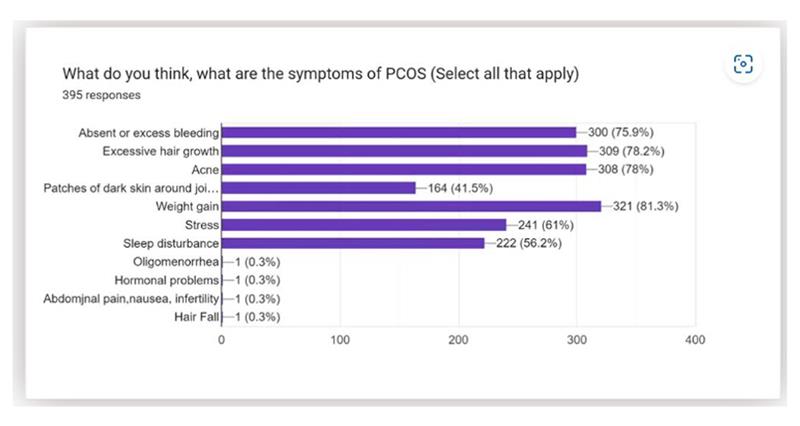
Figure 1: Survey responses on perceived symptoms of PCOS
| S.No. | PCOS Awareness | Frequency | Percentage (%) |
| 1. | Women suffering from PCOS ovulate less frequently. | ||
| False | 45 | 11.4 | |
| True | 350 | 88.6 | |
| 2. | Women suffering from PCOS have bigger follicles. | ||
| False | 131 | 33.2 | |
| True | 264 | 66.8 | |
| 3. | Women with PCOS have higher insulin and testosterone levels in blood. | ||
| False | 63 | 15.9 | |
| True | 332 | 84.1 | |
| 4. | Testosterone levels are responsible for acne, alopecia, and hirsutism. | ||
| False | 16 | 4.1 | |
| True | 379 | 95.9 | |
| 5. | Women with PCOS have a higher risk of developing diabetes and metabolic syndrome. | ||
| False | 27 | 6.8 | |
| True | 368 | 93.2 | |
| 6. | Lowering insulin levels may help decrease free testosterone and also help with weight loss and trigger ovulation. | ||
| False | 66 | 16.7 | |
| True | 329 | 83.3 | |
| 7. | Insulin levels can be lowered by exercise and by certain changes in life. | ||
| False | 50 | 12.7 | |
| True | 345 | 87.3 | |
| 8. | Insulin levels can be lowered by medications that make the body more sensitive to insulin, like metformin. | ||
| False | 47 | 11.9 | |
| True | 348 | 88.1 |
Table 3: Frequency and percentage distribution of knowledge statements
Discussion
In this study, which was conducted among female medical students in Punjab, Pakistan, to assess reproductive health knowledge and lifestyle choices of female medical students, all participants were free to give their consent to participate in this study, and all the personal information remained confidential. A total of 395 medical students participated in this study, with 40.5% females aged 20-22 years and 38% aged 22-24 years, with the majority having their menarche at 12-14 years of age and a normal cycle length of 22-40 days.
The lifestyle choices of participants showed that almost all of them were non-smokers and non-alcoholics. Only 0.5% of medical students in our study were smokers. Likewise, the prevalence of smoking in Arab students is reported to be 2%.[3] A recent study conducted on medical students in Karachi showed that 14.4% were smokers (22.0% male and 3.8% female).[10] However, in a study conducted on medical students in Universidad Cattolica del Maule, regarding alcohol consumption, 64.2% admitted to consuming alcohol, and 6% had alcohol dependence.[11] So, our data showed that due to religious and cultural norms, smoking and alcohol consumption are minimal in Muslim students.
More than 2/3rd (76.7%,74.4%) of the participants had fast food consumption and carbonated drink consumption less than three times a week. However, a recent study showed the increased consumption of fast food and soft drinks among medical students due to increased study load.[12] This study contradicts our study, which showed decreased consumption of fast food, which may be due to increased awareness of the ill effects on health or personal preferences. Almost 50.6% of our participants didn’t do any exercises, which showed sedentary lifestyle choices by medical students due to a lack of exercise. There is increased sedentary behavior in medical students as shown by another study in which 30.1% of all pre-clinical students had a low level of physical activity, and more than half of the male sex were associated with a lower prevalence of low levels of physical activity.[13]
In our study, regarding awareness of polycystic ovarian disease, most of the participants (96.2%) had heard about this disease, and 10.6% of the participants were already diagnosed cases. Likewise, a recent study conducted on female medical and dental students of Lahore in Pakistan showed that 2/3rd (70%) of participants had already heard about PCOS, and 11.2% were diagnosed cases, and the prevalence of PCOS worldwide also lies within the range of 4-18%.[14] A recent study in Nepal and Asia showed a similar prevalence of PCOS in medical students of about 9.8%.[15] While another study on Iranian medical students also reported a prevalence of 11.5%.[16] So, the prevalence of PCOS in female medical students in Pakistan falls within the range of global prevalence.
About 2/3rd (70-80%) of the participants had knowledge about symptoms of PCOS, weight gain, abnormal bleeding, excessive hair growth, acne, etc. In our study, more than 2/3rd (75.5%) of the participants knew about menstrual abnormalities associated with PCOS, and 41.5% were aware of acanthosis nigricans in PCOS. Similar results were obtained in a recent study conducted regarding awareness of PCOS among nursing students in South India, which showed about 85.22% had knowledge of irregular menstruation and 61.36% were aware of velvety patches (acanthosis nigricans).[17] So, our medical students are aware of the symptoms and clinical manifestations of PCOS.
Regarding the pathophysiology of PCOS, almost all medical students (88.6%) knew that women suffering from PCOS ovulate less frequently. Almost all participants knew about long-term complications of PCOS, such as diabetes mellitus (93.2%), and many had knowledge regarding the role of lifestyle modification in the management of PCOS, i.e.,87.3% had knowledge that insulin levels can be lowered by exercise and by certain changes in lifestyle. In a study conducted by T Sivakala, and K Kavitha only 66.1% were aware of complications of PCOS, and only 76.2 % were aware of modifications in diet and physical activity for the treatment of PCOS.[18] So, Medical students in Punjab are aware of complications and lifestyle modifications in the management of PCOS.
Regarding awareness about the basic physiology of the female reproductive system, almost all participants who were in medical school had basic knowledge. The majority (95.4%) of them had knowledge about changes in hormonal levels in the normal menstrual cycle and pregnancy, and a lot of them (94%) had knowledge about factors that lead to infertility. A similar study conducted on diagnosed and undiagnosed women with symptoms of PCOS in Arab countries revealed that reproductive system knowledge was limited among 50 to 70 % of participants.[17], Similar results were obtained while exploring awareness levels of female Emariti university students.[3] So, although medical students have adequate reproductive health knowledge, a lot of work has to be done to raise awareness among non-medical students and females.
From the results collected and analysis done, it is shown that most of the participants who were female medical students had adequate knowledge about the role of various hormones in the female reproductive system and didn’t practice poor lifestyle choices, except for a sedentary daily life. Most of them were also aware of the symptoms and complications of PCOS and the underlying hormonal imbalance associated with its pathophysiology.
However, this study shows some limitations, such as no correlation is found between lifestyle choices and females affected with PCOS. Also, no association is found between the age of menarche, menstrual cycle length, and onset of PCOS in affected females. Also, another limitation is that some females affected by PCOS but not clinically diagnosed may be missed, which could inflate the sample. This could influence the results.
Conclusion
PCOS has been a prevalent medical problem in the developing world in the face of a sedentary lifestyle and poor dietary habits. The incidence of women suffering from PCOS has been rising drastically in the past decade, and subfertility is also peaking in these women. Medical students and the general masses should be aware of the lifestyle modifications needed to counter this issue. The knowledge and awareness among female medical students of Punjab, Pakistan, are adequate. However, campaigns should be carried out to spread the word to the general masses.
References
- Ajmal N, Khan SZ, Shaikh R. Polycystic ovary syndrome (PCOS) and genetic predisposition: A review article. Eur J Obstet Gynecol Reprod Biol X. 2019; 3:100060. doi:10.1016/j.eurox.2019.100060 PubMed | Crossref | Google Scholar
- Patel S. Polycystic ovary syndrome (PCOS), an inflammatory, systemic, lifestyle endocrinopathy. J Steroid Biochem Mol Biol. 2018;182:27-36. doi:10.1016/j.jsbmb.2018.04.008 PubMed | Crossref | Google Scholar
- Pramodh S. Exploration of lifestyle choices, reproductive health knowledge, and polycystic ovary syndrome (PCOS) awareness among female Emirati university students. Int J Womens Health. 2020;12:927-938.doi:10.2147/IJWH.S272867 PubMed | Crossref | Google Scholar
- Rudnicka E, Napierała P, Podfigurna A, et al. Chronic low-grade inflammation in pathogenesis of PCOS. Int J Mol Sci. 2021;22(7):3789. doi:10.3390/ijms22073789 PubMed | Crossref | Google Scholar
- NYU Langone Health. PCOS: Lifestyle changes. PCOS: Lifestyle changes
- Cena H, Chiovato L, Nappi RE. Obesity, polycystic ovary syndrome, and infertility: A new avenue for GLP-1 receptor agonists. J Clin Endocrinol Metab. 2020;105(8). doi:10.1210/clinem/dgaa285 PubMed | Crossref | Google Scholar
- Arentz S, Smith CA, Abbott J, Bensoussan A. Combined lifestyle and herbal medicine in overweight women with polycystic ovary syndrome (PCOS): A randomized controlled trial. Phytother Res. 2017;31(9):1330-1340. doi:10.1002/ptr.5858 PubMed | Crossref | Google Scholar
- Ajmal N, Khan SZ, Shaikh R. Polycystic ovary syndrome (PCOS) and genetic predisposition: A review article. Eur J Obstet Gynecol Reprod Biol X. 2019;3:100060. doi:10.1016/j.eurox.2019.100060 PubMed | Crossref | Google Scholar
- Gul S, Hussain S, Khokhar B. PCOS: Symptoms and awareness in urban Pakistani women. Int J Pharm Res Health Sci. 2014;2:356-360. PCOS: Symptoms and awareness in urban Pakistani women
- Khan FM, Husain SJ, Laeeq A, et al. Smoking prevalence, knowledge and attitudes among medical students in Karachi, Pakistan. East Mediterr Health J. 2005;11(5-6):952-958. Smoking prevalence, knowledge and attitudes among medical students in Karachi, Pakistan
- Latorres M, Huidobro A. Prevalence of alcohol consumption among medical students at the Universidad Católica del Maule, Chile. Rev Med Chil. 2012;140(9):1140-1144. doi:10.4067/S0034-98872012000900006 PubMed | Crossref | Google Scholar
- Geethika P, Yamani L. Fast food and soft drink consumption pattern in medical students and its association with overweight and obesity. Glob J Med Stud. 2021;1:09-14. doi:10.52314/gjms.2021.v1i1.22 Crossref | Google Scholar
- Janampa-Apaza A, Pérez-Mori T, Benites L, et al. Physical activity and sedentary behavior in medical students at a Peruvian public university. 2021;21(5). doi:10.5867/medwave.2021.05.8210 PubMed | Crossref | Google Scholar
- Tahir H, Hassan A, Khan QU, Hafeez F. Prevalence of polycystic ovary syndrome awareness among female medical students. Discoveries Rep. 2020;3. doi: 10.15190/drep.2020.4 Crossref
- Kc S, Shah RK, Singh A, et al. Prevalence of polycystic ovarian syndrome among medical students of a tertiary care hospital. JNMA J Nepal Med Assoc. 2020;58(225):297-300. doi:10.31729/jnma.4885
PubMed | Crossref | Google Scholar - Fattah A, Hadavi F, Bahrami F, et al. Prevalence of polycystic ovary syndrome among girls’ students of Kerman university of medical sciences and a meta-analysis of the prevalence of PCOS among Iranian adolescent girls. Int J Pediatr. 2021;9(7):13957-13969. doi: 10.22038/ijp.2021.57752.4528 Crossref | Google Scholar
- Sasikala R, Shanmugham D, Varghese J, Saravanan DK. A study of knowledge and awareness on polycystic ovarian syndrome among nursing students in a tertiary centre in South India. New Indian J OBGYN. 2021;8(1):121-125. doi:10.21276/obgyn.2021.8.1.23 Crossref | Google Scholar
- Sivakala T, Kavitha K. A cross-sectional study to assess the knowledge regarding polycystic ovarian syndrome among female medical students. Eur J Mol Clin Med. 2022;9(1):1189-1200. doi:10.21276/obgyn.2021.8.1.23 Crossref | Google Scholar
- AlSinan A, Shaman A. A study to measure the health awareness of polycystic ovarian syndrome in Saudi Arabia. Glob J Health Sci. 2017;9:130. doi:10.5539/gjhs.v9n8p130 Crossref | Google Scholar
Acknowledgments
Not reported
Funding
Not reported
Author Information
Corresponding Author:
Qasim Mehmood
Department of Obstetrics and Gynecology
King Edward Medical University, Lahore, Pakistan
Email: qasimmehmood1051@gmail.com
Co-Authors:
Hina Latif
Department of Medicine
Mayo Hospital, Lahore, Pakistan
Fatima Yasin, Sibgha Ali, Hadiqa Shahid
Department of Medicine
King Edward Medical University, Lahore, Pakistan
Asima Yasin
Department of Medicine
Quaid-e-Azam Medical College, Bahawalpur, Pakistan
Authors Contributions
All authors contributed to the conceptualization, investigation, and data curation by acquiring and critically reviewing the selected articles. They were collectively involved in the writing – original draft preparation, and writing – review & editing to refine the manuscript. Additionally, all authors participated in the supervision of the work, ensuring accuracy and completeness. The final manuscript was approved by all named authors for submission to the journal.
Ethical Approval
The study commenced after ethical approval was obtained from the research ethics committee of KRL University, Islamabad.
Conflict of Interest Statement
All authors approve the final version of the manuscript and declare no conflict of interest.
Guarantor
Not reported
DOI
Cite this Article
Qasim M, Hina L, Fatima Y, Sibgha A, Asima Y, Hadiqa S. A Cross-sectional Survey of Reproductive Health Knowledge, Lifestyle Choices, and Polycystic Ovary Syndrome Awareness Among Female Medical Students of Punjab, Pakistan. medtigo J Med. 2024;2(4):e30622415. doi:10.63096/medtigo30622415 Crossref